
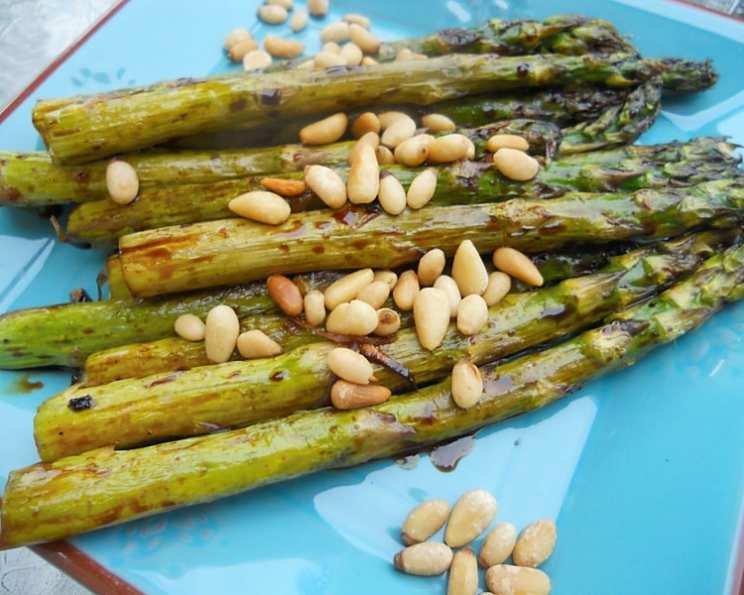
Roasted Asparagus with Pine Nuts: A Simple Elegance
I still remember the first time I tasted asparagus prepared with such care. It wasn’t at a fancy restaurant, but at a friend’s rustic farmhouse in Tuscany. The simplicity of the dish struck me – perfectly roasted asparagus, the delicate crunch of toasted pine nuts, and a whisper of balsamic. It was proof that some of the best culinary experiences come from the simplest ingredients, treated with respect. This recipe captures that memory, bringing a touch of Italian sunshine to any table.
Recipe Overview
- Prep Time: 10 minutes
- Cook Time: 15 minutes
- Total Time: 25 minutes
- Servings: 4
- Dietary Type: Gluten-Free, Vegetarian
Ingredients
- 2 tablespoons pine nuts
- 1 1/2 lbs asparagus
- 1 shallot, thinly sliced
- 2 teaspoons extra virgin olive oil
- 1/4 teaspoon salt, divided
- Fresh ground pepper, to taste
- 1/4 cup balsamic vinegar
Equipment Needed
- Small baking pan
- Large baking sheet with sides
- Small bowl
- Small skillet
Instructions
-
Begin by preheating your oven to 350 degrees Fahrenheit (175 degrees Celsius). This initial lower temperature is for toasting the pine nuts without burning them.
-
Spread the pine nuts evenly in a small baking pan. Toast them in the preheated oven until they are golden brown and fragrant, which usually takes about 7 to 10 minutes. Keep a close watch on them as they can burn quickly.
-
Once toasted, immediately transfer the pine nuts to a small bowl to cool. This will stop the cooking process and prevent them from becoming overly browned.
-
Increase the oven temperature to 450 degrees Fahrenheit (230 degrees Celsius). This higher heat is ideal for roasting the asparagus quickly and developing a slight char.
-
Prepare the asparagus by snapping off the tough ends. The natural breaking point will reveal itself when you gently bend each spear. Discard the tough ends.
-
In a bowl, toss the prepared asparagus with the thinly sliced shallot, olive oil, 1/8 teaspoon of salt, and a generous grind of fresh pepper. Ensure that the asparagus spears are evenly coated with the oil and seasonings.
-
Spread the seasoned asparagus in a single layer on a large baking sheet with sides. Avoid overcrowding the pan, as this will steam the asparagus instead of roasting it. If necessary, use two baking sheets.
-
Roast the asparagus in the preheated oven, turning it twice during cooking, until it is tender and lightly browned. This typically takes 10 to 15 minutes, depending on the thickness of the asparagus spears.
-
While the asparagus is roasting, prepare the balsamic reduction. In a small skillet over medium-high heat, combine the balsamic vinegar and the remaining 1/8 teaspoon of salt.
-
Bring the balsamic vinegar mixture to a simmer, then reduce the heat to medium-low. Simmer gently, swirling the pan occasionally to prevent sticking, until the vinegar has reduced to about 1 tablespoon and has a slightly syrupy consistency. This should take approximately 5 minutes. Be careful not to burn the balsamic; it should thicken, not caramelize to a hard candy.
-
Once the asparagus is roasted to your liking, remove it from the oven and immediately toss it with the reduced balsamic vinegar.
-
To serve, arrange the asparagus on a platter and sprinkle generously with the toasted pine nuts. Serve immediately and enjoy!
Expert Tips & Tricks
- For extra flavor, try adding a squeeze of fresh lemon juice to the asparagus after roasting, before tossing with the balsamic reduction.
- If you don’t have shallots on hand, a small amount of thinly sliced red onion can be used as a substitute.
- To prevent the pine nuts from burning, toast them in a dry skillet over medium heat, stirring frequently, instead of in the oven.
- Don’t discard the asparagus ends! Save them to make vegetable stock.
Serving & Storage Suggestions
Roasted asparagus with pine nuts is best served immediately while the asparagus is still warm and slightly crisp. It makes a wonderful side dish for grilled fish, chicken, or steak. Leftovers can be stored in an airtight container in the refrigerator for up to 3 days. To reheat, simply warm in a skillet over medium heat or in the oven at 350°F (175°C) for a few minutes. Note that the asparagus may lose some of its crispness upon reheating. It is not recommended to freeze roasted asparagus, as the texture will suffer.
Nutritional Information
| Nutrient | Amount per Serving | % Daily Value |
|---|---|---|
| Calories | 103.4 kcal | N/A |
| Calories from Fat | 49g | 48% |
| Total Fat | 5.5 g | 8% |
| Saturated Fat | 0.6 g | 3% |
| Cholesterol | 0 mg | 0% |
| Sodium | 173.6 mg | 7% |
| Total Carbohydrate | 11.1 g | 3% |
| Dietary Fiber | 3.6 g | 14% |
| Sugars | 4.8 g | N/A |
| Protein | 4.9 g | 9% |
Variations & Substitutions
- For a vegan version, ensure that the balsamic vinegar is free of any animal-derived fining agents. Most commercially available balsamic vinegars are vegan-friendly.
- Experiment with different nuts, such as slivered almonds or chopped walnuts, in place of the pine nuts.
- Add a sprinkle of grated Parmesan cheese after roasting for a richer, more decadent flavor. (Not vegan)
- Try roasting other vegetables along with the asparagus, such as bell peppers, zucchini, or cherry tomatoes.
- For a more complex flavor, add a clove of minced garlic to the asparagus when tossing with the olive oil.
FAQs (Frequently Asked Questions)
Q: Can I use frozen asparagus for this recipe?
A: While fresh asparagus is preferred, frozen asparagus can be used in a pinch. Be sure to thaw it completely and pat it dry before roasting to prevent it from becoming soggy.
Q: How do I know when the balsamic vinegar reduction is ready?
A: The balsamic vinegar is ready when it has thickened slightly and coats the back of a spoon. Be careful not to over-reduce it, as it can become too thick and sticky.
Q: Can I prepare the balsamic reduction ahead of time?
A: Yes, the balsamic reduction can be prepared up to a day in advance and stored in an airtight container in the refrigerator. Reheat gently before using.
Q: What is the best way to store leftover roasted asparagus?
A: Store leftover roasted asparagus in an airtight container in the refrigerator for up to 3 days.
Q: Can I add other herbs to this dish?
A: Absolutely! Fresh herbs like thyme, rosemary, or oregano would complement the flavors of the asparagus and balsamic vinegar beautifully. Add them when tossing the asparagus with the olive oil.
Final Thoughts
This simple roasted asparagus dish, with its toasted pine nuts and tangy balsamic glaze, is a testament to the power of fresh ingredients and straightforward cooking techniques. I encourage you to try this recipe and experience the delightful flavors for yourself. It’s a dish that’s perfect for a weeknight dinner or a special occasion, and it’s sure to impress your family and friends. Don’t hesitate to experiment with variations and substitutions to make it your own. Enjoy!