
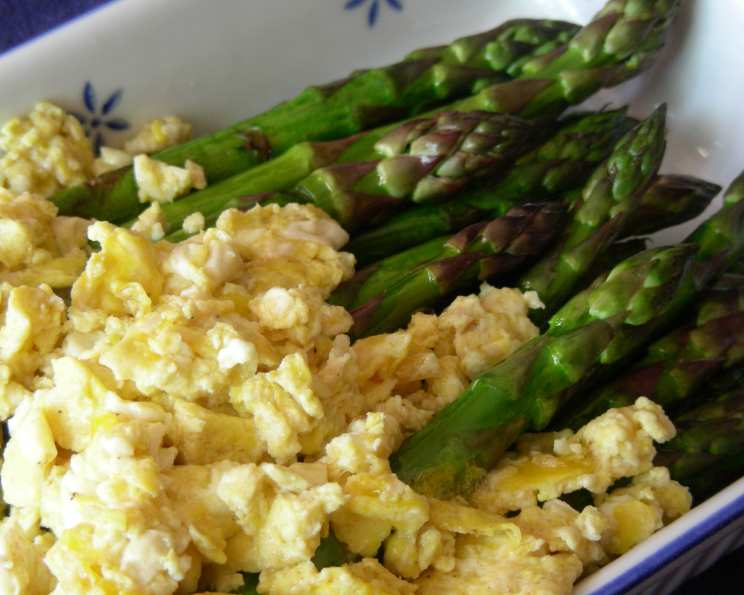
Roasted Asparagus With Scrambled Eggs: A Symphony of Spring
I remember the first time I made this dish. It was early spring, the first asparagus spears were appearing at the farmers market, vibrant green against the lingering grey of winter. The air was still crisp, but filled with the promise of warmer days. I whipped up this simple combination of roasted asparagus and creamy scrambled eggs, and the bright, fresh flavors were an absolute revelation. It tasted like spring itself, a welcome burst of sunshine on a plate.
Recipe Overview
- Prep Time: 10 minutes
- Cook Time: 25 minutes
- Total Time: 35 minutes
- Servings: 6
- Dietary Type: Gluten-Free
Ingredients
- 2 lbs fresh asparagus
- Olive oil
- 1 1/4 teaspoons kosher salt, plus extra kosher salt, for sprinkling
- Fresh ground black pepper
- 1/2 cup Parmesan cheese, freshly grated
- 16 extra-large eggs
- 1 1/4 cups half-and-half
- 4 tablespoons unsalted butter (1/2 stick)
Equipment Needed
- Baking sheet
- Large bowl
- Whisk
- Large skillet
- Wooden spoon
Instructions
-
Preheat your oven to 400 degrees Fahrenheit (200 degrees Celsius). This high heat is crucial for quickly roasting the asparagus and achieving that perfect balance of tenderness and crispness.
-
Prepare the asparagus. Begin by breaking off the tough ends of the asparagus. The point where the asparagus naturally snaps is the right place – don’t force it. If the spears are particularly thick, you may also want to peel the bottom part of the stems with a vegetable peeler to remove any tough outer skin.
-
Toss with oil and seasoning. Place the prepared asparagus on a baking sheet. Drizzle generously with olive oil, ensuring that each spear is lightly coated. The olive oil helps the asparagus to roast evenly and develop a slightly caramelized flavor. Next, sprinkle with 1 1/4 teaspoons of kosher salt and fresh ground black pepper to taste. Toss the asparagus to ensure it is completely coated in the oil and seasonings.
-
Roast the asparagus. Spread the asparagus in a single layer on the baking sheet. This is important because overcrowding the pan will cause the asparagus to steam instead of roast, resulting in a less desirable texture. Roast for 15 to 20 minutes, or until the asparagus is tender but still crisp. The roasting time will depend on the thickness of your asparagus spears, so keep an eye on them.
-
Add the cheese. Remove the baking sheet from the oven and sprinkle the roasted asparagus evenly with 1/2 cup of Parmesan cheese, freshly grated. Return the baking sheet to the oven for another 5 minutes, or until the cheese is melted and lightly golden. The Parmesan adds a salty, savory note that complements the sweetness of the asparagus.
-
Prepare the egg mixture. While the asparagus is roasting, prepare the scrambled eggs. In a large bowl, whisk together 16 extra-large eggs with 1 1/4 cups of half-and-half, 1 1/4 teaspoons of kosher salt, and fresh ground black pepper to taste. Be sure to whisk the mixture thoroughly to ensure everything is evenly combined. The half-and-half adds richness and creaminess to the eggs.
-
Cook the scrambled eggs. Melt 2 tablespoons of unsalted butter in a large skillet over low heat. The key to perfectly creamy scrambled eggs is low heat and constant stirring. Once the butter is melted, pour the egg mixture into the skillet. Cook the eggs on the lowest heat, stirring constantly with a wooden spoon, until they reach your desired doneness. Be patient! It will take some time, but the result will be worth it.
-
Finish with butter. Once the eggs are cooked to your liking (they should still be slightly moist), remove the skillet from the heat. Add the remaining 2 tablespoons of unsalted butter to the skillet and stir until it is completely melted and incorporated into the eggs. This final addition of butter adds extra richness and shine to the eggs.
-
Season to taste. Check the scrambled eggs for seasoning and add more salt and pepper if needed.
-
Serve immediately. Serve the creamy scrambled eggs immediately with the roasted asparagus topped with melted Parmesan cheese. The contrasting textures and flavors of the dish make it a delightful and satisfying meal.
Expert Tips & Tricks
- Asparagus Thickness: Adjust roasting time based on the thickness of your asparagus. Thicker spears will require a bit more time, while thinner spears will cook faster.
- Egg Texture: For even creamier scrambled eggs, consider adding a tablespoon of crème fraîche or sour cream to the egg mixture before cooking.
- Don’t Overcook the Eggs: The key to perfect scrambled eggs is to remove them from the heat while they’re still slightly moist. They’ll continue to cook from the residual heat.
- Parmesan Quality: Using high-quality, freshly grated Parmesan cheese will significantly enhance the flavor of the dish. Avoid using pre-grated Parmesan, as it often contains cellulose and doesn’t melt as well.
- Make-Ahead Tip: While best served immediately, the asparagus can be roasted ahead of time and reheated gently in the oven or microwave. Avoid reheating the eggs, as they can become rubbery.
Serving & Storage Suggestions
This dish is best served immediately to enjoy the optimal texture and flavor of both the roasted asparagus and the scrambled eggs. It can be served as a light lunch, a brunch item, or a side dish for dinner.
- Serving: Arrange the roasted asparagus on a platter and top with the creamy scrambled eggs. You can garnish with a sprinkle of fresh herbs, such as chives or parsley, for added color and flavor.
- Storage: Leftover roasted asparagus can be stored in an airtight container in the refrigerator for up to 3 days. Reheat gently in the oven or microwave. Leftover scrambled eggs are best consumed immediately, but can be stored in the refrigerator for up to 24 hours. Reheating is not recommended, as they can become rubbery.
Nutritional Information
| Nutrient | Amount per Serving | % Daily Value |
|---|---|---|
| Calories | 427 kcal | N/A |
| Total Fat | 31.4 g | 48% |
| Saturated Fat | 14.8 g | 73% |
| Cholesterol | 700.6 mg | 233% |
| Sodium | 732 mg | 30% |
| Total Carbohydrate | 9.6 g | 3% |
| Dietary Fiber | 3.2 g | 12% |
| Sugars | 4.2 g | N/A |
| Protein | 27.6 g | 55% |
Note: Percent Daily Values are based on a 2000 calorie diet. Actual values may vary based on specific ingredients and preparation methods.
Variations & Substitutions
- Cheese Variation: Instead of Parmesan, try using Pecorino Romano, Gruyere, or even a sprinkle of feta cheese for a different flavor profile.
- Herbs: Add fresh herbs like chopped chives, parsley, or dill to the scrambled eggs for added flavor and freshness.
- Vegetables: Consider adding other roasted vegetables to the mix, such as cherry tomatoes, mushrooms, or bell peppers.
- Dairy-Free: For a dairy-free version, substitute the half-and-half with unsweetened almond milk or cashew cream. Use a plant-based butter alternative for cooking the eggs. Skip the Parmesan or use a vegan Parmesan substitute.
- Spicy Kick: Add a pinch of red pepper flakes to the asparagus or the scrambled eggs for a touch of heat.
FAQs (Frequently Asked Questions)
Q: Can I use frozen asparagus for this recipe?
A: While fresh asparagus is preferred for its texture and flavor, frozen asparagus can be used in a pinch. Be sure to thaw and drain it thoroughly before roasting to prevent it from becoming soggy.
Q: How do I prevent my scrambled eggs from becoming dry?
A: The key to creamy scrambled eggs is low heat and constant stirring. Don’t overcook them! Remove them from the heat while they’re still slightly moist, as they’ll continue to cook from the residual heat.
Q: Can I make this dish ahead of time?
A: The asparagus can be roasted ahead of time and reheated gently. However, the scrambled eggs are best served immediately, as they can become rubbery if reheated.
Q: What can I serve with this dish to make it a complete meal?
A: This dish pairs well with toast, muffins, or a side of bacon or sausage for a more substantial meal. It also makes a delicious brunch item.
Q: How do I know when the asparagus is done roasting?
A: The asparagus should be tender but still crisp. It should be easily pierced with a fork, but not mushy. The tips should be slightly browned.
Final Thoughts
Roasted Asparagus with Scrambled Eggs is more than just a recipe; it’s an invitation to savor the simple pleasures of spring. The vibrant flavors and contrasting textures come together in perfect harmony, creating a dish that is both comforting and elegant. I encourage you to try this recipe and experience the joy of transforming simple ingredients into something truly special. Don’t be afraid to experiment with variations and make it your own. And if you do, I’d love to hear about your experience. Share your creations and let me know what you think! Enjoy!