
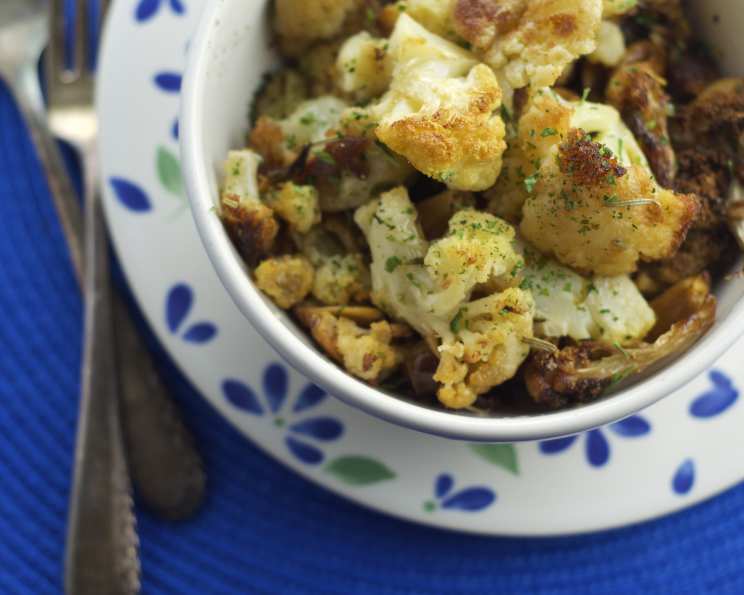
Roasted Cauliflower & 16 Roasted Cloves of Garlic
The aroma still takes me back to my grandmother’s kitchen, a haven of warmth on blustery autumn evenings. I remember watching, mesmerized, as she tossed cauliflower florets with glistening olive oil and fragrant rosemary, the air thick with the promise of savory goodness. The star of the show was always the garlic; after roasting, the cloves transformed into little pockets of creamy, mellow sweetness that we would eagerly spread on everything. It was a simple dish, but it filled our bellies and our hearts with contentment, a taste of home that I cherish to this day.
Recipe Overview
- Prep Time: 10 minutes
- Cook Time: 30 minutes
- Total Time: 40 minutes
- Servings: 6
- Dietary Type: Vegan, Gluten-Free, Dairy-Free
Ingredients
- 1 large cauliflower, trimmed and cut into bite-size pieces, washed with water still on
- 16 garlic cloves, peeled and lightly crushed
- 1-2 teaspoons minced fresh rosemary
- 1 teaspoon salt
- 1/4 – 1/2 teaspoon black pepper
- 1/4 cup olive oil, adding more to taste
- More olive oil, to drizzle if wanted
Equipment Needed
- Large casserole dish
- Oven
Instructions
-
In a large bowl, combine the olive oil, minced fresh rosemary, salt, black pepper, and lightly crushed garlic cloves. Ensure the rosemary is finely minced to evenly distribute its flavor. Lightly crushing the garlic allows it to release its fragrant oils more readily during roasting.
-
Add the trimmed and washed cauliflower florets to the bowl. Gently toss the florets, ensuring each piece is well-coated with the seasoned olive oil mixture. The water clinging to the cauliflower after washing will help it steam slightly in the oven, contributing to a tender texture.
-
Transfer the cauliflower and garlic mixture to a large casserole dish, arranging it in a single layer. This is crucial for even roasting, preventing the florets from steaming and becoming mushy. If necessary, use two casserole dishes to avoid overcrowding.
-
Preheat your oven to 450 degrees Fahrenheit (232 degrees Celsius). Make sure the oven is fully preheated before placing the dish inside; this high heat is essential for achieving that desirable caramelized exterior.
-
Roast in the preheated oven for 20 minutes.
-
Remove the casserole dish from the oven and give the cauliflower and garlic a good toss. This ensures even browning and prevents any pieces from sticking to the bottom of the dish.
-
Return the dish to the oven and bake for an additional 10 minutes, or until the cauliflower is tender and slightly browned, and the garlic cloves are tan in color. Keep a close eye on the dish during this final stage to prevent burning. If the cauliflower begins to brown too quickly, you can tent it with foil.
-
Remove from the oven and drizzle with more olive oil if desired. This adds richness and enhances the overall flavor.
Expert Tips & Tricks
- For extra flavor, consider adding a pinch of red pepper flakes to the olive oil mixture.
- If you don’t have fresh rosemary, dried rosemary can be used, but reduce the amount by half, as dried herbs tend to be more potent.
- Roasting time may vary depending on your oven. Start checking for doneness at the 25-minute mark and adjust accordingly.
- For a deeper, more caramelized flavor, you can broil the cauliflower for the last few minutes, but watch it carefully to prevent burning.
- If you are short on time, pre-cut cauliflower florets can be used, but fresh-cut florets generally have a better texture.
- Add a squeeze of lemon juice at the end for brightness.
- For an even easier cleanup, line your baking dish with parchment paper.
Serving & Storage Suggestions
Serve the roasted cauliflower and garlic immediately as a side dish. The roasted garlic cloves can be squeezed out of their skins and spread on the cauliflower, or onto slices of crusty bread. Be sure to scoop up any of the rosemary-infused olive oil and black pepper that may have escaped to the bottom of the dish – it’s liquid gold!
Leftovers can be stored in an airtight container in the refrigerator for up to 3 days. To reheat, spread the cauliflower on a baking sheet and bake in a preheated oven at 350 degrees Fahrenheit (175 degrees Celsius) until warmed through. You can also microwave the cauliflower, but the texture will be softer. Reheating in a skillet with a little olive oil will also bring it back to life. Freezing is not recommended as the cauliflower may become mushy upon thawing.
Nutritional Information
| Nutrient | Amount per Serving | % Daily Value |
|---|---|---|
| Calories | 126.9 kcal | N/A |
| Calories from Fat | 84 g | 67% |
| Total Fat | 9.4 g | 14% |
| Saturated Fat | 1.3 g | 6% |
| Cholesterol | 0 mg | 0% |
| Sodium | 431.2 mg | 17% |
| Total Carbohydrate | 9.7 g | 3% |
| Dietary Fiber | 3 g | 12% |
| Sugars | 2.8 g | N/A |
| Protein | 3.2 g | 6% |
Variations & Substitutions
- Spice it up: Add a pinch of red pepper flakes or a dash of cayenne pepper to the olive oil mixture.
- Herb variations: Experiment with different herbs such as thyme, oregano, or sage.
- Add parmesan: Sprinkle grated Parmesan cheese over the cauliflower during the last 5 minutes of roasting for a cheesy twist (not vegan).
- Balsamic glaze: Drizzle with balsamic glaze after roasting for a sweet and tangy flavor.
- Lemon zest: Add lemon zest to the olive oil mixture for a bright, citrusy flavor.
- Different vegetables: Try roasting other vegetables alongside the cauliflower, such as broccoli, Brussels sprouts, or carrots.
FAQs (Frequently Asked Questions)
Q: Can I use frozen cauliflower for this recipe?
A: While fresh cauliflower is recommended for the best texture, frozen cauliflower can be used in a pinch. Be sure to thaw it completely and pat it dry before tossing it with the olive oil mixture.
Q: How do I prevent the cauliflower from becoming mushy?
A: Make sure the oven is hot enough (450°F) and don’t overcrowd the casserole dish. Arranging the cauliflower in a single layer allows for even roasting and prevents steaming.
Q: Can I roast the garlic cloves with their skins on?
A: Yes, you can roast the garlic cloves with their skins on. Roasting them whole will result in a sweeter, milder flavor. Simply peel and crush them after roasting before adding them to the cauliflower.
Q: What if I don’t have fresh rosemary?
A: Dried rosemary can be used as a substitute. Use half the amount of dried rosemary, as it is more potent than fresh rosemary.
Q: How can I make this recipe ahead of time?
A: You can trim and cut the cauliflower, peel the garlic, and mix the olive oil mixture ahead of time. Store them separately in the refrigerator and combine them just before roasting.
Final Thoughts
This recipe for Roasted Cauliflower with 16 Roasted Cloves of Garlic is a testament to the magic of simple ingredients and mindful preparation. I encourage you to try it, to make it your own, and to share it with those you love. Don’t be afraid to experiment with different herbs and spices to find your perfect flavor combination. And remember, the best dishes are made with love, so pour your heart into it and enjoy the process!