
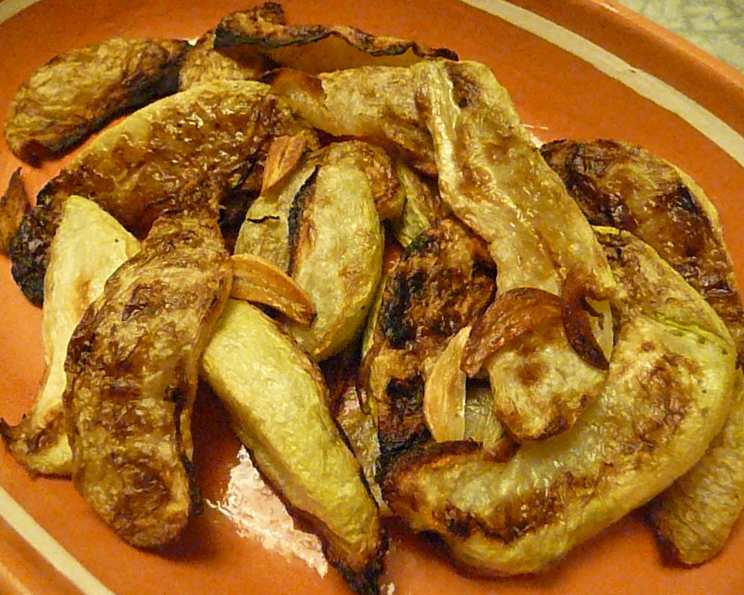
Roasted Chayotes: A Culinary Adventure
I still remember the first time I laid eyes on a chayote. It was at a small farmer’s market in Southern California, nestled amongst the more familiar zucchini and squashes. Its pale green skin and unique pear-like shape immediately intrigued me. The vendor, a sweet woman with a wealth of knowledge, encouraged me to try one, promising a mild, refreshing flavor that would surprise me. Hesitantly, I bought a few, and that evening, roasted them simply with garlic and olive oil. The result? A revelation! The delicate sweetness and satisfying crunch completely won me over.
Recipe Overview
- Prep Time: 20 minutes
- Cook Time: 55 minutes
- Total Time: 1 hour 15 minutes
- Servings: 8
- Dietary Type: Gluten-Free, Vegetarian, Vegan
Ingredients
- 6 lbs chayotes (mirlitons)
- 3 tablespoons olive oil
- 1/2 cup thinly sliced garlic (10 to 12 cloves)
- Salt, to taste
Equipment Needed
- Large cutting board
- Chef’s knife
- Vegetable peeler
- Two large, four-sided sheet pans
- Gloves (optional, but recommended)
Instructions
-
Preheat your oven to 450°F (232°C). Position the oven racks in the upper and lower thirds of the oven to ensure even roasting.
-
Consider wearing protective gloves during preparation. Some people experience a sticky residue on their hands when handling chayotes. This is harmless but can be slightly uncomfortable.
-
Halve the chayotes lengthwise using a sharp chef’s knife. Discard the seeds from the center of each half.
-
Peel the chayotes. A standard vegetable peeler works well for this task. Be sure to remove all of the skin.
-
Cut each chayote half lengthwise into 1-inch wedges. Aim for uniform pieces to ensure even cooking.
-
In a large bowl, toss the chayote wedges with the olive oil. Make sure each piece is well coated.
-
Season generously with salt, using between 1 to 1 1/2 teaspoons, or to your preference.
-
Divide the chayote wedges between the two large sheet pans. Arrange them in a single layer, ensuring they are not overcrowded. Overcrowding can lead to steaming rather than roasting.
-
Roast the chayotes for 45 minutes.
-
After 45 minutes, remove the sheet pans from the oven.
-
Divide the thinly sliced garlic between the two pans, scattering it evenly over the chayote wedges.
-
Return the sheet pans to the oven and continue to roast, turning the chayotes occasionally, until they are golden brown on the edges and tender. This should take approximately 10 – 15 minutes more.
-
Remove the roasted chayotes from the oven and season with additional salt to taste. Adjust seasoning according to your preference.
-
Serve immediately, or see make-ahead instructions below.
Expert Tips & Tricks
- Don’t overcrowd the pan: This is the golden rule of roasting! If your chayotes are too close together, they’ll steam instead of caramelizing and developing that beautiful roasted flavor. Use two pans, or roast in batches if necessary.
- Garlic burn alert! Keep a close eye on the garlic during the final roasting stage. Because it’s thinly sliced, it can burn easily. If it starts to brown too quickly, move the pan to a lower rack in the oven or reduce the oven temperature slightly.
- Spice it up: For a little kick, add a pinch of red pepper flakes along with the salt before roasting.
- Herb infusion: Toss the chayotes with fresh herbs like rosemary, thyme, or oregano before roasting. Their flavors will infuse into the chayotes as they cook.
Serving & Storage Suggestions
Roasted chayotes are delicious served hot as a side dish alongside grilled meats, fish, or poultry. They also make a wonderful addition to vegetarian or vegan meals. Try them as a base for a warm salad, tossed with toasted nuts and a vinaigrette.
Make-Ahead Instructions: The chayotes can be roasted up to 5 hours ahead of serving. Keep them loosely covered with foil at room temperature. To reheat, place them in a preheated 350°F (175°C) oven for about 15 minutes, or until warmed through.
Storage: Leftover roasted chayotes can be stored in an airtight container in the refrigerator for up to 3 days. Reheat gently in a skillet or oven until warmed through. They can be frozen, but the texture may become slightly softer upon thawing.
Nutritional Information
(Estimated per serving)
| Nutrient | Amount per Serving | % Daily Value |
|---|---|---|
| Calories | 115 kcal | 6% |
| Fat | 5.5 g | 8% |
| Saturated Fat | 0.8 g | 4% |
| Cholesterol | 0 mg | 0% |
| Sodium | 8.4 mg | 0% |
| Carbohydrate | 16.1 g | 5% |
| Fiber | 6 g | 23% |
| Sugars | 6.4 g | N/A |
| Protein | 3.3 g | 6% |
Variations & Substitutions
- Chayote Squash Medley: Add other vegetables to the roasting pan, such as bell peppers, onions, and zucchini, for a colorful and flavorful medley. Adjust the roasting time as needed to ensure all vegetables are tender.
- Citrus Zest: Add the zest of one lemon or lime to the chayotes before roasting for a bright, citrusy flavor.
- Asian-Inspired: Replace the olive oil with sesame oil and add a splash of soy sauce or tamari for an Asian-inspired twist. Garnish with sesame seeds and chopped scallions.
- Spicy Chayotes: Add a pinch of cayenne pepper or a dash of your favorite hot sauce to the chayotes before roasting for a spicy kick.
- Maple Glazed: Drizzle with maple syrup during the last 10 minutes of roasting for a sweet and savory flavor.
FAQs (Frequently Asked Questions)
Q: What does chayote taste like?
A: Chayote has a mild, slightly sweet flavor, often described as a cross between a squash and a pear. It’s a very versatile vegetable that takes on the flavors of the ingredients it’s cooked with.
Q: Do I need to peel chayotes?
A: Yes, peeling is recommended. The skin can be tough and slightly bitter.
Q: How do I store raw chayotes?
A: Store raw chayotes in the refrigerator for up to two weeks.
Q: Can I eat chayote seeds?
A: Yes, the seeds are edible and have a nutty flavor. You can roast them along with the chayote wedges or save them for another use.
Q: What if I don’t have gloves?
A: If you don’t have gloves, you can rub your hands with a little bit of oil before handling the chayotes to minimize any potential sticky residue. Wash your hands thoroughly with soap and water afterward.
Final Thoughts
Roasted chayotes are a surprisingly delicious and versatile vegetable that deserves a place in every kitchen. Their mild flavor and satisfying texture make them a perfect canvas for a variety of flavors and seasonings. I encourage you to give this recipe a try and discover the delights of this often-overlooked ingredient. Share your creations and variations with friends and family, and let me know what you think! These roasted chayotes pair beautifully with a crisp Sauvignon Blanc or a refreshing sparkling water with a squeeze of lime.