
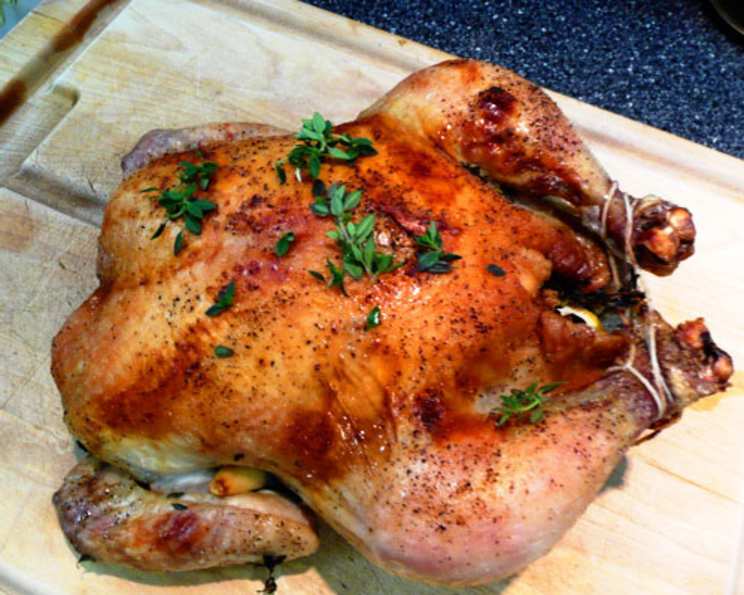
Roasted Chicken With Lemon, Garlic, and Thyme: A Taste of Simple Perfection
The aroma of roasted chicken is, for me, the very essence of home. I can still recall the Sunday dinners of my childhood, the golden-brown bird sitting proudly at the center of the table, its savory scent wrapping around us like a warm hug. This recipe, with its vibrant lemon, pungent garlic, and earthy thyme, elevates that classic comfort food to something truly special – a reminder that the simplest ingredients, treated with care, can create the most unforgettable flavors.
Recipe Overview
- Prep Time: 30 minutes
- Cook Time: 1 hour 30 minutes
- Total Time: 2 hours
- Servings: 4
- Dietary Type: Gluten-Free, Dairy-Free
Ingredients
- 1 (approximately 6 lb) roasting chicken
- 1 tablespoon unsalted butter, softened
- Salt and freshly ground black pepper, to taste
- 1 lemon
- 3 large garlic cloves
- 4 sprigs fresh thyme, plus more for garnish
- 2 medium onions, peeled and cut into 1/2 inch thick slices
Equipment Needed
- Heavy-duty roasting pan
- Kitchen twine
- Fork
- Knife
- Instant-read thermometer
Instructions
- Let the butter and chicken stand at room temperature for about 30 minutes. This will allow the chicken to cook more evenly and the butter to spread easily.
- Preheat your oven to 425 degrees Fahrenheit (220 degrees Celsius). Make sure your oven rack is positioned in the center.
- Remove and discard any giblets, excess fat, and the plastic pop-up timer (if present) from the chicken’s cavity.
- To prevent the wing tips from burning during roasting, tuck them under the body of the chicken. This creates a neat shape and ensures even cooking.
- Season the cavity of the chicken liberally with salt and freshly ground black pepper. Don’t be shy! Generous seasoning is key to a flavorful bird.
- Roll the lemon back and forth on the counter with gentle pressure. This helps to release the juices inside. Pierce the entire surface of the lemon with a fork. This allows the lemon’s flavor to infuse the chicken from the inside out.
- Smash the garlic cloves using the side of a knife. This releases their pungent aroma and flavor.
- Insert the lemon, garlic, and thyme sprigs into the cavity of the bird. Ensure they are distributed evenly inside.
- Arrange the onion slices in the center of a heavy-duty roasting pan. Overlapping the onion slices creates a sort of built-in roasting rack.
- Place the chicken on top of the onion slices, with the breast side facing up.
- Tie the chicken legs together with kitchen twine. This helps the chicken cook evenly and maintain a more attractive shape.
- Spread the softened butter evenly over the entire surface of the chicken. Then season generously with salt and freshly ground black pepper. The butter will help the skin crisp up and brown beautifully.
- Roast the chicken until the skin is crisp and a nice golden brown color. This typically takes about 1 1/2 hours. The juices should run clear when the chicken is pierced with a fork in the thigh.
- The chicken will be cooked perfectly when an instant-read thermometer, inserted into the thickest part of the breast and then the thigh, reads 165 degrees Fahrenheit (74 degrees Celsius).
- Once cooked, let the chicken rest for 10-15 minutes before carving. This allows the juices to redistribute, resulting in a more moist and flavorful bird. Garnish with fresh sprigs of thyme before serving.
Expert Tips & Tricks
- For extra crispy skin: Pat the chicken dry with paper towels before applying the butter. Moisture is the enemy of crispy skin! You can also try broiling the chicken for the last few minutes of cooking, keeping a close eye to prevent burning.
- Don’t overcrowd the pan: Make sure there’s enough space around the chicken for the hot air to circulate. This will ensure even browning.
- Make a pan sauce: While the chicken is resting, deglaze the roasting pan with a splash of white wine or chicken broth. Scrape up the browned bits from the bottom of the pan, and simmer until the sauce thickens slightly. This makes a delicious gravy to serve with the chicken.
- Leftover chicken carcass: Save the bones to make chicken stock! It’s a great way to reduce waste and create a flavorful base for soups and sauces.
Serving & Storage Suggestions
Serve the roasted chicken hot, carved and alongside your favorite sides. Roasted vegetables, mashed potatoes, or a simple salad are all excellent choices. Leftover chicken should be stored in an airtight container in the refrigerator for up to 3-4 days. To reheat, you can gently warm it in the oven, microwave, or skillet. You can also shred the leftover chicken and use it in sandwiches, salads, or casseroles.
Nutritional Information
| Nutrient | Amount per Serving | % Daily Value |
|---|---|---|
| Calories | 1005 kcal | N/A |
| Calories from Fat | 653 kcal | N/A |
| Total Fat | 72.7 g | 111% |
| Saturated Fat | 21.8 g | 108% |
| Cholesterol | 328.5 mg | 109% |
| Sodium | 327.2 mg | 13% |
| Total Carbohydrate | 7.4 g | 2% |
| Dietary Fiber | 1.4 g | 5% |
| Sugars | 2.7 g | N/A |
| Protein | 76.3 g | 152% |
Note: Nutritional information is an estimate and may vary based on specific ingredients and portion sizes.
Variations & Substitutions
- Herbs: Feel free to experiment with different herbs. Rosemary, sage, or oregano would all be delicious additions or substitutes for thyme.
- Citrus: Orange or grapefruit can be used in place of lemon for a slightly different flavor profile.
- Vegetables: Add other vegetables to the roasting pan alongside the onions, such as carrots, potatoes, or celery.
- Butter Alternative: Use olive oil or another cooking oil in place of butter.
FAQs (Frequently Asked Questions)
Q: Can I use a smaller or larger chicken?
A: Yes, but you will need to adjust the cooking time accordingly. Use an instant-read thermometer to ensure the chicken reaches an internal temperature of 165 degrees Fahrenheit (74 degrees Celsius).
Q: Do I have to use onions?
A: The onions act as a natural roasting rack and add flavor to the chicken, but you can omit them if desired. You may want to use a traditional roasting rack in that case.
Q: Can I brine the chicken before roasting?
A: Yes, brining the chicken will result in an even more moist and flavorful bird. Brine for several hours or overnight before roasting, and be sure to reduce the amount of salt you add during the seasoning process.
Q: What if the skin starts to brown too quickly?
A: If the skin is browning too quickly, tent the chicken loosely with aluminum foil. This will prevent it from burning while the inside continues to cook.
Q: How do I know when the chicken is fully cooked?
A: The best way to ensure the chicken is fully cooked is to use an instant-read thermometer. Insert it into the thickest part of the breast and then the thigh, avoiding the bone. The internal temperature should reach 165 degrees Fahrenheit (74 degrees Celsius). The juices should also run clear when pierced with a fork in the thigh.
Final Thoughts
This roasted chicken with lemon, garlic, and thyme is more than just a recipe; it’s an invitation to create a moment of comfort and connection. The simple act of roasting a chicken, filling your kitchen with its incredible aroma, is a way to nourish not just your body, but your soul as well. Don’t be afraid to experiment with the ingredients and make it your own. I encourage you to try this recipe, share it with loved ones, and let me know what you think! Perhaps pair it with a crisp Sauvignon Blanc for the perfect meal. Happy roasting!