
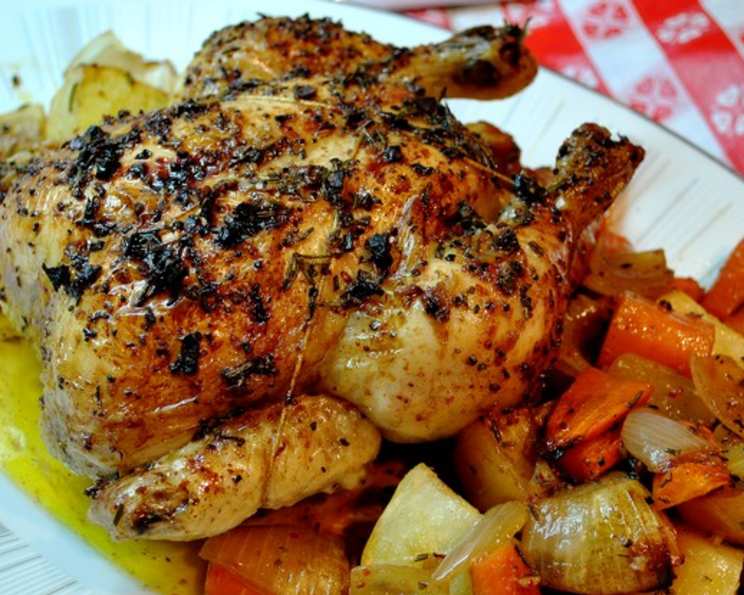
The Unforgettable Aroma of Rosemary Roasted Chicken
I can still remember the first time I walked into my grandmother’s kitchen on a Sunday afternoon and was greeted by the intoxicating aroma of roasted chicken. The air, thick with the savory scent of herbs and perfectly crisped skin, instantly transported me to a place of warmth, comfort, and pure culinary bliss. It wasn’t just the taste; it was the feeling of togetherness, the clatter of silverware, and the shared joy of a home-cooked meal. This Rosemary Roasted Chicken recipe is my humble attempt to recreate that cherished memory, to bring that same sense of comfort and delight to your own table.
Recipe Overview
- Prep Time: 20 minutes
- Cook Time: 2 hours 15 minutes
- Total Time: 2 hours 35 minutes
- Servings: 9
- Dietary Type: Gluten-Free
Ingredients
- 1/2 cup butter
- 4 tablespoons minced fresh rosemary or 2 tablespoons dried rosemary, crushed
- 2 tablespoons chopped fresh parsley
- 3 garlic cloves, minced
- 1 teaspoon salt
- 1/2 teaspoon pepper
- 1 roasting chicken (5-6 pounds)
- 9 small red potatoes, halved
- 6 medium carrots, halved lengthwise and cut into 2 inch pieces
- 2 medium onions, quartered
Equipment Needed
- Small saucepan
- Roasting pan
- Rack (optional, for roasting pan)
- Kitchen string
- Meat thermometer
Instructions
-
Begin by preparing the herb butter. In a small saucepan, melt the butter over low heat. Once melted, stir in the minced fresh rosemary (or crushed dried rosemary), chopped fresh parsley, minced garlic, salt, and pepper. Stir to combine all the ingredients thoroughly. This fragrant mixture will be the key to infusing the chicken and vegetables with a delightful herbaceous flavor.
-
Prepare the chicken for roasting. Place the chicken on a rack inside a roasting pan. Using a rack is optional, but it helps the chicken cook more evenly by allowing air to circulate around it. If you don’t have a rack, you can place the chicken directly in the roasting pan. Use kitchen string to tie the drumsticks together. This helps the chicken maintain its shape during cooking and ensures even cooking of the legs.
-
Season the chicken. Using a spoon, distribute half of the butter mixture evenly over the chicken. Make sure to get some of the butter mixture under the skin of the breast for extra flavor and moisture.
-
Arrange the vegetables around the chicken. Place the halved red potatoes, carrots, and quartered onions around the chicken in the roasting pan. These vegetables will roast alongside the chicken, absorbing the flavorful juices and becoming tender and delicious.
-
Season the vegetables. Drizzle the remaining butter mixture over the vegetables, ensuring they are well coated. This will help them roast evenly and develop a beautiful caramelized color.
-
Cover the roasting pan. Cover the roasting pan tightly with a lid or aluminum foil. This will help to trap the moisture and steam the chicken and vegetables during the first part of the cooking process.
-
Roast the chicken. Bake in a preheated oven at 350°F (175°C) for 1 1/2 hours, basting the chicken and vegetables with the pan juices every 30 minutes. Basting helps to keep the chicken moist and flavorful and also prevents the vegetables from drying out.
-
Uncover and continue roasting. Remove the lid or aluminum foil from the roasting pan. Bake for an additional 30-60 minutes, or until a meat thermometer inserted into the thickest part of the thigh registers 180°F (82°C) and the vegetables are tender. Continue to baste the chicken occasionally during this time to promote browning and prevent the skin from drying out. The exact cooking time will depend on the size of the chicken and the accuracy of your oven, so it’s important to use a meat thermometer to ensure the chicken is cooked through.
-
Rest the chicken. Once the chicken is cooked through, remove it from the oven and cover it loosely with foil. Let it stand for 10-15 minutes before carving. This allows the juices to redistribute throughout the chicken, resulting in a more tender and flavorful bird.
-
Carve and Serve. Carve the chicken and serve with the roasted vegetables. Spoon the pan juices over the chicken and vegetables for added flavor.
Expert Tips & Tricks
-
For an even more intense rosemary flavor, try inserting a few sprigs of fresh rosemary under the skin of the chicken before roasting.
-
If you find that the chicken is browning too quickly, you can loosely tent it with foil during the last part of the cooking time.
-
Don’t discard the pan drippings! They can be used to make a delicious gravy to serve with the chicken. Simply strain the drippings, skim off any excess fat, and thicken with a slurry of cornstarch and water.
-
To ensure the chicken is cooked through without drying out, try using a brine or dry rub the day before roasting.
-
If you prefer a crispier skin, you can increase the oven temperature to 400°F (200°C) during the last 15-20 minutes of cooking. Keep a close eye on it to prevent burning.
Serving & Storage Suggestions
Serve the Rosemary Roasted Chicken hot, straight from the oven, alongside the roasted vegetables. The pan juices make a delicious natural gravy. This dish pairs well with a simple green salad, mashed potatoes, or rice.
Leftover roasted chicken can be stored in an airtight container in the refrigerator for up to 3-4 days. The vegetables can also be stored separately. To reheat, simply place the chicken and vegetables in a preheated oven at 350°F (175°C) until heated through. You can also reheat them in the microwave, but the skin may not be as crispy.
Cooked chicken can also be frozen for longer storage. Wrap the chicken tightly in plastic wrap and then in foil or place it in a freezer-safe container. Frozen chicken can be stored for up to 2-3 months. Thaw the chicken in the refrigerator overnight before reheating.
Nutritional Information
| Nutrient | Amount per Serving | % Daily Value |
|---|---|---|
| Calories | 309 kcal | N/A |
| Calories from Fat | 142g | 46% |
| Total Fat | 15.8 g | 24% |
| Saturated Fat | 8.1 g | 40% |
| Cholesterol | 50.9 mg | 16% |
| Sodium | 431.1 mg | 17% |
| Total Carbohydrate | 33.8 g | 11% |
| Dietary Fiber | 4.6 g | 18% |
| Sugars | 5.2 g | N/A |
| Protein | 9.7 g | 19% |
Variations & Substitutions
-
For a lemon-herb variation, add the zest and juice of one lemon to the butter mixture. You can also add a few sprigs of thyme or oregano.
-
If you don’t have red potatoes, you can use any other type of potato, such as Yukon Gold or russet. Just be sure to cut them into similar-sized pieces so they cook evenly.
-
Feel free to add other vegetables to the roasting pan, such as Brussels sprouts, parsnips, or sweet potatoes.
-
For a spicier kick, add a pinch of red pepper flakes to the butter mixture.
-
If you don’t have fresh rosemary, dried rosemary works perfectly well. Just be sure to use half the amount, as dried herbs are more potent than fresh.
FAQs (Frequently Asked Questions)
Q: How do I ensure my chicken is cooked through without drying it out?
A: The best way to ensure a juicy and thoroughly cooked chicken is to use a meat thermometer. Insert it into the thickest part of the thigh, avoiding the bone. It should register 180°F (82°C). Also, basting regularly helps keep the chicken moist.
Q: Can I prepare the chicken ahead of time?
A: You can prepare the herb butter and chop the vegetables a day in advance. Store them separately in the refrigerator. When you’re ready to cook, simply assemble the dish and roast as directed.
Q: What if my chicken skin isn’t crispy enough?
A: To get crispy skin, make sure the chicken is patted dry before applying the butter mixture. You can also increase the oven temperature to 400°F (200°C) during the last 15-20 minutes of cooking, keeping a close eye to prevent burning.
Q: Can I use boneless, skinless chicken breasts instead of a whole chicken?
A: While this recipe is designed for a whole chicken, you could adapt it for chicken breasts. Reduce the cooking time significantly and monitor them closely to prevent them from drying out. They will cook much faster.
Q: What can I do with the leftover chicken carcass?
A: Don’t throw it away! Use the carcass to make a flavorful chicken broth. Simply simmer the carcass with water, vegetables scraps (onion skins, carrot peels, celery ends), and herbs for a few hours, then strain and use the broth in soups, stews, or sauces.
Final Thoughts
This Rosemary Roasted Chicken is more than just a recipe; it’s an invitation to create lasting memories around your own dining table. The simple combination of fragrant herbs, perfectly roasted vegetables, and succulent chicken is a timeless classic that is sure to delight family and friends. So, gather your ingredients, preheat your oven, and prepare to fill your home with the unforgettable aroma of Rosemary Roasted Chicken. I encourage you to try this recipe, experiment with variations, and most importantly, share your culinary creation with those you love. Bon appétit!