
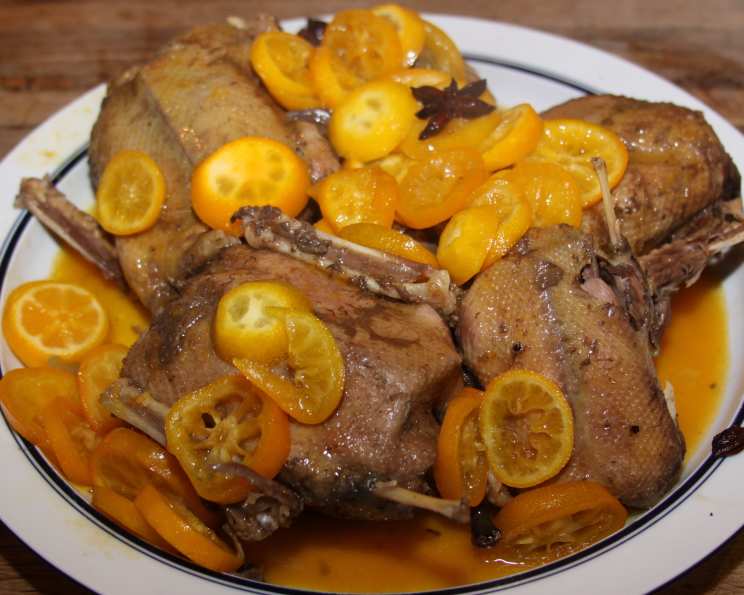
Roasted Duck With Kumquat Sauce: A Culinary Gem
The first time I tasted roasted duck was at a small, family-run bistro in Paris. The rich, crispy skin, the tender meat, and the slightly sweet, tangy sauce created a symphony of flavors that danced on my tongue. It was a revelation, an experience I’ve chased ever since, experimenting with countless variations to recapture that magic. This roasted duck with kumquat sauce is my tribute to that Parisian memory, a dish that brings warmth, sophistication, and a touch of sunshine to any table.
Recipe Overview
- Prep Time: 20 minutes
- Cook Time: 2 hours
- Total Time: 2 hours 20 minutes
- Servings: 6
- Yield: 1 whole duck
- Dietary Type: Omnivore
Ingredients
- 4 1⁄2 lbs duck, washed and dried
- 1 1⁄2 teaspoons salt
- 1⁄4 teaspoon pepper
- 2 celery stalks, diced
- 1 onion, diced
- 2 cinnamon sticks
- 2 star anise
- 2 tablespoons olive oil, divided
- 1⁄4 cup honey
- 1⁄4 cup sherry wine vinegar
- 2 cups orange juice
- 1 tablespoon butter
- 10 kumquats, sliced crosswise into 1/8-inch thick slices
Equipment Needed
- Fork
- Small bowl
- Large sauté pan
- Baking pan
- 2-quart heavy-bottom saucepan
Instructions
- Preheat your oven to 400 degrees Fahrenheit (200 degrees Celsius).
- Prepare the duck: Using a fork, poke the skin of the duck all over. This helps render the fat and creates that desirable crispy skin.
- Season generously: In a small bowl, combine 1 1/2 teaspoons of salt and 1/4 teaspoon of pepper. Rub this seasoning mixture all over the duck’s skin, ensuring every part is covered.
- Stuff the cavity: In the same small bowl, combine the diced celery, diced onion, cinnamon sticks, star anise, and 1 tablespoon of olive oil. Stuff this aromatic mixture into the cavity of the duck.
- Secure the stuffing: Using kitchen twine, tie the legs of the duck together with the tail to prevent the stuffing from falling out during roasting.
- Brown the duck: Heat a large sauté pan over medium-high heat. Add the remaining 1 tablespoon of olive oil. Carefully place the duck in the hot pan and brown it on all sides, turning every few minutes to ensure even coloring. This step should take about 20 minutes in total. A good sear creates layers of flavor.
- Roast the duck: Transfer the browned duck, along with any pan juices, to a baking pan. Roast in the preheated oven, basting with the pan juices every 15 minutes, until the juices run clear when you prick the thigh with a fork. This will take approximately 2 hours. Internal temperature should reach 165F.
- Rest the duck: Once the duck is cooked through, remove it from the oven and let it rest for 20 to 30 minutes before carving. This allows the juices to redistribute, resulting in a more tender and flavorful bird. Tenting loosely with foil can help retain warmth.
- Prepare the kumquat sauce: While the duck is in the final hour of roasting, begin making the kumquat sauce. In a 2-quart heavy-bottom saucepan, place the 1/4 cup of honey over high heat.
- Caramelize the honey: Bring the honey to a boil and cook until it begins to darken and caramelize, watching closely to prevent burning. This step requires vigilance!
- Deglaze the pan: Immediately remove the pan from the heat and add the 1/4 cup of sherry wine vinegar and 2 cups of orange juice, stirring to combine. The vinegar will sizzle and release the caramelized flavors.
- Reduce the sauce: Return the pan to medium heat and cook until the liquid is reduced by approximately three-fourths, which should take about 20 to 25 minutes. The sauce should thicken slightly.
- Finish the sauce: Stir in the 1 tablespoon of butter and the sliced kumquats. Simmer gently for 5 minutes, stirring occasionally, to allow the flavors to meld.
- Serve: Remove the kumquat sauce from the heat and serve it alongside the carved roasted duck.
Expert Tips & Tricks
- Pricking the skin: Don’t be shy when pricking the duck skin. The more holes, the more fat will render, resulting in crispier skin.
- Basting is key: Regular basting is crucial for a moist and flavorful duck. Don’t skip this step!
- Salting in advance: If you have time, salt the duck a day in advance and leave uncovered in the refrigerator. This helps to dry the skin and intensifies the flavor.
- Defatting the pan juices: After roasting, you can defat the pan juices before making the sauce for a cleaner flavor. A fat separator works well for this.
- Kumquat variation: If you can’t find kumquats, try using mandarin oranges or blood oranges for a similar flavor profile.
Serving & Storage Suggestions
Serve the roasted duck hot, carved, and drizzled generously with the kumquat sauce. It pairs beautifully with roasted root vegetables, wild rice pilaf, or a simple green salad.
Leftover roasted duck should be stored in an airtight container in the refrigerator for up to 3 days. The kumquat sauce can also be stored separately in the refrigerator for up to 5 days.
To reheat the duck, preheat the oven to 325 degrees Fahrenheit (160 degrees Celsius). Place the duck on a baking sheet and reheat until warmed through, about 15-20 minutes. You can also reheat the duck in a microwave, but be careful not to overcook it. Reheat the kumquat sauce gently in a saucepan over low heat.
Nutritional Information
| Nutrient | Amount per Serving | % Daily Value |
|---|---|---|
| Calories | 1545.9 kcal | N/A |
| Calories from Fat | 1267 g | 82% |
| Total Fat | 140.9 g | 216% |
| Saturated Fat | 46.9 g | 234% |
| Cholesterol | 263.9 mg | 87% |
| Sodium | 829 mg | 34% |
| Total Carbohydrate | 27.8 g | 9% |
| Dietary Fiber | 2.9 g | 11% |
| Sugars | 22.5 g | N/A |
| Protein | 40.7 g | 81% |
Note: Nutritional information is an estimate and may vary based on specific ingredients and preparation methods.
Variations & Substitutions
- Spice it up: Add a pinch of red pepper flakes to the kumquat sauce for a touch of heat.
- Herbaceous twist: Incorporate fresh thyme or rosemary into the stuffing for a more fragrant duck.
- Citrus infusion: Substitute lemon or grapefruit juice for the orange juice in the kumquat sauce for a different citrus profile.
- Maple syrup alternative: Use maple syrup instead of honey for a deeper, richer sweetness in the sauce.
- Duck fat potatoes: Roast potatoes in the rendered duck fat for an incredibly flavorful side dish.
FAQs (Frequently Asked Questions)
Q: How do I get the skin of the duck extra crispy?
A: Besides pricking the skin and salting in advance, try increasing the oven temperature for the last 15-20 minutes of cooking. Just watch carefully to prevent burning.
Q: Can I use frozen duck for this recipe?
A: Yes, but make sure to thaw the duck completely in the refrigerator before cooking. This can take 24-48 hours, depending on the size of the duck.
Q: What if I don’t have sherry wine vinegar?
A: You can substitute with apple cider vinegar or white wine vinegar. These will provide a similar tang to the sauce.
Q: How do I know when the duck is fully cooked?
A: The internal temperature of the thickest part of the thigh should reach 165 degrees Fahrenheit (74 degrees Celsius). The juices should also run clear when you prick the thigh with a fork.
Q: Can I make the kumquat sauce ahead of time?
A: Yes, you can make the kumquat sauce a day or two in advance. Store it in an airtight container in the refrigerator and reheat gently before serving.
Final Thoughts
This roasted duck with kumquat sauce is more than just a recipe; it’s an experience. The combination of rich, savory duck and bright, tangy kumquat sauce is truly unforgettable. I encourage you to try this recipe and share it with your loved ones. Don’t be afraid to experiment with the variations and substitutions to create your own unique masterpiece. And if you do, please let me know how it turns out! Bon appétit!