
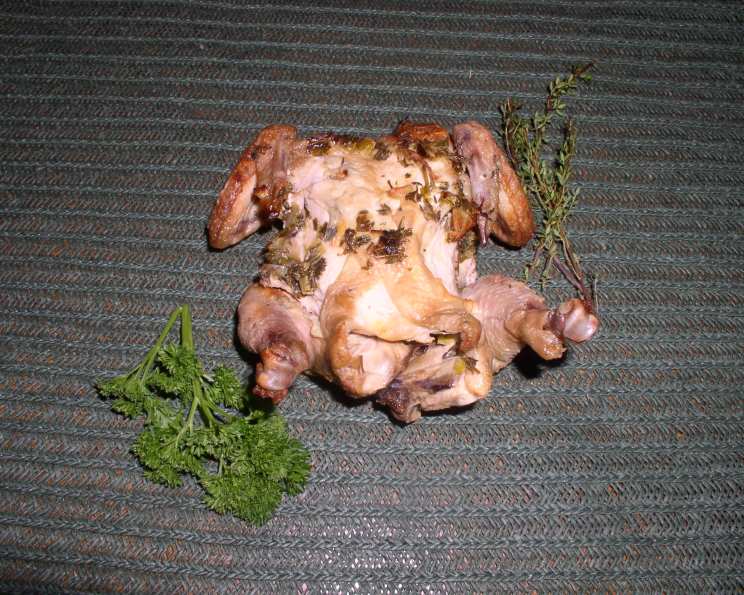
Roasted, Herbed Baby Chickens: A Taste of Simple Elegance
I can still remember the first time I prepared baby chickens. It was a chilly autumn evening, and the aroma of lemon, thyme, and roasting poultry filled my tiny apartment. The golden-brown skin, the tender, juicy meat – it was a revelation. A simple dish, yes, but one that transformed an ordinary weeknight into a special occasion. It was then that I realized the magic of simple, well-executed cooking, and the joy of sharing a delicious meal with loved ones.
Recipe Overview
- Prep Time: 15 minutes
- Cook Time: 30-35 minutes
- Total Time: 45-50 minutes
- Servings: 4
- Yield: 4 baby chickens
- Dietary Type: Omnivore
Ingredients
- 5 1/2 ounces butter, softened
- 2 teaspoons fresh lemon thyme, chopped
- 1 tablespoon fresh parsley, chopped
- 2 spring onions, finely chopped
- 1 teaspoon fresh lemon rind, finely grated
- 2 tablespoons lemon juice
- 1/2 teaspoon salt
- 1/4 teaspoon pepper
- 4 (1 lb) baby chickens
Equipment Needed
- Poultry shears
- Shallow baking dish
- Oven rack
Instructions
-
Begin by preparing the herb butter. In a medium bowl, combine 4 1/2 ounces of the softened butter with the chopped lemon thyme, parsley, finely chopped spring onions, lemon rind, 3/4 of the lemon juice, salt, and pepper. Mix well until all ingredients are evenly incorporated. This fragrant butter will infuse the chickens with incredible flavor.
-
Preheat your oven to 400 degrees F (200 degrees C). Ensuring your oven is properly preheated is crucial for even cooking and beautiful browning.
-
Using your poultry shears, cut down either side of the backbone of each baby chicken. This is best achieved by placing the chicken breast-side down on a cutting board and cutting along either side of the spine. Be careful to avoid cutting yourself.
-
Discard the backbones. (Alternatively, save them in the freezer to make chicken stock later.) Gently flatten the chickens, pressing down on the breastbone to open them up. This technique, known as spatchcocking or butterflying, allows the chickens to cook more evenly and quickly.
-
Carefully lift the skin from the breastbone and legs of each chicken, creating a pocket between the skin and the flesh. This is where the magic happens.
-
Gently push the prepared herb butter mixture between the skin and the flesh of each chicken, distributing it evenly. The butter will melt and baste the chicken from within, resulting in exceptionally moist and flavorful meat.
-
Tuck the wings and neck inward to prevent them from burning during cooking. This also helps to create a more uniform shape for even roasting.
-
Lay the chickens on a rack in a shallow baking dish. The rack allows for better air circulation, promoting even browning on all sides.
-
Brush the chickens with the remaining herb butter and lemon juice mixture. This final brushing will create a beautiful, glossy finish.
-
Bake for 30-35 minutes, or until the juices run clear when the thickest part of the thigh is pierced with a fork or knife. The internal temperature should reach 165 degrees F (74 degrees C). Use a meat thermometer for the most accurate reading.
-
Once cooked, remove the chickens from the oven and let them rest for 5 minutes before serving. This allows the juices to redistribute, resulting in more tender and flavorful meat.
Expert Tips & Tricks
-
For extra crispy skin, pat the chickens dry with paper towels before applying the herb butter. This helps to remove excess moisture, allowing the skin to brown more effectively.
-
If the chickens start to brown too quickly during baking, tent them loosely with foil to prevent burning.
-
Don’t be afraid to experiment with different herbs. Rosemary, sage, or oregano would all be delicious additions to the herb butter.
-
To make the herb butter ahead of time, simply combine all the ingredients and store it in the refrigerator for up to 3 days. Bring to room temperature before using.
-
For even more flavor, consider adding a splash of dry white wine to the baking dish along with a few sprigs of fresh thyme.
Serving & Storage Suggestions
Serve these roasted, herbed baby chickens immediately, accompanied by your favorite sides. They pair perfectly with roasted potatoes, rice pilaf, steamed green beans, or a fresh salad. A chilled Chardonnay or Sauvignon Blanc would also be an excellent complement.
Leftover cooked chicken can be stored in an airtight container in the refrigerator for up to 3-4 days. Reheat in the oven at 350 degrees F (175 degrees C) until warmed through, or shred and use in sandwiches, salads, or soups. While it’s possible to freeze the cooked chicken, the texture may be slightly affected upon thawing.
Nutritional Information
| Nutrient | Amount per Serving | % Daily Value |
|---|---|---|
| Calories | 1453.5 kcal | N/A |
| Calories from Fat | 1174 g | 81% |
| Total Fat | 130.5 g | 200% |
| Saturated Fat | 37.9 g | 189% |
| Cholesterol | 358.7 mg | 119% |
| Sodium | 583.1 mg | 24% |
| Total Carbohydrate | 1.4 g | 0% |
| Dietary Fiber | 0.3 g | 1% |
| Sugars | 0.4 g | 1% |
| Protein | 64 g | 128% |
Note: Nutritional information is an estimate and may vary based on specific ingredients and preparation methods.
Variations & Substitutions
-
For a dairy-free version, substitute the butter with a plant-based butter alternative or olive oil.
-
Add a touch of heat by incorporating a pinch of red pepper flakes into the herb butter.
-
Use different citrus fruits like orange or grapefruit for a unique flavor profile.
-
Stuff the chickens with lemon wedges, garlic cloves, and fresh herbs for added aromatics during roasting.
-
Adapt the recipe to use bone-in chicken breasts or thighs if baby chickens are unavailable. Adjust cooking time accordingly.
FAQs (Frequently Asked Questions)
Q: Can I use dried herbs instead of fresh?
A: While fresh herbs provide the best flavor, dried herbs can be substituted. Use approximately 1 teaspoon of dried herbs for every tablespoon of fresh herbs.
Q: How do I know when the chickens are done?
A: The most accurate way to check for doneness is to use a meat thermometer. The internal temperature should reach 165 degrees F (74 degrees C) in the thickest part of the thigh.
Q: Can I make this recipe with Cornish hens instead of baby chickens?
A: Yes, Cornish hens can be substituted for baby chickens. Adjust the cooking time as needed, as Cornish hens may take slightly longer to cook.
Q: What if I don’t have poultry shears?
A: If you don’t have poultry shears, you can use a sharp kitchen knife to cut along the backbone. Be careful and take your time.
Q: Can I marinate the chickens overnight?
A: While this recipe doesn’t require marinating, you can certainly marinate the chickens overnight in a mixture of lemon juice, herbs, and olive oil for added flavor. Just pat them dry before proceeding with the recipe.
Final Thoughts
This recipe for roasted, herbed baby chickens is a testament to the power of simple ingredients and techniques. It’s a dish that’s both elegant and approachable, perfect for a weeknight dinner or a special occasion. I encourage you to try it and experience the joy of creating something truly delicious. Don’t hesitate to experiment with different herbs and seasonings to make it your own. And most importantly, enjoy the process and share your culinary creation with those you love. Perhaps pair it with a crisp green salad and a glass of chilled white wine for a truly memorable meal!