
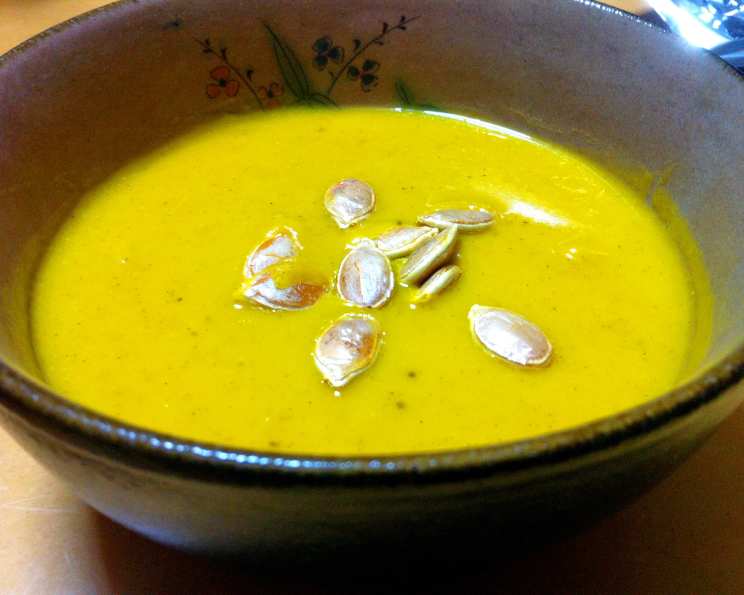
Roasted Kabocha (Japanese Pumpkin) Soup: A Taste of Autumn
There’s a certain magic in the air as the seasons shift, and the vibrant greens of summer give way to the warm hues of autumn. For me, nothing quite captures this feeling like the rich, comforting aroma of roasting squash wafting from the oven. I remember the first time I made this soup, huddled in my tiny apartment kitchen on a blustery October evening. The golden kabocha, with its nutty sweetness, transformed into a velvety smooth elixir that warmed me from the inside out. It was more than just a meal; it was a hug in a bowl, a reminder of the simple joys of home.
Recipe Overview:
- Prep Time: 15 minutes
- Cook Time: 1 hour 5 minutes
- Total Time: 1 hour 20 minutes
- Servings: 4-6
- Dietary Type: Vegetarian
Ingredients:
- 1 medium kabocha squash
- 1 teaspoon olive oil
- 1 medium onion, thinly sliced
- 1 tablespoon butter
- 2 teaspoons chicken bouillon powder
- 2 cups water
- 1/2 teaspoon cinnamon
- 1 2/3 cups milk
- Salt and pepper to taste
Equipment Needed:
- Baking dish
- Large pot
- Blender (or immersion blender)
- Dry pan
Instructions:
-
Preheat your oven to 350°F (175°C). This will ensure the squash roasts evenly and develops its characteristic sweetness.
-
Carefully cut the kabocha in half. It can be quite hard, so use a large, sharp knife and exercise caution. Scoop out the seeds and membranes with a spoon. Don’t discard the seeds just yet!
-
Use a fork to prick the flesh of the kabocha halves all over. This allows steam to escape during roasting and prevents the squash from exploding in the oven. Brush the cut sides with olive oil and place them face down on a baking dish.
-
Bake the kabocha for about 40 minutes at 350°F (175°C), or until the flesh is tender when pierced with a fork. The exact cooking time will depend on the size and ripeness of the squash, so keep an eye on it.
-
While the kabocha is roasting, it’s time to prepare the seeds. Clean and dry them as thoroughly as possible. Moisture can hinder the toasting process. Toast the seeds in a dry pan over medium-high heat for about 5 minutes, or until they are nicely golden brown and fragrant. Be sure to stir them frequently to prevent burning. Alternatively, you can bake them in the oven for 10-20 minutes at 400°F (200°C), spreading them in a single layer on a baking sheet. Set the toasted seeds aside for garnish.
-
In a large pot, melt the butter over medium heat. Add the thinly sliced onion and sauté until soft and translucent. This usually takes about 5-7 minutes. Don’t rush this step; allowing the onions to caramelize slightly will add depth of flavor to the soup.
-
Once the kabocha is soft and cool enough to handle, carefully scoop the flesh out of the skin in chunks and add it to the pot with the sautéed onions. You can wait for it to cool completely, or even roast it already peeled, but roasting it in the skin helps retain moisture and flavor.
-
Add the chicken bouillon powder, water, and cinnamon to the pot. Stir well to combine. Bring the mixture to a simmer, then reduce the heat to low and cover the pot. Simmer for about 20 minutes. This allows the flavors to meld together beautifully. Covering the pot helps to prevent splattering.
-
Carefully pour the hot mixture into a large bowl. In batches, puree the mixture in a blender. Only fill the blender about 3/4 full or less to prevent hot liquid from exploding. Be extremely cautious when blending hot liquids. Return the pureed soup to the pot. If you have an immersion blender, you can simply puree the soup directly in the pot. This eliminates the need for transferring hot liquids and makes cleanup a breeze.
-
Stir in the milk and heat gently over low heat, stirring frequently. Do not boil! You just want to warm the soup through. Season with salt and pepper to taste. Remember to taste as you go and adjust the seasoning accordingly.
-
Ladle the soup into bowls and garnish with the toasted kabocha seeds. Serve immediately and enjoy the delicious flavors of autumn!
Expert Tips & Tricks:
- For a richer, creamier soup, use heavy cream instead of milk.
- If you want a vegan version, substitute vegetable bouillon powder for the chicken bouillon and use almond, soy, or coconut milk instead of dairy milk.
- A pinch of nutmeg or ginger can also be added to enhance the warm, spicy notes of the soup.
- Roasting a head of garlic alongside the kabocha adds a wonderful depth of flavor. Simply drizzle the garlic with olive oil, wrap it in foil, and roast it alongside the squash. Squeeze the roasted garlic cloves into the soup before pureeing.
- For a smoother texture, strain the soup through a fine-mesh sieve after pureeing.
Serving & Storage Suggestions:
This Roasted Kabocha Soup is best served hot, garnished with the toasted squash seeds. A swirl of cream or a drizzle of olive oil adds a touch of elegance. It pairs perfectly with a crusty bread for dipping.
Leftover soup can be stored in an airtight container in the refrigerator for up to 3-4 days. It can also be frozen for up to 2-3 months. To reheat, simply warm the soup gently over low heat, stirring frequently. If frozen, thaw the soup in the refrigerator overnight before reheating.
Nutritional Information:
| Nutrient | Amount per Serving | % Daily Value |
|---|---|---|
| Calories | 210 kcal | 11% |
| Total Fat | 9g | 14% |
| Saturated Fat | 5g | 25% |
| Cholesterol | 15mg | 5% |
| Sodium | 450mg | 19% |
| Total Carbohydrate | 28g | 9% |
| Dietary Fiber | 4g | 16% |
| Sugars | 9g | |
| Protein | 5g | 10% |
Nutritional information is an estimate and may vary depending on specific ingredients and portion sizes.
Variations & Substitutions:
- Spicy Kabocha Soup: Add a pinch of red pepper flakes or a dash of hot sauce to the soup for a little heat.
- Maple-Glazed Kabocha Soup: Drizzle the roasted kabocha with maple syrup before baking for a sweeter, more caramelized flavor.
- Coconut Kabocha Curry Soup: Replace the milk with coconut milk and add a tablespoon of red curry paste for an exotic twist.
- Apple Kabocha Soup: Add diced apples to the pot along with the kabocha for a sweet and tart flavor combination.
- Kabocha and Ginger Soup: Add a tablespoon of freshly grated ginger to the pot along with the kabocha for a warming and aromatic soup.
FAQs (Frequently Asked Questions):
Q: Can I use a different type of squash?
A: Yes, you can substitute butternut squash, acorn squash, or even pumpkin for the kabocha. However, the flavor and texture may vary slightly.
Q: Do I have to roast the kabocha?
A: While roasting is highly recommended for the best flavor, you can also steam or boil the kabocha until tender.
Q: Can I make this soup ahead of time?
A: Absolutely! In fact, the flavors often meld together even more beautifully when the soup is made a day or two in advance.
Q: How do I prevent the soup from curdling when I add the milk?
A: Make sure the soup is not boiling when you add the milk, and stir frequently. You can also temper the milk by whisking a small amount of the hot soup into the milk before adding it to the pot.
Q: Can I use broth instead of water and bouillon?
A: Yes, you can substitute chicken or vegetable broth for the water and bouillon. This will add even more flavor to the soup.
Final Thoughts:
This Roasted Kabocha Soup is a celebration of autumn’s bounty, a simple yet elegant dish that’s perfect for a cozy night in or a festive gathering. It’s a recipe that’s both comforting and nourishing, a true embodiment of seasonal flavors. I encourage you to try it, experiment with the variations, and make it your own. Share your creations and feedback – I’d love to hear how it turns out for you. Pair this soup with a grilled cheese sandwich for a comforting lunch, or serve it as an appetizer before a hearty fall feast. Enjoy!