
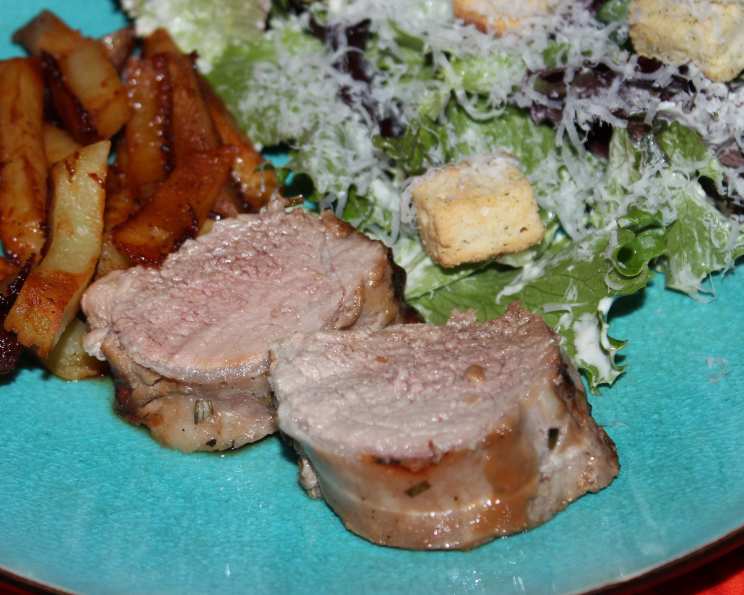
The Secret to Succulent Roasted Pork Tenderloin
I still remember the first time I nervously roasted a pork tenderloin for a dinner party. The pressure was on! I wanted something elegant yet approachable, a dish that would impress my guests without requiring me to spend the entire evening chained to the stove. After what felt like endless research and a few near-disasters, I stumbled upon this simple yet brilliant recipe. The dry brine, the high-heat roasting, it all seemed a little unorthodox, but the results were astonishing: a perfectly cooked, juicy, and flavorful pork tenderloin that became an instant crowd-pleaser, and a mainstay in my cooking repertoire.
Recipe Overview
- Prep Time: 15 minutes
- Cook Time: 18 minutes
- Total Time: 33 minutes
- Servings: 8
- Dietary Type: Gluten-Free, Dairy-Free
Ingredients
- 2 lbs pork tenderloin, rinsed, silver skin removed and dried
- 3 tablespoons brown sugar
- 1 tablespoon seasoned herbal salt
- 1 teaspoon fresh rosemary, minced (use your favorite herbs)
- ½ teaspoon fresh cracked black pepper
Equipment Needed
- Small roasting pan
- Non-stick foil
- Instant-read thermometer
Instructions
-
Begin by preheating your oven to a blazing 500 degrees Fahrenheit. Positioning a rack at the bottom of the oven is key for even heat distribution.
-
Now, for the magic ingredient: the dry brine. In a small bowl, thoroughly mix together the brown sugar, seasoned herbal salt, minced rosemary, and fresh cracked black pepper. The aromatic blend will transform the pork.
-
Generously rub the dry brine mixture all over the pork tenderloins, ensuring every surface is coated. Let the tenderloins infuse with the flavors for at least 1 hour. This “dry brining” process draws moisture into the meat, resulting in a more tender and flavorful final product.
-
Line your smallest roasting pan with non-stick foil. This makes cleanup a breeze! Place the tenderloins side by side in the pan, making sure they aren’t touching. This allows for even browning.
-
Roast the tenderloins for 10 minutes, then carefully flip them over. Continue roasting until the internal temperature registers 155°F on an instant-read thermometer, about 8 minutes more. Remember, a thermometer is your best friend in this recipe! Don’t rely on guesswork.
-
Remove the roasted pork tenderloins from the oven and let them rest for about 10 minutes. During this resting period, the internal temperature will continue to rise, reaching approximately 160°F. This resting period is crucial; it allows the juices to redistribute throughout the meat, ensuring maximum tenderness and preventing them from running out when you slice it.
-
If desired, deglaze the pan with a splash of water, wine, or apple juice. Scrape up any browned bits from the bottom of the pan and pour the resulting sauce over the pork tenderloin slices.
-
Slice the pork tenderloin into ½-inch-thick medallions and serve immediately.
Expert Tips & Tricks
-
Don’t skip the dry brine! It’s the secret to the pork’s incredible tenderness and flavor. If you have more time, you can even let the pork brine in the refrigerator for up to 4 hours.
-
High heat is key. The high oven temperature creates a beautiful crust on the outside of the pork while keeping the inside juicy.
-
Use a reliable thermometer. An instant-read thermometer is essential for ensuring the pork is cooked to the perfect temperature. Insert the thermometer into the thickest part of the tenderloin, being careful not to touch any bone.
-
Let the pork rest! This is perhaps the most crucial step. Don’t be tempted to slice into the pork immediately after it comes out of the oven. The resting period allows the juices to redistribute, resulting in a much more tender and flavorful final product.
-
If you are having trouble getting the internal temp up, turn the oven to broil the last minute or two to give it the little extra push.
Serving & Storage Suggestions
Serve the roasted pork tenderloin hot, sliced into medallions. It pairs beautifully with roasted vegetables, mashed potatoes, rice pilaf, or a fresh salad. Drizzle with the pan sauce for added flavor.
Leftover pork tenderloin can be stored in an airtight container in the refrigerator for up to 3-4 days. To reheat, gently warm in a skillet over low heat or in a microwave. Be careful not to overcook it, or it will become dry. The pork can also be sliced thinly and used in sandwiches or salads.
For longer storage, you can freeze the cooked pork tenderloin. Wrap it tightly in plastic wrap and then in foil, or place it in a freezer-safe bag. Frozen pork tenderloin can be stored for up to 2-3 months. Thaw it in the refrigerator overnight before reheating.
Nutritional Information
| Nutrient | Amount per Serving | % Daily Value |
|---|---|---|
| Calories | 156.3 kcal | N/A |
| Calories from Fat | 36 g | 23% |
| Total Fat | 4 g | 6% |
| Saturated Fat | 1.3 g | 6% |
| Cholesterol | 73.8 mg | 24% |
| Sodium | 932.6 mg | 38% |
| Total Carbohydrate | 5.2 g | 1% |
| Dietary Fiber | 0.1 g | 0% |
| Sugars | 5 g | 20% |
| Protein | 23.5 g | 46% |
Variations & Substitutions
-
Herb variations: Feel free to experiment with different herbs in the dry brine. Thyme, sage, oregano, or a combination of your favorites would all work well.
-
Spice it up: Add a pinch of red pepper flakes to the dry brine for a touch of heat.
-
Sweet and savory: Drizzle a balsamic glaze over the pork tenderloin after roasting for a sweet and tangy flavor.
-
Citrus zest: Add the zest of an orange or lemon to the dry brine for a bright, citrusy note.
-
Consider using smoked paprika to give the pork a subtle smoky flavor.
FAQs (Frequently Asked Questions)
Q: What is the “silver skin” on the pork tenderloin, and why should I remove it?
A: The silver skin is a thin, silvery membrane on the surface of the pork tenderloin. It’s tough and doesn’t break down during cooking, so removing it will result in a more tender and pleasant eating experience.
Q: Can I use a different type of salt for the dry brine?
A: Yes, you can use kosher salt or sea salt in place of the seasoned herbal salt, but you may need to adjust the amount to taste. Start with a smaller amount and add more if needed.
Q: What if my pork tenderloin is thicker or thinner than 2 lbs?
A: Adjust the cooking time accordingly. Use a thermometer to ensure the pork reaches an internal temperature of 155°F.
Q: Can I cook the pork tenderloin in a cast iron skillet instead of a roasting pan?
A: Yes, a cast iron skillet works well for roasting pork tenderloin. Just make sure the skillet is oven-safe.
Q: Why do I need to let the pork rest after roasting?
A: Resting allows the juices to redistribute throughout the meat, resulting in a more tender and flavorful final product. If you slice into the pork immediately after it comes out of the oven, the juices will run out, leaving you with dry meat.
Final Thoughts
This roasted pork tenderloin recipe is a true winner – simple enough for a weeknight meal, yet elegant enough for a special occasion. The combination of the dry brine and high-heat roasting yields a remarkably tender, juicy, and flavorful dish that’s sure to impress. So, give it a try, and don’t be afraid to experiment with different herbs and spices to create your own signature version. And most importantly, share your culinary creations with friends and family! Let me know how it turns out, and what your favorite variations are. Bon appétit!