
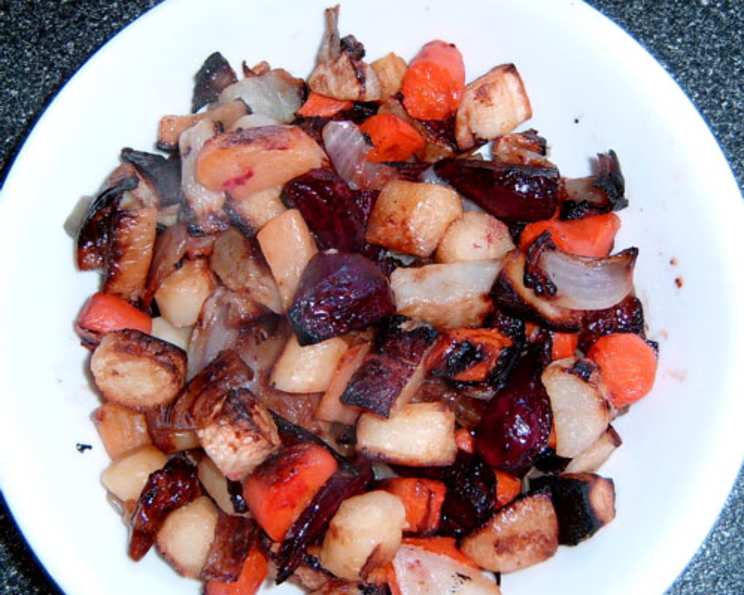
The Rustic Charm of Roasted Root Vegetables
There’s something magical about the transition from summer’s bright, fleeting produce to the earthy, comforting flavors of fall and winter. I remember one particularly crisp November afternoon, helping my grandmother in her sprawling garden as she harvested the last of the season’s bounty. The air was thick with the scent of woodsmoke and damp soil. We pulled carrots, beets, and turnips from the ground, their skins dusted with earth. Back in her cozy kitchen, she’d transform those humble roots into a vibrant medley of roasted vegetables, their natural sweetness intensified by the heat of the oven. The simple act of roasting brought out the best in each vegetable, creating a symphony of flavors and textures that warmed us from the inside out. This dish, in its beautiful simplicity, is a taste of home for me, a connection to those cherished memories.
Recipe Overview
- Prep Time: 30 minutes
- Cook Time: 1 hour
- Total Time: 1 hour 30 minutes
- Servings: 12
- Dietary Type: Vegan, Gluten-Free, Dairy-Free
Ingredients
- 1 bunch beets
- 1 lb carrots
- 1 lb red potatoes
- 2 large red onions
- 1 lb parsnips
- 1 lb rutabaga
- ½ lb turnip
- Olive oil
- Kosher salt
Equipment Needed
- Large cutting board
- Chef’s knife
- Vegetable peeler
- Two large roasting pans
Instructions
- Preheat your oven to a high heat of 500-550°F (260-290°C). This high temperature is key to achieving that desirable caramelization and tender interior.
- Begin by prepping your vegetables. Peel the beets, carrots, parsnips, rutabaga, and turnip. There’s no need to peel the potatoes, as their skin adds a nice texture and rustic element.
- Cut all the vegetables into roughly 1-inch cubes or wedges. Consistency in size is important for even cooking. However, keep the beets separate from the other vegetables. Their vibrant color can bleed and stain the other vegetables during roasting.
- In a large bowl (or two, if necessary), coat the non-beet vegetables generously with olive oil. Make sure each piece is well coated for optimal roasting. Then, sprinkle them liberally with kosher salt. Don’t be shy with the salt, as it helps to draw out the natural sweetness of the vegetables.
- Repeat this process with the beets in a separate bowl, ensuring they are well coated with olive oil and kosher salt.
- Transfer the oiled and seasoned vegetables to your roasting pans. Spread them out in a single layer, making sure not to overcrowd the pans. Overcrowding can lead to steaming instead of roasting, resulting in softer, less caramelized vegetables. Place the beets in their own roasting pan.
- Roast the vegetables at 500-550°F (260-290°C), stirring every ten minutes or so, for up to an hour, or until the vegetables are tender when pierced with a fork. The exact roasting time will depend on the size of your vegetable pieces and the accuracy of your oven temperature, so keep a close eye on them. The goal is to achieve a golden-brown, slightly caramelized exterior and a tender, yielding interior.
- Once the vegetables are tender and nicely browned, remove them from the oven.
- Mix the roasted beets with the other roasted vegetables. The beets will impart a beautiful reddish hue to the other vegetables, adding visual appeal.
- Serve immediately and enjoy the delightful flavors of roasted root vegetables.
Expert Tips & Tricks
- Don’t wash your vegetables after peeling and cutting! Thoroughly drying them before coating with oil is key to better caramelization. Any excess water will steam the vegetables instead of roasting them.
- Roasting at a high temperature is essential for achieving that desirable caramelization. Don’t be afraid to crank up the heat! Just keep a close eye on the vegetables to prevent burning.
- Consider adding herbs like rosemary, thyme, or sage to elevate the flavor profile. Toss them with the vegetables before roasting for a fragrant and savory dish.
- For easier cleanup, line your roasting pans with parchment paper.
- If you find the vegetables are browning too quickly, you can lower the oven temperature slightly and continue roasting until they are tender.
- Add a touch of sweetness with a drizzle of maple syrup or balsamic glaze after roasting for an extra layer of flavor.
Serving & Storage Suggestions
Serve your roasted root vegetables hot, as a delightful side dish alongside your favorite protein. They pair beautifully with roasted chicken, pork, lamb, or a hearty vegetarian main course. Leftovers can be stored in an airtight container in the refrigerator for up to 3-4 days. To reheat, simply spread the vegetables on a baking sheet and warm them in a preheated oven at 350°F (175°C) until heated through. You can also reheat them in a skillet over medium heat or in the microwave. These roasted vegetables also make a delicious addition to salads or grain bowls.
Nutritional Information
| Nutrient | Amount per Serving | % Daily Value |
|---|---|---|
| Calories | 150 kcal | 8% |
| Total Fat | 7g | 11% |
| Saturated Fat | 1g | 5% |
| Cholesterol | 0mg | 0% |
| Sodium | 150mg | 7% |
| Total Carbohydrate | 20g | 7% |
| Dietary Fiber | 5g | 20% |
| Sugars | 6g | – |
| Protein | 2g | 4% |
Note: Nutritional information is an estimate and may vary based on specific ingredients and portion sizes.
Variations & Substitutions
- Spice it up: Add a pinch of red pepper flakes for a touch of heat.
- Sweeten the deal: Drizzle with maple syrup or honey before roasting for a caramelized finish.
- Herbaceous twist: Toss with fresh rosemary, thyme, or sage before roasting.
- Citrus zing: Add lemon or orange zest for brightness.
- Different vegetables: Feel free to substitute or add other root vegetables like sweet potatoes, celeriac, or Jerusalem artichokes.
- Vegan parmesan: Sprinkle with nutritional yeast after roasting for a cheesy flavor.
FAQs (Frequently Asked Questions)
Q: Why do I need to keep the beets separate during roasting?
A: Beets have a strong pigment that can bleed and stain the other vegetables, turning them an unappetizing color. Roasting them separately prevents this.
Q: Can I use pre-cut vegetables to save time?
A: While you can use pre-cut vegetables, they may not roast as evenly as freshly cut vegetables. If using pre-cut, make sure the pieces are roughly the same size.
Q: What if my vegetables are not tender after an hour?
A: The roasting time can vary depending on your oven and the size of the vegetable pieces. If they’re not tender, continue roasting, checking every 10 minutes, until they reach the desired tenderness.
Q: Can I use a different oil instead of olive oil?
A: Yes, you can use other oils with a high smoke point, such as avocado oil or grapeseed oil.
Q: How do I prevent the vegetables from sticking to the pan?
A: Make sure the vegetables are well-coated with oil and spread out in a single layer on the roasting pan. You can also line the pan with parchment paper for easier cleanup and to prevent sticking.
Final Thoughts
Roasted root vegetables are a testament to the simple beauty of seasonal cooking. They are a blank canvas for your culinary creativity, offering endless possibilities for customization and flavor exploration. So, embrace the abundance of the fall and winter harvest, gather your favorite root vegetables, and embark on a culinary adventure. Don’t be afraid to experiment with different herbs, spices, and seasonings to create your own signature version of this classic dish. And most importantly, enjoy the process of creating a wholesome and delicious meal that nourishes both body and soul. Share your creations and feedback – happy cooking!