
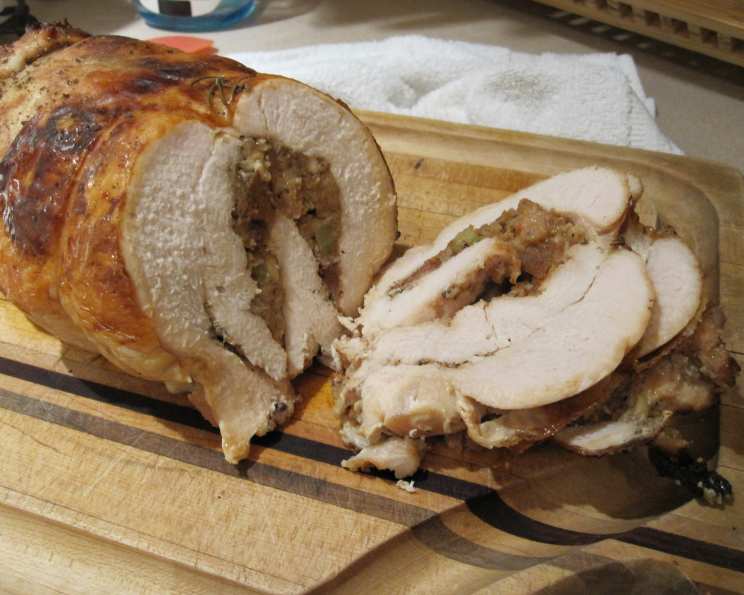
Roasted Turkey Roulade: A Thanksgiving Game Changer (Barefoot Contessa Style)
The first time I made this turkey roulade, it was a desperate attempt to salvage a holiday gone wrong. The oven decided to quit halfway through roasting a twenty-pound bird, and panic set in. I remembered seeing Ina Garten’s recipe, and with a quick run to the store, I managed to pull off a delicious, surprisingly elegant Thanksgiving dinner. The aroma of sausage, cranberries, and rosemary filled the air, and the juicy, perfectly cooked turkey made everyone forget the earlier disaster. Now, it’s a tradition, a stress-free centerpiece that lets me actually enjoy the holiday.
Recipe Overview
- Prep Time: 45 minutes
- Cook Time: 1 hour 45 minutes
- Total Time: 2 hours 30 minutes
- Servings: 6
- Yield: 1 roulade
- Dietary Type: Not specified (Contains meat, dairy, and may not be suitable for all dietary restrictions)
Ingredients
- 3/4 cup large-diced dried figs, stems removed
- 3/4 cup dried cranberries
- 1/2 cup Calvados or 1/2 cup brandy
- 4 tablespoons unsalted butter
- 1 1/2 cups diced onions (2 onions)
- 1 cup celery (3 stalks, 1/2-inch diced)
- 3/4 lb pork sausage, casings removed (sweet and hot mixed)
- 1 1/2 tablespoons chopped fresh rosemary leaves
- 3 tablespoons pine nuts, toasted
- 3 cups Pepperidge Farm herb-seasoned stuffing mix
- 1 1/2 cups chicken stock, preferably homemade
- 1 extra-large egg, beaten
- Kosher salt & freshly ground black pepper
- 1 turkey breast, whole (2 halves)
- 3 tablespoons unsalted butter, melted
Equipment Needed
- Small saucepan
- Large (12-inch) skillet
- Large bowl
- Baking rack
- Sheet pan
- Cutting board
- Kitchen twine
- Thermometer
- Gratin dish (optional, for leftover stuffing)
Instructions
-
Infuse the Fruit: In a small saucepan, combine the dried figs and dried cranberries. Pour in the Calvados (or brandy) and 1/2 cup of water. Bring the mixture to a boil over medium heat, then reduce the heat to low and simmer for 2 minutes. Remove from heat and set aside to allow the fruit to plump up and absorb the liquid.
-
Sauté the Aromatics and Sausage: While the fruit is simmering, melt the 4 tablespoons of butter in a large (12-inch) skillet over medium heat. Add the diced onions and celery and sauté until softened, about 5 minutes. Add the pork sausage, breaking it into small pieces with a fork. Continue to sauté, stirring frequently, for 10 minutes, or until the sausage is cooked through and nicely browned.
-
Combine Filling Ingredients: Add the figs and cranberries, along with their liquid, to the skillet with the sausage mixture. Stir in the chopped fresh rosemary and toasted pine nuts. Cook for an additional 2 minutes, scraping up any flavorful browned bits from the bottom of the pan with a wooden spoon. This step adds depth and richness to the stuffing.
-
Prepare the Stuffing: Place the stuffing mix in a large bowl. Pour the sausage mixture from the skillet over the stuffing mix. Add the chicken stock, beaten egg, 1 teaspoon of kosher salt, and 1/2 teaspoon of freshly ground black pepper. Stir thoroughly to combine all ingredients. The stuffing should be moist but not soggy. At this point, the stuffing can be prepared ahead of time and stored in the refrigerator overnight. This allows the flavors to meld together beautifully.
-
Preheat the Oven: Preheat your oven to 325 degrees Fahrenheit (160 degrees Celsius). Place a baking rack on a sheet pan. This allows for even cooking and prevents the bottom of the roulade from becoming soggy.
-
Prepare the Turkey Breast: Lay the butterflied turkey breast skin side down on a cutting board. Pat it dry with paper towels. Sprinkle the meat evenly with 2 teaspoons of kosher salt and 1 teaspoon of freshly ground black pepper. This seasons the turkey from the inside out.
-
Assemble the Roulade: Spread the prepared stuffing in a 1/2-inch-thick layer over the turkey breast, leaving a half-inch border on all sides. Be careful not to overstuff the turkey, as this will make it difficult to roll. Don’t mound the stuffing; keep it relatively even.
-
Roll and Tie: Starting at one end, roll the turkey breast tightly like a jelly roll. Tuck in any stuffing that attempts to escape from the sides. Use kitchen twine to tie the roast firmly every 2 inches to create a compact cylinder. This will help the roulade hold its shape during cooking.
-
Roast the Turkey: Place the stuffed turkey breast seam side down on the rack on the prepared sheet pan. Brush the top of the roulade generously with the melted butter. Sprinkle with additional salt and pepper. Roast in the preheated oven for 1 3/4 to 2 hours, or until a meat thermometer inserted into the center of the roulade registers 150 degrees Fahrenheit (66 degrees Celsius). It’s a good idea to test in a few places to ensure even doneness.
-
Rest and Carve: Once the turkey reaches the desired temperature, remove it from the oven and cover it loosely with aluminum foil. Allow it to rest at room temperature for 15 minutes. This allows the juices to redistribute, resulting in a more tender and flavorful roast. After resting, carefully remove the kitchen twine and carve the roulade into 1/2-inch-thick slices. Serve warm.
-
Bake Extra Stuffing (Optional): If you have leftover stuffing, place it in a buttered gratin dish and bake it alongside the turkey for the last 45 minutes of the roasting time. This ensures that the extra stuffing is cooked through and nicely browned.
Expert Tips & Tricks
- Make-Ahead Stuffing: Prepare the stuffing a day in advance. This allows the flavors to meld and saves time on the day of cooking.
- Internal Temperature is Key: Use a reliable meat thermometer to ensure the turkey reaches a safe internal temperature.
- Don’t Overstuff: Avoid overstuffing the turkey breast to prevent it from bursting during cooking.
- Toasting Pine Nuts: Toasting the pine nuts enhances their flavor and adds a pleasant crunch to the stuffing. Toast them in a dry skillet over medium heat until golden brown, being careful not to burn them.
- Brandy Alternative: If you don’t have Calvados or brandy, you can substitute apple juice or even chicken broth for the simmering liquid.
- Prevent Burning: If the turkey begins to brown too quickly during roasting, tent it with aluminum foil to prevent burning.
Serving & Storage Suggestions
Serve the Roasted Turkey Roulade warm, sliced into 1/2-inch-thick portions. Arrange the slices attractively on a platter and garnish with fresh rosemary sprigs or cranberries for a festive touch. This dish pairs beautifully with classic Thanksgiving sides such as mashed potatoes, gravy, green bean casserole, and cranberry sauce.
Leftover roulade can be stored in an airtight container in the refrigerator for up to 3-4 days. To reheat, gently warm the slices in a covered dish in the oven or microwave until heated through. You can also freeze leftover slices for longer storage (up to 2-3 months). Thaw overnight in the refrigerator before reheating.
Nutritional Information
| Nutrient | Amount per Serving | % Daily Value |
|---|---|---|
| Calories | 723 kcal | N/A |
| Total Fat | 46.6 g | 71% |
| Saturated Fat | 17.9 g | 89% |
| Cholesterol | 241.8 mg | 80% |
| Sodium | 590.4 mg | 24% |
| Carbohydrate | 20.7 g | 6% |
| Dietary Fiber | 3.4 g | 13% |
| Sugars | 12.6 g | N/A |
| Protein | 54.5 g | 108% |
Note: Nutritional information is an estimate and may vary based on specific ingredients and portion sizes.
Variations & Substitutions
- Gluten-Free: Use gluten-free stuffing mix for a gluten-free option.
- Different Sausage: Experiment with different types of sausage, such as Italian sausage, chorizo, or even vegetarian sausage.
- Dried Fruit Variations: Substitute other dried fruits like apricots, cherries, or golden raisins for the figs and cranberries.
- Nut-Free: Omit the pine nuts or substitute them with sunflower seeds or pumpkin seeds for a nut-free version.
- Herb Variations: Use different herbs, such as thyme, sage, or parsley, in place of or in addition to the rosemary.
- Vegetable Additions: Add diced vegetables like mushrooms, carrots, or bell peppers to the stuffing for extra flavor and nutrients.
FAQs (Frequently Asked Questions)
Q: Can I use a bone-in turkey breast for this recipe?
A: It’s best to use a boneless, butterflied turkey breast for easier rolling and even cooking. A bone-in breast would be difficult to roll into a roulade.
Q: How do I butterfly the turkey breast?
A: If your turkey breast isn’t already butterflied, you can do it yourself by slicing it horizontally through the center, almost all the way through, then opening it up like a book.
Q: Can I make this recipe ahead of time?
A: Yes, you can prepare the stuffing and assemble the roulade a day in advance. Store it covered in the refrigerator and roast it the next day. Allow an extra 15-20 minutes of cooking time if roasting from cold.
Q: What is Calvados?
A: Calvados is an apple brandy from the Normandy region of France. It adds a unique apple flavor to the dish, but you can substitute with regular brandy or even apple juice.
Q: How do I know when the turkey is done?
A: The best way to ensure the turkey is cooked through is to use a meat thermometer. Insert it into the thickest part of the roulade, avoiding the stuffing. It should register 150 degrees Fahrenheit (66 degrees Celsius). Remember the temperature will rise slightly during the resting period.
Final Thoughts
This Roasted Turkey Roulade is more than just a recipe; it’s an invitation to create a memorable and stress-free holiday meal. The combination of savory sausage, sweet dried fruits, and fragrant rosemary creates a symphony of flavors that will delight your guests. Don’t be afraid to experiment with different variations and substitutions to make it your own. I hope this recipe becomes a cherished tradition in your home, just as it has in mine. Share your creations and feedback – I can’t wait to hear how it turns out for you! Consider serving it with a crisp, dry white wine or a light-bodied red for a truly exceptional culinary experience.