
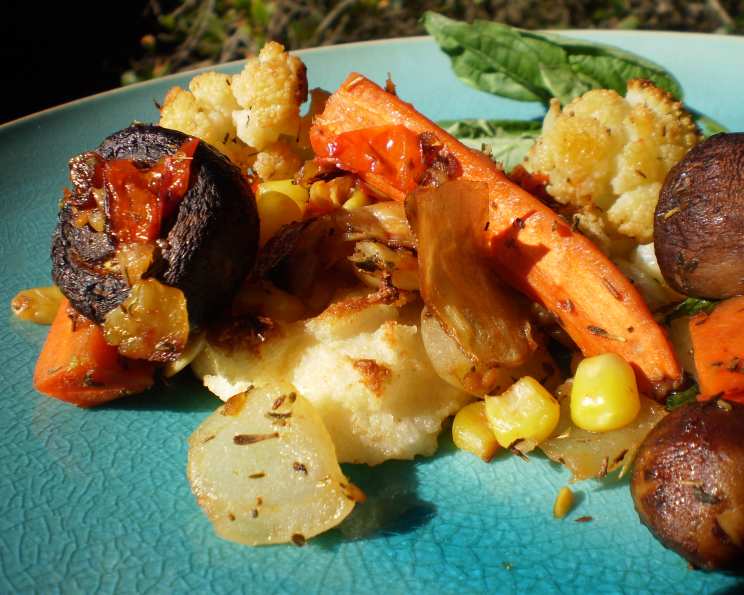
Roasted Vegetable Ragout With Polenta: A Rustic Celebration of Flavor
There’s something magical about a rustic vegetable ragout, isn’t there? I remember my grandmother, a true kitchen sorceress, making a similar dish every autumn with the last of the garden’s bounty. The aroma of roasting vegetables, infused with herbs, would fill her cozy farmhouse. The heartiness of the ragout paired with creamy polenta always warmed us from the inside out on crisp evenings. This recipe captures that same cozy feeling, a symphony of flavors and textures that feels both comforting and elegant.
Recipe Overview
- Prep Time: 25 minutes
- Cook Time: 45 minutes
- Total Time: 1 hour 10 minutes
- Servings: 6
- Dietary Type: Vegetarian
Ingredients
For the Polenta:
- 1 ¾ cups vegetable broth or chicken broth
- ¼ teaspoon dry mustard
- 1 pinch cayenne powder
- 1 cup yellow cornmeal
For the Vegetable Ragout:
- 1 large leek, trimmed, halved and rinsed well
- 2 cups small cauliflower florets
- 1 cup baby carrots, halved lengthwise
- 8 ounces baby bella mushrooms or white mushrooms
- 4 garlic cloves, coarsely chopped
- 2 tablespoons olive oil
- 1 cup fresh corn or frozen corn
- 1 roma tomato, chopped
- ¼ cup thinly sliced basil leaves
- 1 tablespoon fresh marjoram
- 1 tablespoon fresh thyme
Equipment Needed
- 8-inch glass baking dish
- Large saucepan
- Whisk
- Large bowl
- Large roasting pan
- Dutch oven
- Baking sheet
- Foil
- Cooking spray
Instructions
-
Prepare the Polenta: Coat an 8-inch glass baking dish with cooking spray. This ensures the polenta releases easily after it sets.
-
In a large saucepan, combine 1 ¾ cups vegetable broth (or chicken broth), ¼ teaspoon dry mustard, and a pinch of cayenne powder. Bring the mixture to a boil over medium-high heat. The mustard and cayenne add a subtle depth of flavor that complements the sweetness of the cornmeal.
-
Reduce the heat to medium and whisk in 1 cup yellow cornmeal gradually to prevent lumps from forming. Continuous whisking is key to a smooth polenta.
-
Reduce the heat to medium-low, cover the saucepan, and cook for 5 minutes, or until the polenta has thickened, stirring occasionally to prevent sticking. The polenta should have a creamy, porridge-like consistency.
-
Remove the saucepan from the heat and pour the cooked polenta into the prepared baking dish. Set aside to firm up while you prepare the ragout. It will take about 20-30 minutes to reach a good consistency.
-
Prepare the Ragout: Preheat your oven to 425 degrees Fahrenheit (220 degrees Celsius). High heat is essential for roasting the vegetables properly and developing their natural sweetness.
-
Cut off and discard the dark green top from the leek. Cut the remaining leek into 1-inch slices and place them in a large bowl. Leeks can trap dirt, so make sure to rinse them thoroughly after slicing.
-
Add 2 cups small cauliflower florets, 1 cup baby carrots (halved lengthwise), 8 ounces baby bella mushrooms (or white mushrooms), and 4 coarsely chopped garlic cloves to the bowl with the leeks.
-
Drizzle 2 tablespoons olive oil over the vegetables and toss to coat evenly. Ensure that all the vegetables are lightly coated in oil for optimal roasting.
-
Spread the vegetables in a single layer in a large roasting pan. Avoid overcrowding the pan, as this can steam the vegetables instead of roasting them properly. If necessary, use two roasting pans.
-
Roast the vegetables for 8 minutes.
-
Remove the pan from the oven and stir in 1 cup fresh corn (or frozen corn) and 1 chopped roma tomato. Stirring at this stage helps distribute the corn and tomatoes evenly among the other vegetables.
-
Return the pan to the oven and roast for an additional 20-25 minutes, or until the vegetables are tender and slightly caramelized. Check for doneness by piercing a carrot or cauliflower floret with a fork; it should be easily pierced.
-
Remove the roasting pan from the oven and transfer the roasted vegetables and any accumulated juices to a large Dutch oven. The Dutch oven will allow the flavors to meld together beautifully.
-
Place the Dutch oven over medium heat. Cook the vegetables for 5-10 minutes, or until the sauce has thickened slightly. This step concentrates the flavors and creates a richer, more cohesive ragout.
-
Stir in ¼ cup thinly sliced basil leaves, 1 tablespoon fresh marjoram, and 1 tablespoon fresh thyme. These fresh herbs add a vibrant aroma and a burst of herbaceous flavor to the ragout.
-
Prepare the Polenta Squares: Meanwhile, preheat your broiler with the top rack positioned 4-6 inches from the heat source. This ensures that the polenta squares will brown evenly without burning.
-
Line a baking sheet with foil and coat it with cooking spray. This prevents the polenta from sticking to the baking sheet.
-
Cut the polenta into 12 squares and place them on the prepared baking sheet.
-
Broil the polenta squares for 5-8 minutes, or until they are lightly browned and slightly crispy on top. Watch carefully to prevent burning.
-
Assemble and Serve: To serve, place 2 polenta squares on each plate and top with a generous portion of the vegetable ragout. Garnish with extra basil leaves, if desired.
Expert Tips & Tricks
- Roasting Vegetables to Perfection: Don’t overcrowd the roasting pan. If necessary, use two pans to ensure even browning. Roasting brings out the natural sweetness of the vegetables, adding depth to the ragout.
- Herbs: Feel free to experiment with other herbs like rosemary or oregano. Dried herbs can be used if fresh aren’t available, but use half the amount as they are more concentrated.
- Polenta Consistency: For a creamier polenta, add a knob of butter or a drizzle of olive oil at the end of cooking.
- Make-Ahead: The ragout can be made a day or two in advance. The flavors will meld together even more as it sits. Store it in an airtight container in the refrigerator.
- Vegetable Variations: Feel free to swap out vegetables based on what’s in season or what you have on hand. Squash, zucchini, eggplant, or bell peppers would all be excellent additions.
Serving & Storage Suggestions
Serve the roasted vegetable ragout with polenta immediately for the best flavor and texture. The warm ragout and crispy polenta make a comforting and satisfying meal. Leftover ragout can be stored in an airtight container in the refrigerator for up to 3 days. Reheat gently on the stovetop or in the microwave until heated through. The polenta squares are best eaten fresh, but can also be stored in the refrigerator and reheated in the oven or toaster oven to regain some crispness. Avoid storing at room temperature for more than 2 hours to prevent spoilage. Freezing is not recommended as it can alter the texture of the polenta and vegetables.
Nutritional Information
| Nutrient | Amount per Serving | % Daily Value |
|---|---|---|
| Calories | 290 kcal | 15% |
| Total Fat | 12g | 18% |
| Saturated Fat | 2g | 10% |
| Cholesterol | 0mg | 0% |
| Sodium | 100mg | 4% |
| Total Carbohydrate | 40g | 13% |
| Dietary Fiber | 8g | 32% |
| Sugars | 7g | |
| Protein | 8g | 16% |
Note: Nutritional information is an estimate and can vary based on specific ingredients and portion sizes.
Variations & Substitutions
- Vegan Polenta: Ensure you use vegetable broth and avoid any animal products.
- Gluten-Free: This recipe is naturally gluten-free.
- Spicy Kick: Add a pinch of red pepper flakes to the ragout for a little heat.
- Cheese Lovers: A sprinkle of grated Parmesan cheese over the polenta adds a salty, savory element (omit for vegan diets).
- Winter Variation: Substitute the fresh corn and tomatoes with root vegetables like parsnips and sweet potatoes for a hearty winter ragout.
- Mediterranean Twist: Add Kalamata olives, sun-dried tomatoes, and feta cheese (omit for vegan diets) for a Mediterranean-inspired flavor profile.
FAQs (Frequently Asked Questions)
Q: Can I use pre-cooked polenta to save time?
A: Yes, pre-cooked polenta logs can be sliced and broiled according to the recipe instructions. However, freshly made polenta has a superior flavor and texture.
Q: What can I substitute for the leeks?
A: If leeks are unavailable, you can use yellow onions or shallots as a substitute. Sauté them lightly before roasting them with the other vegetables.
Q: How do I prevent the polenta from sticking to the pan?
A: Ensure that you thoroughly grease the baking dish with cooking spray or olive oil before pouring in the cooked polenta.
Q: Can I use dried herbs instead of fresh?
A: Yes, you can use dried herbs. However, use half the amount specified for fresh herbs, as dried herbs are more concentrated in flavor.
Q: Can I add protein to this dish?
A: Absolutely! Roasted chickpeas or white beans would be a great addition to the ragout for extra protein and fiber.
Final Thoughts
I hope this recipe for Roasted Vegetable Ragout with Polenta brings as much joy to your table as it has to mine. It’s a dish that celebrates simple, wholesome ingredients and transforms them into something truly special. Don’t be afraid to experiment with different vegetables and herbs to create your own unique version. Share your creations with friends and family, and let me know what you think. Bon appétit!