
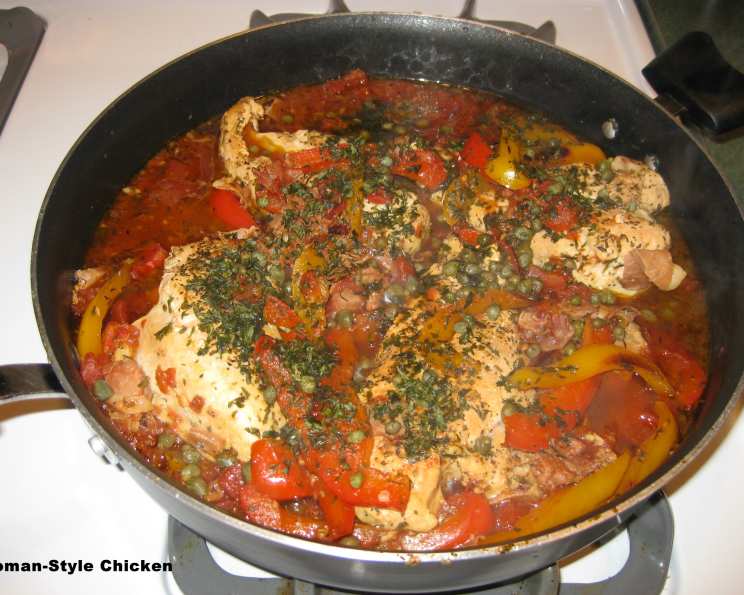
Roman-Style Chicken: A Culinary Journey to the Heart of Italy
The aroma alone transports me back to a sun-drenched afternoon in Rome. My Nonna, a whirlwind of flour and laughter, would be stirring a similar concoction on her ancient stovetop. The vibrant colors of the bell peppers, the salty tang of prosciutto, the herbaceous perfume of thyme and oregano – it was more than just a meal; it was a story whispered in flavors, a tangible expression of love and heritage that permeated every bite. To recreate that magic in my own kitchen is a privilege, a connection to my roots, and a joy I want to share with you.
Recipe Overview
- Prep Time: 20 minutes
- Cook Time: 45 minutes
- Total Time: 1 hour 5 minutes
- Servings: 6
- Yield: 6 servings
- Dietary Type: Varies (see variations)
Ingredients
- 4 skinless chicken breast halves
- 2 skinless chicken thighs, with bones
- 1⁄2 teaspoon salt
- 1⁄2 teaspoon black pepper
- 1⁄4 cup olive oil
- 1 red bell pepper, sliced
- 1 yellow bell pepper, sliced
- 3 ounces prosciutto, chopped
- 2 garlic cloves, chopped
- 1 (15 ounce) can diced tomatoes
- 1⁄2 cup white wine
- 1 tablespoon fresh thyme
- 1 teaspoon fresh oregano
- 1⁄2 cup chicken stock
- 2 tablespoons capers
- 1⁄4 cup flat leaf parsley, chopped
Equipment Needed
- Large, heavy skillet
- Wooden spoon
- Storage container (for make-ahead option)
Instructions
- Begin by seasoning the chicken breast halves and chicken thighs generously with 1/2 teaspoon of salt and 1/2 teaspoon of black pepper. Ensure each piece is evenly coated for maximum flavor.
- Place a large, heavy skillet over medium heat. Add 1/4 cup of olive oil and allow it to heat until it shimmers – this indicates it’s ready for searing the chicken.
- Carefully place the seasoned chicken in the hot skillet. Cook until browned on both sides, about 5-7 minutes per side. The browning process is crucial as it builds a delicious foundation of flavor for the entire dish. Once browned, remove the chicken from the pan and set aside. Don’t worry about cooking it all the way through at this stage, as it will continue to cook in the sauce later.
- Keeping the same pan over medium heat, add the sliced red bell pepper and yellow bell pepper, along with the chopped prosciutto. Cook until the peppers have softened slightly and the prosciutto is crisp, about 5 minutes. The rendering prosciutto will release its savory fats, infusing the peppers with a wonderful depth of flavor.
- Add the chopped garlic and cook for 1 minute, stirring constantly to prevent burning. The aroma of garlic hitting the hot pan is a culinary signal that deliciousness is on its way.
- Pour in the can of diced tomatoes, 1/2 cup of white wine, 1 tablespoon of fresh thyme, and 1 teaspoon of fresh oregano. Using a wooden spoon, scrape the browned bits off the bottom of the pan. These caramelized bits, known as fond, are packed with flavor and will enrich the sauce.
- Return the browned chicken to the pan, nestling it amongst the peppers and tomatoes. Add 1/2 cup of chicken stock. Bring the mixture to a boil, then immediately reduce the heat to a simmer.
- Cover the skillet and simmer until the chicken is cooked through, about 20 to 30 minutes. The internal temperature of the chicken should reach 165°F (74°C). Ensure even cooking by occasionally rotating the chicken pieces in the sauce.
- If serving immediately, stir in the 2 tablespoons of capers and 1/4 cup of chopped flat leaf parsley. Combine thoroughly and serve hot. The capers provide a briny burst, while the parsley adds a fresh, herbaceous finish.
- For a more intense flavor, consider making the dish ahead of time. Transfer the chicken and sauce to a storage container, allow it to cool completely, and then refrigerate. The next day, reheat the chicken to a simmer over medium heat. Stir in the capers and the parsley just before serving.
Expert Tips & Tricks
- For extra depth of flavor, consider using bone-in, skin-on chicken thighs instead of skinless. The skin will crisp up beautifully during the initial searing and the bones will add richness to the sauce.
- If your sauce becomes too thick during simmering, add a splash more chicken stock to loosen it up. Conversely, if it’s too thin, remove the lid during the last 10 minutes of cooking to allow it to reduce.
- Don’t be afraid to experiment with different herbs! A pinch of red pepper flakes can add a touch of heat, while a bay leaf simmered in the sauce will impart a subtle, earthy aroma.
- To ensure even cooking, use chicken breasts of similar thickness. If they vary significantly, you may need to adjust the cooking time accordingly. Pound thicker breasts to an even thickness before searing.
- Deglazing the pan with white wine is crucial for incorporating those browned bits of flavor. Use a dry white wine like Pinot Grigio or Sauvignon Blanc for the best results. Avoid sweet wines, which will alter the flavor profile of the dish.
Serving & Storage Suggestions
Roman-style chicken is delicious served over creamy polenta, mashed potatoes, or alongside a crusty loaf of bread for soaking up the flavorful sauce. A simple green salad makes a refreshing accompaniment.
Leftovers can be stored in an airtight container in the refrigerator for up to 3 days. To reheat, gently simmer on the stovetop or microwave until heated through. You can also freeze the cooked chicken and sauce for up to 2 months. Thaw overnight in the refrigerator before reheating.
Nutritional Information
| Nutrient | Amount per Serving | % Daily Value |
|---|---|---|
| Calories | 240.8 kcal | N/A |
| Calories from Fat | N/A | 45% |
| Total Fat | 12.2 g | 18% |
| Saturated Fat | 1.9 g | 9% |
| Cholesterol | 62.3 mg | 20% |
| Sodium | 418.2 mg | 17% |
| Total Carbohydrate | 8.2 g | 2% |
| Dietary Fiber | 2 g | 7% |
| Sugars | 3.3 g | N/A |
| Protein | 21.3 g | 42% |
Note: Nutritional information is an estimate and may vary based on specific ingredients and preparation methods.
Variations & Substitutions
- Gluten-Free: This recipe is naturally gluten-free. Ensure that your chicken stock is also gluten-free.
- Dairy-Free: This recipe is naturally dairy-free.
- Vegetarian: Substitute the chicken with firm tofu or a mix of hearty vegetables like zucchini, eggplant, and mushrooms. Adjust cooking times accordingly.
- Spicy: Add a pinch of red pepper flakes or a finely chopped chili pepper to the sauce for a kick.
- Seasonal: Use different vegetables based on the season. In the fall, consider adding butternut squash or sweet potatoes. In the spring, asparagus or peas would be a delightful addition.
- Wine Substitution: If you don’t have white wine on hand, you can substitute with an equal amount of chicken stock or vegetable broth. The flavor will be slightly different, but still delicious.
FAQs (Frequently Asked Questions)
Q: Can I use dried herbs instead of fresh?
A: Yes, you can substitute dried herbs for fresh, but use about half the amount as dried herbs are more potent. So, use 1/2 tablespoon of dried thyme and 1/2 teaspoon of dried oregano.
Q: Can I make this in a slow cooker?
A: Yes, you can adapt this recipe for a slow cooker. Sear the chicken and vegetables as directed, then transfer everything to the slow cooker. Cook on low for 6-8 hours or on high for 3-4 hours. Stir in the capers and parsley before serving.
Q: How do I prevent the chicken from drying out?
A: Simmering the chicken in the sauce helps to keep it moist. Avoid overcooking the chicken, and be sure to cover the skillet tightly while simmering.
Q: Can I use different types of peppers?
A: Absolutely! Feel free to experiment with different colored bell peppers or add other peppers like poblano or Anaheim for a different flavor profile.
Q: Can I add mushrooms to this dish?
A: Yes, sliced mushrooms would be a great addition. Add them to the pan along with the bell peppers and prosciutto.
Final Thoughts
I hope you’ll embrace the flavors of Rome and give this recipe a try. Whether you’re looking for a comforting weeknight meal or a dish to impress guests, Roman-Style Chicken is sure to be a hit. Don’t be afraid to put your own spin on it and make it your own. I encourage you to share your creations and feedback – and perhaps a story or two of your own culinary adventures. Buon appetito!