
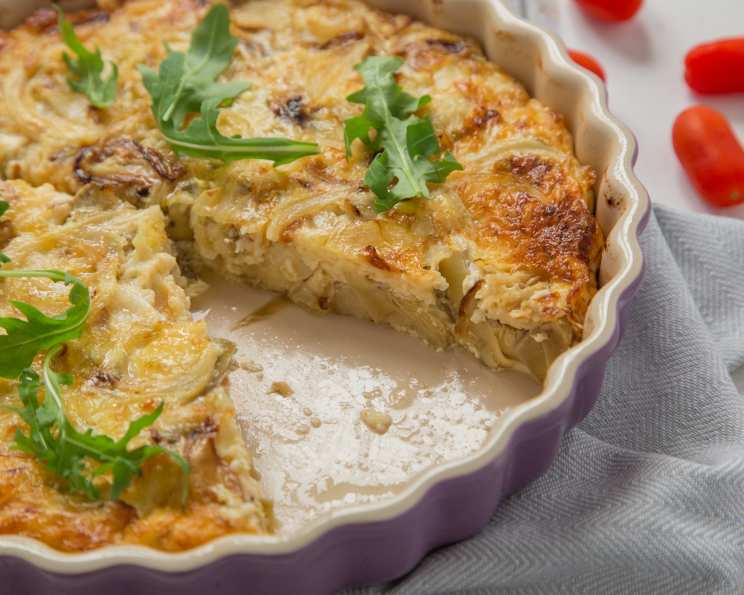
Ron’s Artichoke and Two Cheese Frittata
The aroma of artichokes sizzling gently in butter, mingling with the sharp tang of asiago and the smooth, nutty scent of gouda – that’s the memory that always floods back when I think of this frittata. My grandfather, Ron, wasn’t a chef, but he possessed a knack for creating simple yet unforgettable dishes. He’d whip this up on lazy Sunday mornings, the golden-brown frittata proudly presented in the center of the table, a beacon of warmth and family. Each bite was a comforting hug, a reminder of shared laughter and the unconditional love only grandparents can offer. It’s a recipe that’s been passed down, a tangible link to those cherished moments.
Recipe Overview
- Prep Time: 15 minutes
- Cook Time: 30 minutes
- Total Time: 45 minutes
- Servings: 6
- Yield: 1 frittata
- Dietary Type: Vegetarian
Ingredients
- 2 tablespoons butter, divided (or use Pam cooking spray)
- 1 (14 ounce) can water-packed artichoke hearts
- ½ cup asiago cheese, grated
- ½ cup gouda cheese, grated
- 1 large shallot, thinly sliced
- ½ cup milk
- 6 eggs, lightly beaten
Equipment Needed
- 1 quart shallow casserole pan or quiche pan
- Small pan
- Medium bowl
- Fork
Instructions
-
Begin by preheating your oven to 350 degrees F (175 degrees C). Ensuring the oven is at the correct temperature is crucial for even cooking and preventing a soggy frittata.
-
Next, prepare your casserole or quiche pan. Grease a 1-quart shallow casserole pan or quiche pan with 1 tablespoon of the butter. Make sure to coat the bottom and sides evenly to prevent sticking. Alternatively, you can use cooking spray for a lighter option.
-
Now, prepare the artichoke hearts. Drain the can of artichoke hearts thoroughly. Quarter the artichokes and arrange them evenly in the prepared pan. Distributing them uniformly ensures each bite is packed with flavor.
-
Sprinkle the grated asiago cheese and gouda cheese evenly over the artichokes in the pan. These cheeses will melt beautifully during baking, creating a creamy and flavorful layer.
-
In a small pan, melt the remaining 1 tablespoon of butter over medium heat. Add the thinly sliced shallot and sauté until the shallots become tender and translucent, approximately 5 minutes. Stir frequently to prevent browning. Sautéing the shallots first mellows their flavor and prevents them from being too pungent in the final dish.
-
In a medium bowl, combine the milk and eggs. Using a fork, lightly beat the eggs and milk together until just combined. Over-beating can incorporate too much air, resulting in a less dense frittata.
-
Add the sautéed shallots to the egg mixture. Stir gently to distribute the shallots evenly throughout the egg mixture.
-
Pour the milk, egg, and shallot mixture evenly over the artichokes and cheeses in the prepared pan. Ensure that the ingredients are submerged as much as possible to bind them together.
-
Bake in the preheated 350-degree F (175 degrees C) oven for 30 minutes, or until the frittata is set. The frittata is done when the center is no longer jiggly and a knife inserted into the center comes out clean. If the top starts to brown too quickly, you can loosely tent the pan with foil during the last 10 minutes of baking.
-
Remove from oven and let cool slightly before serving.
Expert Tips & Tricks
- For a richer flavor, consider using brown butter to sauté the shallots. The nutty notes of brown butter will complement the cheeses beautifully.
- To prevent the frittata from sticking to the pan, you can line the bottom with parchment paper before greasing. Cut a circle of parchment paper to fit the bottom of the pan, leaving a little overhang for easy removal.
- If you prefer a firmer frittata, you can add a tablespoon of flour to the egg mixture. This will help to bind the ingredients together and create a more solid texture.
- Don’t overbake the frittata! Overbaking will result in a dry and rubbery texture. The frittata is done when the center is set but still slightly moist.
- If you’re short on time, you can use pre-sautéed shallots. Look for them in the refrigerated section of your grocery store.
Serving & Storage Suggestions
This Artichoke and Two Cheese Frittata is delicious served warm, at room temperature, or even cold. It makes a wonderful breakfast, brunch, lunch, or light dinner. Garnish with a sprinkle of fresh herbs, such as parsley or chives, for a pop of color and flavor.
Leftovers can be stored in an airtight container in the refrigerator for up to 3 days. To reheat, you can microwave individual slices, or warm the entire frittata in a low oven (around 300 degrees F) until heated through. Freezing is not recommended, as the texture can become watery upon thawing.
Nutritional Information
| Nutrient | Amount per Serving | % Daily Value |
|---|---|---|
| Calories | 155.9 kcal | N/A |
| Calories from Fat | 86 kcal | 55% |
| Total Fat | 9.6 g | 14% |
| Saturated Fat | 4.5 g | 22% |
| Cholesterol | 199 mg | 66% |
| Sodium | 154.8 mg | 6% |
| Total Carbohydrate | 9.8 g | 3% |
| Dietary Fiber | 5.7 g | 22% |
| Sugars | 0.8 g | N/A |
| Protein | 9 g | 17% |
Variations & Substitutions
-
Gluten-Free: This recipe is naturally gluten-free. However, always check the labels of your cheese to ensure they haven’t been processed with any gluten-containing ingredients.
-
Dairy-Free: For a dairy-free version, substitute the milk with unsweetened almond milk or coconut milk. Use dairy-free cheeses or omit them altogether and add roasted vegetables for flavor.
-
Add Meat: Cooked and crumbled bacon, diced ham, or Italian sausage would be excellent additions to this frittata. Add them to the pan along with the artichoke hearts.
-
Vegetable Variations: Feel free to swap out the artichokes for other vegetables. Asparagus, spinach, mushrooms, roasted red peppers, or sun-dried tomatoes would all be delicious.
-
Cheese Variations: Experiment with different cheeses to suit your taste. Gruyere, fontina, or parmesan would all be excellent choices.
FAQs (Frequently Asked Questions)
Q: Can I make this frittata ahead of time?
A: Yes, you can prepare the frittata a day in advance. Store it in the refrigerator and reheat it before serving. The texture may be slightly different, but it will still be delicious.
Q: Can I use frozen artichoke hearts?
A: Yes, you can use frozen artichoke hearts. Be sure to thaw them completely and squeeze out any excess water before adding them to the pan.
Q: Can I add other herbs to the frittata?
A: Absolutely! Fresh herbs like thyme, rosemary, or oregano would complement the flavors of the frittata nicely. Add them to the egg mixture before pouring it over the artichokes and cheeses.
Q: What if I don’t have shallots?
A: If you don’t have shallots, you can substitute them with a small yellow onion or a few cloves of garlic. Sauté them until they are tender and translucent before adding them to the egg mixture.
Q: The top of my frittata is browning too quickly. What should I do?
A: If the top of your frittata is browning too quickly, you can loosely tent the pan with aluminum foil during the last 10-15 minutes of baking. This will help to prevent it from burning.
Final Thoughts
Ron’s Artichoke and Two Cheese Frittata is more than just a recipe; it’s a tradition, a memory, and a testament to the power of simple ingredients transformed into something truly special. I encourage you to try this recipe and create your own memories around it. Feel free to adapt it to your own taste preferences and share your feedback. Serve it with a side of crusty bread and a crisp salad for a complete and satisfying meal. Enjoy!