
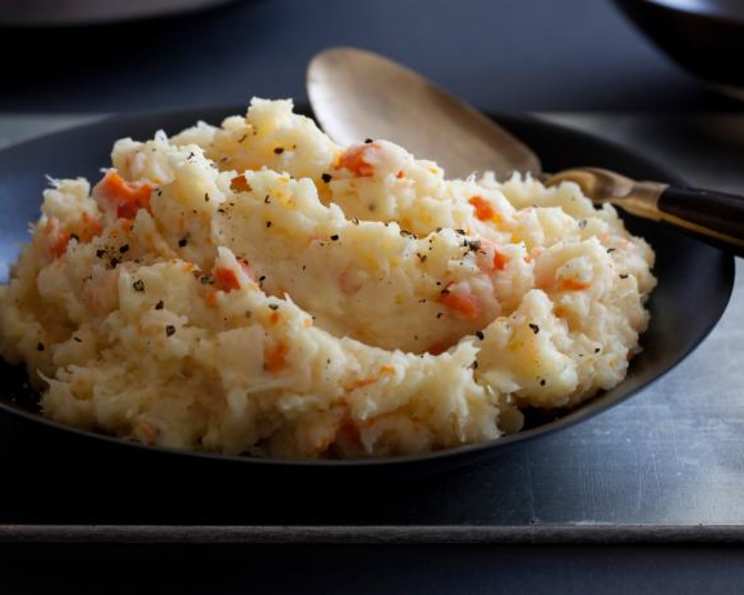
Elevate Your Dinner: The Ultimate Root Vegetable Mash
I can still remember the first time I tasted a truly exceptional root vegetable mash. It wasn’t at some fancy restaurant, but at my grandmother’s cozy farmhouse. The air was thick with the aroma of woodsmoke and roasting vegetables, and the dish, simple as it was, tasted like pure love and comfort. Each bite was a symphony of earthy sweetness, a welcome change from the usual mashed potatoes. She always said, “Don’t underestimate what grows beneath the surface, child. The best flavors are often hidden.” And she was absolutely right; this mash is a testament to that wisdom.
Recipe Overview
- Prep Time: 20 minutes
- Cook Time: 30 minutes
- Total Time: 50 minutes
- Servings: 4
- Dietary Type: Gluten-Free
Ingredients
- 2 Yukon Gold potatoes
- 4 parsnips
- 2 carrots
- 2 salsify
- 1/4 cup 35-percent whipping cream
- 1⁄4 cup butter
- Salt & freshly ground black pepper
Equipment Needed
- Large pot
- Potato masher or ricer
Instructions
-
Begin by preparing your vegetables. Thoroughly wash the Yukon Gold potatoes, parsnips, carrots, and salsify. You can peel the potatoes and carrots if you prefer a smoother mash, but leaving the skins on adds texture and nutrients. Peel the parsnips and salsify as their skins can be a bit tough.
-
Cut all the potatoes, parsnips, carrots, and salsify into roughly equal-sized chunks. This ensures they cook evenly.
-
Place the chopped vegetables into a large pot. Cover them with cold, salted water. The salt helps to season the vegetables as they cook.
-
Bring the water to a boil over high heat. Once boiling, reduce the heat to medium and let the vegetables simmer for about 30 minutes, or until they are fork-tender. To test for doneness, pierce the largest piece of vegetable with a fork. If it slides in easily, they are ready.
-
Drain the cooked vegetables thoroughly in a colander. Be sure to remove as much water as possible, as excess water will result in a watery mash. Return the drained vegetables to the pot.
-
Now, it’s time to create the creamy texture. Add the whipping cream and butter to the pot with the vegetables.
-
Using a potato masher or a ricer, mash the vegetables until they reach your desired consistency. For a smoother mash, a ricer works best. For a more rustic texture, a potato masher is perfect. Be careful not to over-mash, as this can make the mash gluey.
-
Season the vegetables generously with salt and freshly ground black pepper to taste. Start with a small amount and add more as needed, tasting as you go. The seasoning is crucial for bringing out the natural sweetness of the root vegetables.
-
Keep warm until ready to serve. You can place the mashed vegetables in a heatproof bowl set over a pot of simmering water to keep them warm without drying them out.
Expert Tips & Tricks
- Roast for Depth: For a richer, more complex flavor, try roasting the root vegetables instead of boiling them. Toss them with olive oil, salt, and pepper, and roast at 400°F (200°C) until tender and slightly caramelized, about 30-40 minutes.
- Add Aromatics: Infuse your mash with extra flavor by adding a clove of minced garlic, a sprig of fresh thyme, or a bay leaf to the cooking water. Remove the aromatics before mashing.
- Spice it Up: A pinch of nutmeg or a dash of smoked paprika can add a lovely warmth and complexity to the mash.
- Make Ahead: The root vegetable mash can be made a day or two in advance. Store it in an airtight container in the refrigerator and reheat gently on the stovetop or in the microwave, adding a splash of cream or milk if needed to restore its creamy texture.
- Control the Texture: If you prefer a very smooth mash, use an immersion blender or food processor. However, be careful not to over-process, as this can make the mash gummy.
- Butter Matters: Using high-quality butter really elevates the flavour. Opt for European-style butter for a richer taste.
Serving & Storage Suggestions
Serve the root vegetable mash hot as a side dish alongside roasted meats, poultry, or fish. It pairs beautifully with hearty stews and braised dishes. Garnish with a drizzle of olive oil, a sprinkle of fresh herbs, or a dollop of sour cream or yogurt.
Leftover root vegetable mash can be stored in an airtight container in the refrigerator for up to 3-4 days. To reheat, gently warm it on the stovetop over low heat, adding a splash of milk or cream to restore moisture. You can also reheat it in the microwave in short intervals, stirring in between, until heated through.
Freezing is also an option. Allow the mash to cool completely before transferring it to a freezer-safe container. It can be frozen for up to 2 months. Thaw in the refrigerator overnight before reheating. Note that the texture may change slightly after freezing.
Nutritional Information
| Nutrient | Amount per Serving | % Daily Value |
|---|---|---|
| Calories | 210 kcal | 11% |
| Total Fat | 12g | 18% |
| Saturated Fat | 8g | 40% |
| Cholesterol | 35mg | 12% |
| Sodium | 150mg | 7% |
| Total Carbohydrate | 25g | 9% |
| Dietary Fiber | 4g | 16% |
| Sugars | 5g | – |
| Protein | 2g | 4% |
Variations & Substitutions
- Dairy-Free: Substitute the whipping cream and butter with plant-based alternatives like almond milk, oat milk, or vegan butter.
- Sweet Potato: Add one or two peeled and cubed sweet potatoes to the mix for a sweeter and more vibrant mash.
- Cauliflower: Substitute one of the potatoes with an equal amount of cauliflower florets for a lower-carb option.
- Herbed Mash: Stir in a handful of chopped fresh herbs like rosemary, thyme, or parsley at the end of cooking for a fragrant twist.
- Garlic Infusion: Roast a head of garlic alongside the vegetables for a mellow, sweet garlic flavor. Squeeze the roasted garlic cloves into the mash before mashing.
- Maple Glaze: Drizzle a small amount of maple syrup over the mash before serving for a touch of sweetness.
FAQs (Frequently Asked Questions)
Q: Can I use different types of root vegetables in this mash?
A: Absolutely! Feel free to experiment with other root vegetables like turnips, rutabagas, or celeriac. Adjust the cooking time as needed.
Q: How do I prevent the mash from becoming gluey?
A: Avoid over-mashing the vegetables. Use a potato masher or ricer instead of a blender or food processor, and stop mashing as soon as the desired consistency is reached.
Q: Can I make this recipe ahead of time?
A: Yes, the root vegetable mash can be made a day or two in advance. Store it in an airtight container in the refrigerator and reheat gently on the stovetop or in the microwave.
Q: What can I do if my mash is too watery?
A: Drain the cooked vegetables very thoroughly before mashing. If the mash is still too watery, you can cook it over low heat for a few minutes, stirring constantly, to evaporate some of the excess moisture.
Q: Is it necessary to peel the vegetables?
A: Peeling is optional. Leaving the skins on adds texture and nutrients, but some people prefer a smoother mash. If you leave the skins on, be sure to scrub the vegetables very clean.
Final Thoughts
This root vegetable mash is more than just a side dish; it’s a celebration of simple, seasonal ingredients and the comforting flavors of home. I encourage you to try this recipe and make it your own. Experiment with different vegetables, herbs, and spices to create a mash that perfectly suits your taste. And don’t be afraid to share your creations with friends and family – after all, food is best when shared with loved ones. Pair this dish with a hearty roasted chicken or a flavorful beef stew for a complete and satisfying meal. Bon appétit!