
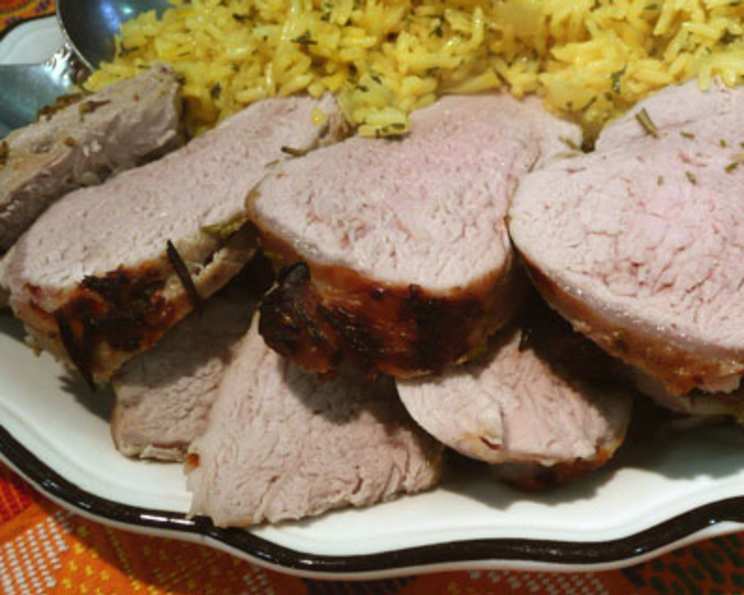
Rosemary Roasted Pork Tenderloin: A Culinary Classic
The aroma of rosemary, garlic, and Dijon mustard mingling in the oven always transports me back to my grandmother’s kitchen. She wasn’t a fancy chef, but her Sunday roasts were legendary. This Rosemary Roasted Pork Tenderloin, while perhaps a touch more refined than her rustic fare, captures the same essence of comforting flavors and simple elegance. I cherish the memories of family gatherings around her table, and this dish is a perfect way to keep that tradition alive.
Recipe Overview
- Prep Time: 15 minutes
- Cook Time: 45 minutes
- Total Time: 1 hour
- Servings: 6
- Dietary Type: Gluten-Free
Ingredients
- 1/2 cup apple juice
- 1/4 cup Dijon mustard
- 1/4 cup fresh rosemary, chopped
- 8 garlic cloves, minced
- 3/4 teaspoon fresh coarse ground black pepper
- 3 (1 lb) pork tenderloin
Equipment Needed
- Large bowl
- Resealable plastic bag
- Roasting pan
- Nonstick cooking spray
- Meat thermometer
Instructions
-
In a large bowl, combine the apple juice, Dijon mustard, chopped fresh rosemary, minced garlic cloves, and coarse ground black pepper. Mix thoroughly until well combined. This creates a vibrant and aromatic marinade that will infuse the pork with flavor.
-
Set aside 1/3 cup of the marinade. Cover it tightly and refrigerate. This reserved marinade will be used to baste the pork during roasting, adding another layer of flavor and moisture.
-
Place the pork tenderloins into a large resealable plastic bag. Pour the remaining marinade from the bowl over the pork.
-
Seal the bag, removing as much air as possible. Turn the bag to ensure the pork is thoroughly coated in the marinade. Refrigerate the bag, allowing the pork to marinate overnight. This extended marinating time allows the flavors to deeply penetrate the meat, resulting in a more tender and flavorful final product.
-
The next day, remove the pork tenderloins from the refrigerator. Discard the marinade from the bag. Do not reuse the marinade, as it has been in contact with raw pork.
-
Coat a roasting pan with nonstick cooking spray. This will prevent the pork from sticking to the pan during cooking, ensuring easy removal and cleanup.
-
Place the marinated pork tenderloins in the prepared roasting pan.
-
Pour the reserved 1/3 cup of marinade evenly over the pork tenderloins. This will create a beautiful glaze as the pork roasts.
-
Bake, uncovered, in a preheated oven at 350 degrees F (175 degrees C) for 40-45 minutes, or until a meat thermometer inserted into the thickest part of the tenderloin reads 160 degrees F (71 degrees C). It is crucial to use a meat thermometer to ensure the pork is cooked to a safe internal temperature. Overcooking will result in dry, tough meat.
-
Remove the pork tenderloins from the oven and let them rest for 10 minutes before slicing. This resting period allows the juices to redistribute throughout the meat, resulting in a more tender and flavorful final product. Slice the pork tenderloin against the grain into 1/2 inch thick slices.
Expert Tips & Tricks
-
Achieving the Perfect Sear: For an extra layer of flavor and a beautiful presentation, sear the pork tenderloins in a hot skillet with a little olive oil before roasting. Sear on all sides for 2-3 minutes per side, creating a rich brown crust. Then, transfer to the roasting pan and proceed with the recipe.
-
Garlic Infusion: If you prefer a more subtle garlic flavor, consider using roasted garlic instead of minced raw garlic in the marinade. Roasting the garlic mellows its sharpness and brings out its sweetness.
-
Marinade Enhancement: For an even deeper flavor profile, add a tablespoon of balsamic vinegar or Worcestershire sauce to the marinade. These ingredients add a touch of umami and complexity.
-
Doneness Check: If you don’t have a meat thermometer, you can check the doneness of the pork by inserting a knife into the thickest part. The juices should run clear. However, a meat thermometer is the most accurate way to ensure the pork is cooked to a safe internal temperature.
-
Make-Ahead Tip: Prepare the marinade a day or two in advance and store it in the refrigerator. This allows the flavors to meld together and intensify.
Serving & Storage Suggestions
Serve the Rosemary Roasted Pork Tenderloin sliced and drizzled with pan juices. It pairs beautifully with roasted vegetables like potatoes, carrots, and Brussels sprouts. It’s equally delicious served alongside a fresh green salad or creamy polenta.
Storage:
- Room Temperature: Do not leave cooked pork at room temperature for more than 2 hours.
- Refrigerator: Store leftover pork in an airtight container in the refrigerator for up to 3-4 days.
- Freezer: For longer storage, wrap the pork tightly in plastic wrap and then place it in a freezer-safe bag or container. It can be frozen for up to 2-3 months.
Reheating:
- Oven: Preheat oven to 325°F (160°C). Place the pork in a baking dish with a little broth or water to keep it moist. Cover with foil and heat for 15-20 minutes, or until warmed through.
- Microwave: Place the pork on a microwave-safe plate and cover with a damp paper towel. Microwave on medium power in 30-second intervals, until warmed through.
- Skillet: Slice the pork and sauté it in a skillet with a little olive oil or butter until heated through.
Nutritional Information
| Nutrient | Amount per Serving | % Daily Value |
|---|---|---|
| Calories | 333.1 kcal | N/A |
| Calories from Fat | 114 g | 34% |
| Total Fat | 12.7 g | 19% |
| Saturated Fat | 4.3 g | 21% |
| Cholesterol | 149.7 mg | 49% |
| Sodium | 229.5 mg | 9% |
| Total Carbohydrate | 5 g | 1% |
| Dietary Fiber | 0.7 g | 2% |
| Sugars | 2.6 g | N/A |
| Protein | 47.3 g | 94% |
Note: Nutritional information is an estimate and may vary based on specific ingredients and preparation methods.
Variations & Substitutions
-
Herb Variations: If you don’t have fresh rosemary, you can substitute dried rosemary (use about 1 tablespoon). Other herbs that work well with pork include thyme, sage, and oregano.
-
Spice it Up: Add a pinch of red pepper flakes to the marinade for a touch of heat.
-
Citrus Zest: Add the zest of one lemon or orange to the marinade for a bright, citrusy flavor.
-
Sweet and Savory: Add a tablespoon of honey or maple syrup to the marinade for a touch of sweetness.
-
Apple Cider Vinegar: Substitute apple cider vinegar for some of the apple juice in the marinade for a tangier flavor.
FAQs (Frequently Asked Questions)
Q: Can I marinate the pork for longer than overnight?
A: While overnight is ideal, you can marinate the pork for up to 24 hours. Any longer, and the acid in the marinade may start to break down the meat, making it mushy.
Q: Can I use frozen pork tenderloin?
A: Yes, but be sure to thaw it completely in the refrigerator before marinating. This will ensure that the marinade penetrates the meat evenly.
Q: What if I don’t have apple juice?
A: You can substitute apple cider, white grape juice, or even chicken broth.
Q: How do I prevent the pork from drying out?
A: Don’t overcook it! Use a meat thermometer to ensure it reaches an internal temperature of 160 degrees F (71 degrees C). Also, be sure to let it rest for 10 minutes before slicing.
Q: Can I cook this on the grill?
A: Yes! Grill the pork tenderloins over medium heat for about 15-20 minutes, turning occasionally, until they reach an internal temperature of 160 degrees F (71 degrees C).
Final Thoughts
This Rosemary Roasted Pork Tenderloin is a dish that’s both elegant and approachable, perfect for a weeknight dinner or a special occasion. The simple marinade transforms the pork into a flavorful and tender delight. Don’t be afraid to experiment with different herbs and spices to create your own unique version. I encourage you to try this recipe and share your creations. Serve it with your favorite sides and a glass of your preferred wine for a truly memorable meal. Happy cooking!