
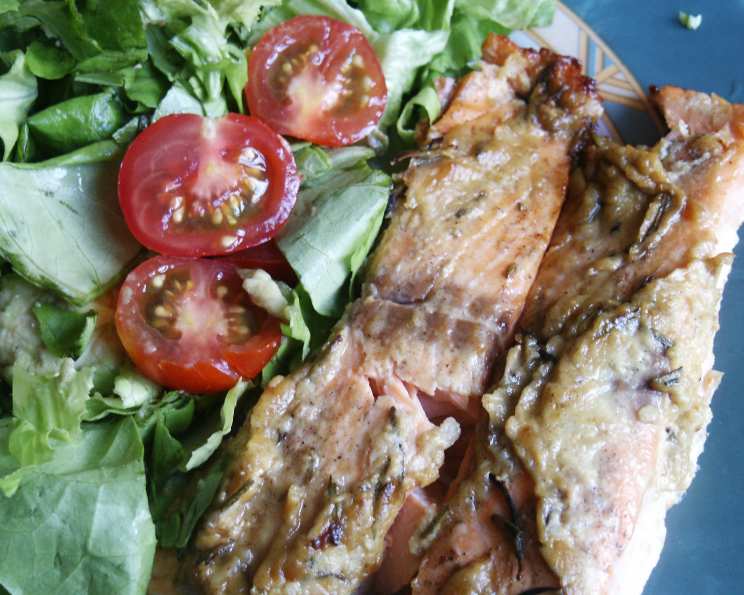
Rosemary Roasted Salmon: A Quick & Flavorful Delight
The scent of rosemary always takes me back to my grandmother’s garden. She had a sprawling herb garden, and I remember sneaking sprigs of rosemary while she wasn’t looking, its piney aroma clinging to my fingers long after. One summer, she showed me how to roast salmon with rosemary, a simple dish that highlighted the fresh flavors of the season. It was an instant family favorite, and even now, the aroma fills me with the warmth of her kitchen and the joy of shared meals.
Recipe Overview
- Prep Time: 10 minutes
- Cook Time: 8-10 minutes
- Total Time: 18-20 minutes
- Servings: 4
- Dietary Type: Gluten-Free, Dairy-Free
Ingredients
- 1 1/2 lbs salmon fillets (1 inch thick), skin on or off
- 4 medium garlic cloves, minced
- 2 tablespoons olive oil
- 1 tablespoon country-style Dijon mustard
- 1 tablespoon finely chopped rosemary
- 1/4 teaspoon salt
- 1/4 teaspoon fresh ground pepper
Equipment Needed
- Small rimmed baking sheet
- Aluminum foil
- Small bowl
Instructions
- Preheat your oven to 475°F. Ensure your oven rack is positioned in the center for even cooking.
- Line a small rimmed baking sheet with aluminum foil. This makes cleanup a breeze.
- Place the salmon fillet, skin side down (if applicable), on the prepared baking sheet. If you prefer skinless salmon, that works perfectly too.
- In a small bowl, vigorously stir together the minced garlic, olive oil, Dijon mustard, and finely chopped rosemary. The Dijon adds a lovely tang that complements the richness of the salmon.
- Sprinkle the salmon with salt and fresh ground pepper. Seasoning is key to bringing out the natural flavors of the fish.
- Spoon the rosemary mixture evenly over the salmon. Ensure the entire surface is covered for maximum flavor infusion.
- Refrigerate for 10 minutes. This allows the flavors to meld and penetrate the salmon slightly. While it’s tempting to skip this step, the brief marination makes a noticeable difference.
- Bake the salmon for 8 to 10 minutes, or until it begins to flake easily with a fork. Cooking time depends on the thickness of your fillet. Thicker pieces may require a minute or two longer. Don’t overcook it; salmon is best when it’s moist and tender. An internal temperature of 145°F (63°C) is ideal.
Expert Tips & Tricks
- Don’t overcrowd the pan: Ensure there’s enough space between each salmon fillet on the baking sheet for even cooking. Overcrowding can lead to steaming instead of roasting.
- Pat the salmon dry: Before seasoning, gently pat the salmon dry with a paper towel. This helps the rosemary mixture adhere better and promotes browning.
- Adjust the rosemary: If you’re not a huge fan of rosemary, you can substitute with other herbs like thyme, dill, or parsley.
- Garlic variations: For a milder garlic flavor, try using roasted garlic instead of raw.
- Checking for doneness: Gently insert a fork into the thickest part of the salmon and twist. If the fish flakes easily, it’s done. The color should be opaque, not translucent.
- Broiling for extra color: For a more caramelized top, broil the salmon for the last minute or two, watching it carefully to prevent burning.
- Make-ahead option: You can prepare the rosemary mixture up to a day in advance and store it in the refrigerator.
Serving & Storage Suggestions
Serve the Rosemary Roasted Salmon immediately while it’s hot and juicy. It pairs beautifully with roasted vegetables like asparagus, broccoli, or Brussels sprouts. A simple side salad with a lemon vinaigrette also complements the richness of the salmon. Consider serving it alongside quinoa, rice, or couscous for a complete meal.
Leftover salmon can be stored in an airtight container in the refrigerator for up to 2-3 days. To reheat, gently warm it in a skillet over low heat or in a microwave. Be careful not to overcook it when reheating, as it can become dry. Cold salmon is also delicious in salads, sandwiches, or wraps.
Nutritional Information
| Nutrient | Amount per Serving | % Daily Value |
|---|---|---|
| Calories | 265 kcal | – |
| Total Fat | 12.8g | 19% |
| Saturated Fat | 1.9g | 9% |
| Cholesterol | 88.7mg | 29% |
| Sodium | 302.4mg | 12% |
| Total Carbohydrate | 1.5g | 0% |
| Dietary Fiber | 0.3g | 1% |
| Sugars | 0.1g | 0% |
| Protein | 34.4g | 68% |
Note: Nutritional information is an estimate and may vary based on specific ingredients and portion sizes.
Variations & Substitutions
- Lemon-Rosemary Salmon: Add a squeeze of fresh lemon juice to the rosemary mixture for a bright, citrusy flavor.
- Honey-Garlic Rosemary Salmon: Drizzle a teaspoon of honey over the salmon before adding the rosemary mixture for a touch of sweetness.
- Spicy Rosemary Salmon: Add a pinch of red pepper flakes to the rosemary mixture for a hint of heat.
- Herb Variations: Experiment with different herbs like thyme, oregano, or dill in place of rosemary.
- Mustard Variations: Use whole-grain mustard or a flavored Dijon mustard for a different flavor profile.
- Salmon type: While the recipe is amazing with King, Coho or Sockeye, feel free to use other types of salmon.
- Vegetarian option: While this recipe focuses on salmon, similar techniques can be applied to firm tofu steaks for a vegetarian alternative. Marinate the tofu in the rosemary mixture before baking.
FAQs (Frequently Asked Questions)
Q: Can I use frozen salmon for this recipe?
A: Yes, but be sure to thaw the salmon completely before cooking. Pat it dry with a paper towel to remove any excess moisture.
Q: How do I know when the salmon is done?
A: The salmon is done when it flakes easily with a fork and the internal temperature reaches 145°F (63°C).
Q: Can I cook this recipe on the grill?
A: Absolutely! Preheat your grill to medium-high heat and place the salmon skin-side down on the grates. Cook for about 8-12 minutes, or until cooked through.
Q: What if I don’t have Dijon mustard?
A: You can substitute with regular yellow mustard or even a touch of horseradish for a similar flavor.
Q: Can I add vegetables to the baking sheet?
A: Yes, you can roast vegetables alongside the salmon. Choose vegetables that cook in a similar time frame, such as asparagus, broccoli florets, or bell pepper slices. Toss them with olive oil, salt, and pepper before adding them to the baking sheet.
Final Thoughts
Rosemary Roasted Salmon is more than just a recipe; it’s an invitation to create a simple yet elegant meal that bursts with flavor. Whether you’re cooking for a weeknight dinner or a special occasion, this dish is sure to impress. Don’t be afraid to experiment with different herbs and seasonings to make it your own. I encourage you to try this recipe and share your feedback. Pair it with a crisp white wine like Sauvignon Blanc or Pinot Grigio for the perfect culinary experience. Bon appétit!