
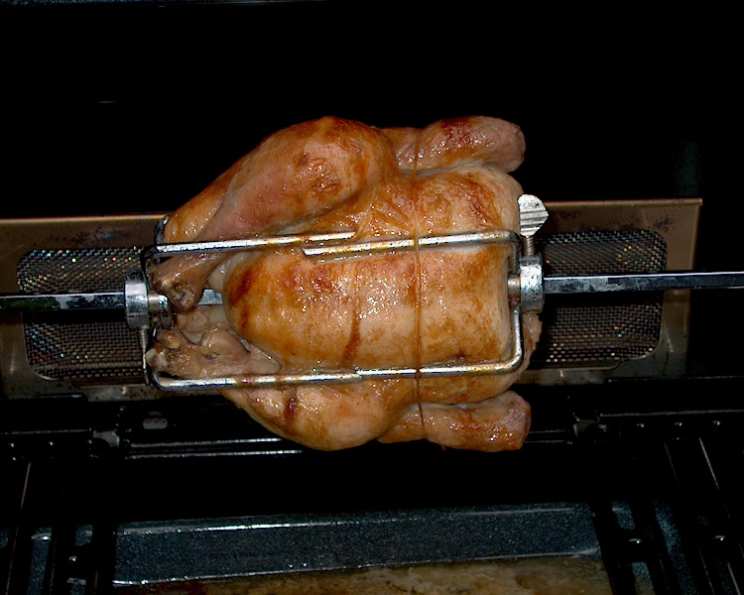
The Ultimate Rotisserie Revelation: Chicken or Turkey
I remember the first time I tasted rotisserie chicken. It was at a bustling farmer’s market, the air thick with the aroma of wood smoke and roasted herbs. I watched, mesmerized, as the golden bird turned slowly on the spit, its skin glistening under the heat. One bite, and I was hooked – the succulent meat practically falling off the bone, the crispy skin a symphony of savory flavors. Now, years later, I’ve perfected the art of rotisserie cooking at home, and I’m eager to share my secrets with you.
Recipe Overview
- Prep Time: 20 minutes
- Cook Time: 2 hours
- Total Time: 2 hours 20 minutes
- Servings: 4-8
- Dietary Type: Generally Gluten-Free, Dairy-Free (check wine label)
Ingredients
- 1 whole chicken (3-4 lbs) or 1 whole turkey (10-12 lbs)
- 1 cup orange juice
- 1 cup dry white wine (such as Sauvignon Blanc or Pinot Grigio)
- 2 cups water
- 1 orange
- 4 sprigs fresh rosemary
- 2-3 garlic cloves
Equipment Needed
- Barbecue with rotisserie attachment and rear burner (optional)
- Heavy-duty tray or broiler pan base
- Kitchen twine
- Meat thermometer
Instructions
-
Prepare your barbecue: Remove all grill racks and preheat the barbecue to 450°F (232°C). If your barbecue has a rear burner, this is the preferred method for even cooking.
-
Set up the drip pan: Place a heavy-duty tray (your broil pan base works well) directly on the burner(s) underneath where the poultry will sit. This pan will catch the flavorful drippings and prevent flare-ups.
-
Prepare the basting liquid: In a bowl or measuring cup, mix together the orange juice, dry white wine, and water. Slice half of the orange and add the slices to the liquid along with 2 sprigs of rosemary and the sliced garlic cloves.
-
Pour the liquid into the drip pan: Carefully pour the prepared liquid mixture into the heavy-duty tray.
-
Prepare the poultry: Rinse the chicken or turkey well under cold water and pat it completely dry with paper towels. This is crucial for achieving crispy skin.
-
Flavor the skin and cavity: Rub the remaining half of the orange over the entire bird, making sure to separate the skin from the breast area and apply juice there as well. This adds a bright citrus note and helps the skin crisp up. Cut the remaining half of the orange in half again and put the pieces inside the cavity.
-
Add aromatics: Break up 1 sprig of rosemary, placing it in and around the breast area, underneath the skin if possible. Add the remaining 1 or 2 sprigs of rosemary to the inside of the cavity.
-
Truss the bird: Tie the legs and wings tightly to the body of the chicken or turkey using kitchen twine. Soaking the twine in water beforehand will help prevent it from burning during cooking. This step ensures even cooking and a more appealing presentation.
-
Attach to rotisserie: Place the prepared chicken or turkey on the rotisserie spit, ensuring it is centered and balanced. Secure it tightly according to the rotisserie manufacturer’s instructions.
-
Begin cooking: Place the rotisserie spit on the barbecue and center it over the tray filled with the basting liquid.
-
Initial high heat sear: Cook for 30-40 minutes at 450°F (232°C). This initial burst of high heat helps to render the fat under the skin and promotes browning.
-
Reduce heat and continue cooking: Reduce the heat to 300°F (149°C). The juice in the drip pan will continually evaporate, creating steam that rises and self-bastes the chicken or turkey. Try to avoid lifting the lid too often to maintain a consistent cooking temperature.
-
Monitor and baste: Do not let the pan dry out. Add more liquid (a mixture of orange juice, wine, and water, or even just water) as needed to maintain a consistent level of moisture.
-
Cook to temperature: Cook for 18-20 minutes per pound or until cooked through. Use a meat thermometer to check for doneness. The internal temperature should reach 165°F (74°C) in the thickest part of the thigh for chicken, and the breast and thigh for turkey.
-
Rest before carving: Once cooked through, remove the chicken or turkey from the rotisserie. Tent it loosely with foil and let it rest for at least 15-20 minutes before carving. This allows the juices to redistribute, resulting in a more tender and flavorful bird.
Expert Tips & Tricks
- Don’t overcrowd the rotisserie: Ensure there is enough space around the bird for the heat to circulate properly.
- Dry brine: For even more flavorful and juicy meat, consider dry brining the chicken or turkey 12-24 hours before cooking. Simply rub the bird generously with salt (about 1 teaspoon per pound) and let it sit uncovered in the refrigerator.
- Spice it up: Experiment with different herbs and spices! Paprika, garlic powder, onion powder, thyme, and oregano are all excellent additions.
- Flavor infusion: Injecting the chicken or turkey with a marinade before cooking can also add a boost of flavor and moisture.
- Crispy skin secret: During the last 15-20 minutes of cooking, you can briefly increase the heat again to crisp up the skin even further, but watch carefully to prevent burning.
Serving & Storage Suggestions
Serve the freshly carved rotisserie chicken or turkey immediately. It pairs wonderfully with roasted vegetables, mashed potatoes, stuffing, or a simple salad.
Storage:
- Room Temperature: Do not leave cooked poultry at room temperature for more than 2 hours.
- Refrigerator: Store leftover chicken or turkey in an airtight container in the refrigerator for up to 3-4 days.
- Freezer: For longer storage, freeze the meat in freezer-safe bags or containers for up to 2-3 months.
Reheating: Reheat leftover chicken or turkey in the oven, microwave, or in a skillet. Add a little broth or water to help prevent it from drying out.
Nutritional Information
| Nutrient | Amount per Serving | % Daily Value |
|---|---|---|
| Calories | 815.8 kcal | N/A |
| Calories from Fat | 477 g | 59% |
| Total Fat | 53.1 g | 81% |
| Saturated Fat | 15.2 g | 75% |
| Cholesterol | 243.8 mg | 81% |
| Sodium | 233.3 mg | 9% |
| Total Carbohydrate | 12.3 g | 4% |
| Dietary Fiber | 0.9 g | 3% |
| Sugars | 8.8 g | N/A |
| Protein | 58.1 g | 116% |
Note: Nutritional information is an estimate and may vary based on specific ingredients and portion sizes.
Variations & Substitutions
- Lemon Herb: Substitute lemon juice for orange juice and add thyme and parsley to the cavity.
- Spicy Southwestern: Use lime juice instead of orange juice and add chili powder, cumin, and smoked paprika to the rub.
- Beer Basting: Substitute beer for the white wine in the basting liquid.
- Maple Glazed: Brush the chicken or turkey with a maple syrup glaze during the last 30 minutes of cooking.
- Vegetable Boost: Add chopped carrots, celery, and onions to the drip pan for extra flavor in the drippings and a delicious side dish.
FAQs (Frequently Asked Questions)
Q: Can I use a charcoal grill for rotisserie cooking?
A: Yes, you can. Distribute the charcoal evenly around the edges of the grill to create indirect heat. Be sure to maintain a consistent temperature.
Q: How do I know when the chicken or turkey is done?
A: The best way is to use a meat thermometer. Insert it into the thickest part of the thigh, avoiding the bone. The internal temperature should reach 165°F (74°C).
Q: My chicken skin is not crispy enough. What can I do?
A: Make sure the bird is thoroughly dry before cooking. You can also increase the heat during the last 15-20 minutes of cooking to crisp up the skin.
Q: Can I use a different type of wine for the basting liquid?
A: Yes, you can experiment with different types of white wine, such as Chardonnay or Pinot Grigio. You can also use chicken broth or apple cider.
Q: What can I do with the drippings from the drip pan?
A: The drippings are incredibly flavorful! Strain them and use them to make gravy or sauce for the chicken or turkey.
Final Thoughts
Now that you’re armed with this comprehensive guide, I encourage you to try this recipe for yourself. The aroma of the roasting bird, the satisfying crispness of the skin, and the explosion of flavor in every bite will transport you to culinary paradise. Don’t be afraid to experiment with different herbs, spices, and basting liquids to create your own signature rotisserie masterpiece. And most importantly, share your creation with friends and family – because food tastes best when shared!