
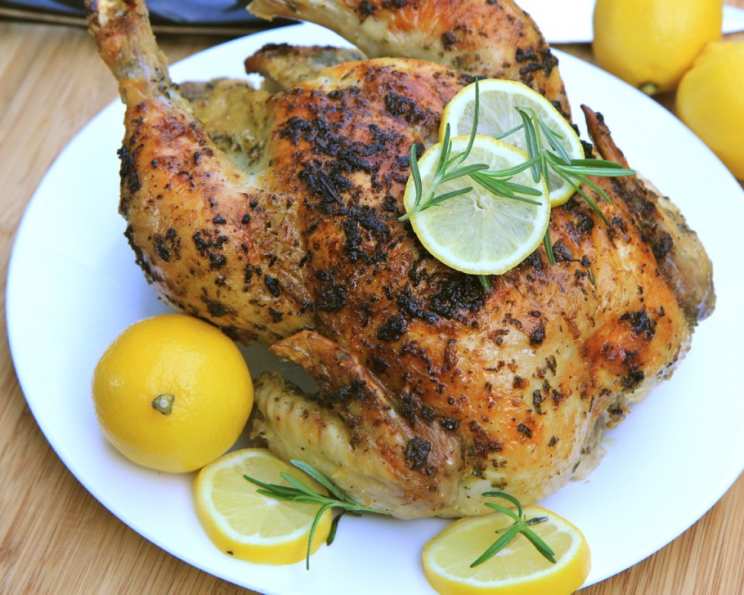
Rotisserie Lemon-Rosemary Chicken: A Taste of Sunshine on a Spit
The first time I tasted rotisserie chicken prepared with lemon and rosemary, I was at a bustling farmer’s market in Provence. The aroma alone, a heady blend of citrus zest, herbaceous rosemary, and roasting chicken, drew me in like a moth to a flame. Watching the golden-brown birds slowly turning on the spit, basting in their own juices, was mesmerizing. Each bite was an explosion of flavor – the crisp, savory skin giving way to succulent, perfectly cooked meat, brightened by the lemon and grounded by the earthy rosemary. That simple chicken was a revelation, and I’ve been chasing that taste of sunshine ever since.
Recipe Overview
- Prep Time: 8 hours 15 minutes
- Cook Time: 1 hour 20 minutes
- Total Time: 9 hours 35 minutes
- Servings: 6
- Yield: 1 whole chicken
- Dietary Type: Gluten-Free, Dairy-Free
Ingredients
- 1 (4 lb) chicken
Marinade
- 1/2 cup fresh lemon juice
- 1 lemon, zest of, grated
- 5 garlic cloves, minced
- 1/4 cup fresh rosemary leaf
- 1 teaspoon salt
- 1 teaspoon fresh ground black pepper
- 1/4 cup olive oil
Equipment Needed
- 2-gallon zip-top bag
- Rotisserie spit rod assembly
- Butcher’s twine (optional, for trussing)
- Instant-read meat thermometer
Instructions
- Begin by preparing the chicken. Wash the chicken inside and out under cold water, then pat it completely dry with paper towels. Removing excess moisture is crucial for achieving that desirable crispy skin. Remove any excess fat from the skin as well.
- Place the chicken in a 2-gallon zip-top bag. This will make marinating easier and ensure even flavor distribution.
- Now, prepare the marinade. In a bowl, whisk together the fresh lemon juice, lemon zest, minced garlic cloves, fresh rosemary leaf, salt, fresh ground black pepper, and olive oil. The combination of lemon and rosemary provides a bright, aromatic flavor that penetrates the chicken during the marinating process.
- Pour the marinade over the chicken in the bag. Seal the bag, removing as much air as possible, and massage the marinade into the chicken, ensuring it’s thoroughly coated.
- Marinate in the refrigerator for about 8 hours. This allows ample time for the flavors to infuse the chicken, resulting in a more flavorful and tender final product. Turning the bag occasionally during marinating ensures even exposure.
- Remove the chicken from the marinade and drain thoroughly. Discard the marinade.
- Load the chicken onto the spit rod assembly. Secure it tightly, following the manufacturer’s directions for your rotisserie.
- Truss the chicken according to the manufacturer’s directions, or tie the legs together with butcher’s twine. Then, tie another string around the body and wings to prevent them from flopping around during cooking. This ensures even cooking and a more aesthetically pleasing appearance.
- Roast the chicken until an instant-read meat thermometer inserted into the thickest part of the thigh registers 175 degrees Fahrenheit, about 20 minutes per pound. Cooking time can vary depending on the rotisserie and the size of the chicken, so always rely on temperature rather than time alone. A properly cooked chicken will have clear juices running from it when pierced in the thigh.
- Remove the chicken from the spit, cover it loosely with foil, and let it rest for about 10 minutes before carving. This allows the juices to redistribute throughout the chicken, resulting in a more tender and flavorful bird.
Expert Tips & Tricks
- Crispy Skin Secret: For extra crispy skin, pat the chicken completely dry, inside and out, before marinating. You can even leave it uncovered in the refrigerator for an hour or two before marinating to dry out the skin further.
- Herbs: Feel free to add other herbs to the marinade, such as thyme or oregano, to customize the flavor profile.
- Don’t Overcrowd: Ensure the chicken is properly balanced on the spit rod to ensure even cooking. An unbalanced load will cause uneven cooking and could strain your rotisserie motor.
- Basting: While not strictly necessary with a rotisserie, basting the chicken with pan juices halfway through the cooking process can enhance the flavor and moisture.
- Temperature is Key: Always use an instant-read thermometer to ensure the chicken is cooked to a safe internal temperature.
Serving & Storage Suggestions
Serve the Rotisserie Lemon-Rosemary Chicken hot, directly from the rotisserie. Carve it into serving pieces and arrange on a platter. The bright flavors pair well with roasted vegetables, a simple green salad, or creamy mashed potatoes.
Leftover cooked chicken can be stored in an airtight container in the refrigerator for up to 3-4 days. It can also be frozen for up to 2-3 months. To reheat, bake in a preheated oven at 350°F (175°C) until heated through, or microwave in short intervals. To retain moisture when reheating, consider adding a splash of chicken broth or water to the container. Do not leave cooked chicken at room temperature for more than 2 hours.
Nutritional Information
| Nutrient | Amount per Serving | % Daily Value |
|---|---|---|
| Calories | 486.4 kcal | N/A |
| Calories from Fat | 331 g | 68% |
| Total Fat | 36.8 g | 56% |
| Saturated Fat | 9.2 g | 46% |
| Cholesterol | 138 mg | 46% |
| Sodium | 517.6 mg | 21% |
| Total Carbohydrate | 3 g | 1% |
| Dietary Fiber | 0.4 g | 1% |
| Sugars | 0.5 g | 2% |
| Protein | 34.5 g | 69% |
Nutritional information is an estimate and may vary based on specific ingredients and preparation methods.
Variations & Substitutions
- Spice It Up: Add a pinch of red pepper flakes to the marinade for a touch of heat.
- Herb Garden Variation: Experiment with different herbs in the marinade. Thyme, oregano, or even a touch of sage can add unique flavors.
- Citrus Twist: Replace the lemon with orange or grapefruit for a different citrus profile.
- Sweet & Savory: Add a tablespoon of honey or maple syrup to the marinade for a touch of sweetness.
FAQs (Frequently Asked Questions)
Q: Can I use dried rosemary instead of fresh?
A: While fresh rosemary provides the best flavor, you can use dried rosemary in a pinch. Use about 1 teaspoon of dried rosemary for every tablespoon of fresh.
Q: How do I prevent the chicken from drying out?
A: Marinating the chicken helps to keep it moist during cooking. Also, avoid overcooking the chicken. The internal temperature should reach 175°F (79°C) in the thickest part of the thigh.
Q: Can I make this recipe without a rotisserie?
A: Yes, you can roast the chicken in a conventional oven. Preheat the oven to 375°F (190°C) and roast for about 1 hour 15 minutes, or until the internal temperature reaches 175°F (79°C).
Q: How can I tell if the chicken is cooked through without a thermometer?
A: If you don’t have a thermometer, pierce the chicken in the thickest part of the thigh with a fork or knife. If the juices run clear, the chicken is likely cooked through.
Q: What is the best way to reheat leftover rotisserie chicken?
A: The best way to reheat leftover rotisserie chicken is in the oven at 350°F (175°C) covered with foil to prevent it from drying out. You can also microwave it, but be careful not to overcook it.
Final Thoughts
This Rotisserie Lemon-Rosemary Chicken is more than just a meal; it’s an experience. The intoxicating aroma filling your kitchen, the anticipation of the first bite, and the satisfaction of sharing a delicious, home-cooked meal with loved ones – it all adds up to something truly special. So, dust off your rotisserie, gather your ingredients, and embark on this culinary adventure. Don’t be afraid to experiment with different herbs and spices to create your own signature flavor. And most importantly, enjoy the process and the delicious results. I’d love to hear about your experience, so please share your feedback or any variations you try. Pair it with a crisp, dry white wine like Sauvignon Blanc to truly elevate the meal. Bon appétit!