
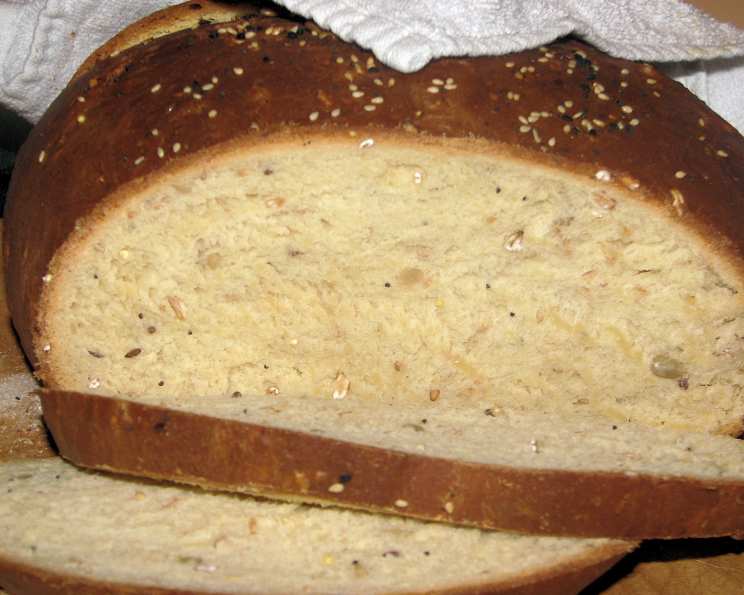
Rustic Country Sourdough Bread
There’s something magical about the smell of freshly baked bread wafting through the house. It evokes memories of my grandmother’s kitchen, a warm and inviting space where she would spend hours kneading dough with her strong, capable hands. I remember watching her, mesmerized, as she transformed simple ingredients into golden, crusty loaves that nourished both body and soul. This sourdough recipe, while adapted for modern kitchens, carries that same spirit of homespun goodness.
Recipe Overview
- Prep Time: 30 minutes
- Rise Time: 2-2.5 hours
- Cook Time: 30-35 minutes
- Total Time: 3 hours 30 minutes
- Yield: 2 loaves
- Servings: 20
Ingredients
- 4 1/2 teaspoons dry active yeast (2 packages dry yeast)
- 1 1/4 cups warm water (105-110 degrees F)
- 1 cup sourdough starter (at room temperature)
- 1/4 cup Splenda granular
- 3/4 tablespoon kosher salt
- 2 eggs, beaten
- 1/4 cup sunflower oil
- 4 -5 cups unbleached flour, divided
- Sunflower oil, for brushing
- Melted butter, for brushing
Equipment Needed
- Stand Mixer (KitchenAid recommended)
- Mixing Bowls
- Measuring Cups and Spoons
- Greased 9x5x3 inch Loaf Pans
- Warm Place for Proofing (Oven with pilot light, or dedicated proofing box)
Instructions
-
Begin by gently placing the eggs into a bowl of warm water. Allow them to sit for approximately 10-15 minutes. This helps bring the eggs to room temperature, which aids in better gluten development in the dough.
-
Prepare your stand mixer’s bowl. If using a KitchenAid, warm the bowl by filling it with hot water. After a minute or two, carefully dump out the water and thoroughly towel dry the bowl. This pre-warming encourages the yeast to activate more quickly.
-
In the warmed mixing bowl, dissolve the dry active yeast in the warm water. Ensure the water temperature is between 105-110 degrees Fahrenheit. Too hot, and you’ll kill the yeast; too cold, and it won’t activate properly.
-
Let the yeast and water mixture stand for 5 minutes. You should see a slight frothing or bubbling, indicating that the yeast is alive and active. This step is crucial to ensure your bread rises beautifully.
-
Attach the dough hook to your stand mixer. On speed 1 (low), stir in the sourdough starter, Splenda granular, kosher salt, warmed eggs, sunflower oil, and 3 cups of the unbleached flour.
-
Gradually add the remaining flour, a little at a time, until the dough begins to separate from the sides of the mixing bowl. This process should take approximately 8 minutes. Be patient and avoid adding too much flour at once, as this can result in a dry, dense loaf. You want the dough to be slightly sticky but still manageable.
-
Lightly grease a large bowl with sunflower oil. Place the dough in the bowl, turning it to coat the top with oil. This prevents the dough from drying out as it rises.
-
Cover the bowl with plastic wrap or a clean kitchen towel. Place the bowl in a warm, draft-free place (around 85 degrees F). A slightly warmed oven with the pilot light on works well, or you can use a dedicated proofing box if you have one.
-
Let the dough rise for 1 to 1 1/2 hours, or until it has doubled in bulk. The rising time will vary depending on the warmth of your environment. Keep an eye on the dough and allow it to fully double for the best texture.
-
Once the dough has doubled, punch it down gently to release the air. Divide the dough in half.
-
Shape each half into a loaf. You can also use this dough to make dinner rolls if desired.
-
Grease two 9x5x3 inch loaf pans thoroughly. Place each loaf into a prepared pan.
-
Brush the tops of the loaves with sunflower oil. This will help create a golden-brown crust.
-
Cover the loaves with plastic wrap or a clean kitchen towel. Let them rise again in a warm, draft-free place (around 85 degrees F) for about 1 hour, or until they have doubled in bulk.
-
Preheat your oven to 375 degrees Fahrenheit.
-
Bake the loaves at 375 degrees F for 30 to 35 minutes, or until they sound hollow when tapped on the bottom. Keep an eye on the loaves, and if they begin to brown too quickly, tent them loosely with foil.
-
Remove the loaves from the oven and let them cool in the pans for a few minutes before transferring them to a wire rack to cool completely.
-
While the loaves are still warm, brush the tops with melted butter. This adds a rich flavor and beautiful sheen to the crust.
Expert Tips & Tricks
- For a tangier sourdough flavor, try using a more mature starter (one that hasn’t been fed in a few days).
- If your kitchen is cold, you can speed up the rising process by placing the dough in a bowl set over a pan of warm water.
- Don’t over-knead the dough, as this can result in a tough loaf. Stop mixing when the dough pulls away from the sides of the bowl and is slightly tacky.
- For an even crispier crust, try baking the bread in a Dutch oven. Preheat the Dutch oven along with the oven, then carefully place the dough inside.
- Use a digital thermometer to check the internal temperature of the bread. It should reach around 200-210 degrees Fahrenheit.
Serving & Storage Suggestions
Serve this rustic sourdough bread warm with a pat of butter, a drizzle of olive oil, or alongside your favorite soup or stew. It’s also delicious toasted and topped with avocado, cheese, or jam.
To store, wrap the cooled bread tightly in plastic wrap or place it in a bread bag. It will stay fresh at room temperature for 2-3 days. For longer storage, slice the bread and freeze it in an airtight container for up to 3 months. To reheat, thaw the slices and toast them, or wrap the whole loaf in foil and warm it in a 350-degree oven for about 15 minutes.
Nutritional Information
| Nutrient | Amount per Serving | % Daily Value |
|---|---|---|
| Calories | 125.2 kcal | N/A |
| Calories from Fat | 31 g | 25% |
| Total Fat | 3.5 g | 5% |
| Saturated Fat | 0.6 g | 2% |
| Cholesterol | 18.6 mg | 6% |
| Sodium | 270.1 mg | 11% |
| Total Carbohydrate | 19.5 g | 6% |
| Dietary Fiber | 0.9 g | 3% |
| Sugars | 0.1 g | 0% |
| Protein | 3.6 g | 7% |
Variations & Substitutions
- For a whole wheat version, substitute up to half of the unbleached flour with whole wheat flour.
- Add herbs like rosemary, thyme, or oregano to the dough for a flavorful twist.
- Incorporate seeds such as sunflower, pumpkin, or flax seeds for added texture and nutrition.
- If you don’t have Splenda, you can use regular sugar or honey as a substitute.
- For a dairy-free version, use your favorite non-dairy butter alternative.
FAQs (Frequently Asked Questions):
Q: My sourdough starter isn’t very active. What can I do?
A: Make sure you’re feeding your starter regularly (every 12-24 hours) with equal parts flour and water. A warmer environment will also encourage activity.
Q: Why is my bread so dense?
A: This could be due to several factors, including not using enough yeast, not letting the dough rise long enough, or over-kneading the dough.
Q: Can I use a different type of oil?
A: Yes, you can substitute sunflower oil with another neutral-flavored oil like canola or vegetable oil.
Q: How do I know when the bread is done baking?
A: The bread should be golden brown and sound hollow when tapped on the bottom. You can also use a thermometer to check for an internal temperature of 200-210 degrees Fahrenheit.
Q: Can I make this recipe without a stand mixer?
A: Yes, you can knead the dough by hand. It will require more effort and time, but it’s certainly possible.
Final Thoughts
Baking this rustic country sourdough bread is more than just following a recipe; it’s an act of connecting with tradition and creating something truly special. Don’t be intimidated by the process—embrace it! The reward of a warm, crusty loaf, made with your own hands, is well worth the effort. Share your creations with loved ones, and savor the simple pleasure of good bread. And most importantly, don’t hesitate to experiment and make this recipe your own. Happy baking!