
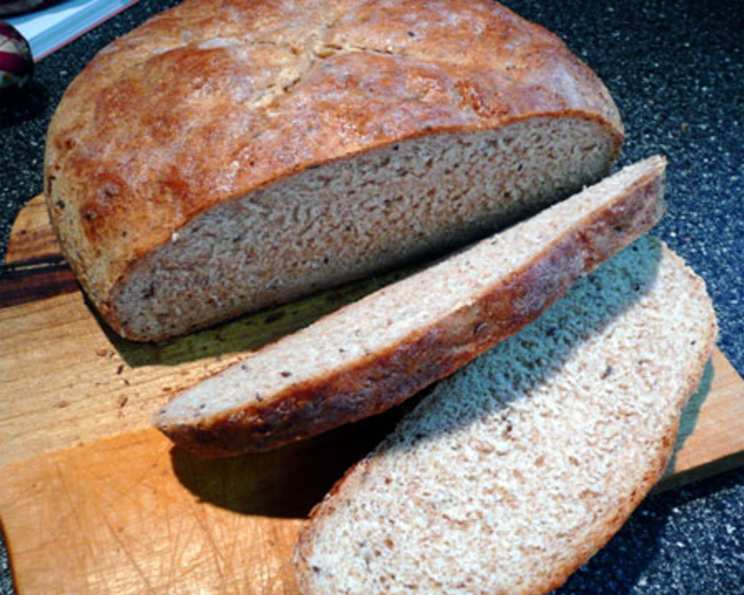
Hearty Homemade Rye: Bread Machine Magic
The aroma of rye bread baking always takes me back to my grandmother’s kitchen. She wasn’t a fancy baker, but her rye loaves were legendary – dense, flavorful, and always piled high with corned beef and tangy mustard. The hearty smell would fill the house, a warm, comforting embrace that signaled a delicious meal and even better company. While she kneaded hers by hand, I’ve embraced the convenience of the bread machine to recreate that same comforting flavor, with a few modern twists.
Recipe Overview
- Prep Time: 15 minutes
- Cook Time: 35 minutes (oven bake) or depends on bread machine
- Total Time: 3 hours 20 minutes (including rise time)
- Yields: 1 pound loaf
- Serves: 12
- Dietary Type: Vegetarian (can be vegan by substituting dry milk)
Ingredients
- 1 cup cold water, plus 2 tablespoons cold water
- 1 tablespoon olive oil
- 1 1/2 tablespoons honey
- 3/4 teaspoon salt
- 2 teaspoons caraway seeds
- 1 cup rye flour
- 1 1/2 cups bread flour
- 1/4 cup white wheat flour
- 3 tablespoons wheat gluten
- 3 tablespoons dry milk (can substitute with soy milk powder or omit)
- 1 1/2 teaspoons bread machine yeast
Equipment Needed
- Bread Machine
- Measuring cups and spoons
- Greased bread pan (if baking in the oven)
- Damp cotton towel (if baking in the oven)
- Baking stone (optional, for a crustier crust)
Instructions
-
Prepare the Bread Machine: Ensure your bread machine is clean and ready to go. Refer to your bread machine’s manual for specific instructions on adding ingredients.
-
Add Wet Ingredients: Pour 1 cup plus 2 tablespoons of cold water into the bread machine pan. Follow with 1 tablespoon of olive oil and 1 1/2 tablespoons of honey.
-
Add Dry Ingredients: Add 3/4 teaspoon of salt, 2 teaspoons of caraway seeds, 1 cup of rye flour, 1 1/2 cups of bread flour, 1/4 cup of white wheat flour, 3 tablespoons of wheat gluten, and 3 tablespoons of dry milk to the pan. Make sure the salt and yeast don’t touch directly.
-
Add Yeast: Make a small well on top of the dry ingredients and add 1 1/2 teaspoons of bread machine yeast. This ensures the yeast is activated properly.
-
Select Bread Machine Cycle: Select the “Whole Wheat” cycle on your bread machine. This cycle typically includes a longer kneading and rising time, which is ideal for rye bread. Start the machine.
-
Alternative Oven Baking Method (Dough Cycle): If you prefer to bake the bread in the oven, use the “Dough” cycle on your bread machine. This cycle will knead and proof the dough for you.
-
Second Rise (Oven Baking): After the dough cycle is complete, gently remove the dough from the bread machine pan. Place it in a greased bread pan. Cover the pan with a damp cotton towel and let it rise in a warm place until the dough almost doubles in size. This usually takes about 1 to 1.5 hours.
-
Preheat Oven (Oven Baking): Preheat your oven to 350°F (175°C).
-
Bake (Oven Baking): Bake the bread for 35 minutes, or until golden brown. For a crustier crust, remove the bread from the pan after 25 minutes and place it directly on a baking stone for the remaining 10 minutes of baking.
-
Cooling: Once the bread is baked, remove it from the bread machine or oven. Let it cool on a wire rack before slicing and serving.
-
Optional Butter Glaze: While the bread is still warm, rub a small amount of cold butter over the top crust for an extra layer of flavor and a beautiful sheen.
Expert Tips & Tricks
- The Right Flour is Key: Using a combination of rye flour, bread flour, and white wheat flour is essential for the right texture and flavor. Don’t substitute these unless you’re familiar with the effects of other flours on bread baking.
- Wheat Gluten is Your Friend: Rye flour has less gluten than wheat flour, so adding wheat gluten is crucial for a good rise and structure. Don’t skip it!
- Adjust Liquid as Needed: Depending on the humidity in your kitchen and the brand of flour you’re using, you might need to adjust the amount of water slightly. The dough should be slightly tacky but not overly sticky.
- Kneading Time Matters: If baking in the oven, ensure the dough is properly kneaded in the bread machine before the dough cycle ends. This develops the gluten and creates a better texture.
- Temperature is Critical: Ensure your water is cold. Hot water can activate the yeast too early and inhibit the bread’s rising properly. Use an oven thermometer to ensure the correct baking temperature.
Serving & Storage Suggestions
Serve this hearty rye bread warm or at room temperature. It’s perfect for sandwiches, especially with corned beef, pastrami, or smoked turkey. It also makes excellent toast, especially when topped with cream cheese and smoked salmon.
Store the bread in an airtight container at room temperature for up to 3 days. For longer storage, wrap it tightly in plastic wrap and freeze it for up to 2 months. To reheat, thaw the bread completely and then warm it in a 350°F (175°C) oven for 5-10 minutes, or toast individual slices.
Nutritional Information
| Nutrient | Amount per Serving | % Daily Value |
|---|---|---|
| Calories | 125.5 kcal | N/A |
| Calories from Fat | N/A | N/A |
| Total Fat | 2.1 g | 3% |
| Saturated Fat | 0.5 g | 2% |
| Cholesterol | 1.9 mg | 0% |
| Sodium | 154 mg | 6% |
| Total Carbohydrate | 23.6 g | 7% |
| Dietary Fiber | 2.2 g | 8% |
| Sugars | 3 g | N/A |
| Protein | 3.5 g | 7% |
Note: Nutritional information is an estimate and may vary based on specific ingredients and preparation methods.
Variations & Substitutions
- Dark Rye: Substitute up to 1/2 cup of the rye flour with dark rye flour for a richer, more intense flavor.
- Pumpernickel: Add 2 tablespoons of unsweetened cocoa powder and 1 tablespoon of molasses to the dough for a pumpernickel-like flavor.
- Onion Rye: Add 1/4 cup of dried minced onions to the dough for an onion-flavored rye bread.
- Vegan Option: Replace the dry milk with soy milk powder or simply omit it. The bread will still be delicious!
- Seed Variations: Experiment with different seeds like sesame seeds, poppy seeds, or sunflower seeds. Add them to the dough or sprinkle them on top before baking.
FAQs (Frequently Asked Questions)
Q: Can I use active dry yeast instead of bread machine yeast?
A: Yes, but you’ll need to proof the active dry yeast first. Dissolve it in warm water with a teaspoon of sugar and let it sit for 5-10 minutes until it foams before adding it to the bread machine.
Q: My bread didn’t rise properly. What could be the reason?
A: Possible reasons include using expired yeast, incorrect water temperature, or too much salt. Make sure your yeast is fresh, the water is cold, and you’re using the correct amount of salt.
Q: Can I make this recipe without wheat gluten?
A: It’s not recommended. Wheat gluten is essential for giving the bread structure and a good rise, especially when using rye flour, which has less gluten than wheat flour. The bread may be very dense or flat without it.
Q: How do I know when the bread is done? (Oven Method)
A: The bread is done when it’s golden brown and sounds hollow when tapped on the bottom. You can also use a thermometer; the internal temperature should be around 200-210°F (93-99°C).
Q: Can I freeze the dough instead of baking it right away?
A: Yes, after the dough cycle is complete, you can freeze the dough. Wrap it tightly in plastic wrap and then in foil. Thaw it in the refrigerator overnight before letting it rise again and baking.
Final Thoughts
Now it’s your turn! I hope you feel inspired to try this bread machine rye recipe. There’s nothing quite like the satisfaction of pulling a warm, fragrant loaf from the bread machine or oven. It’s a simple pleasure that elevates any meal. Don’t be afraid to experiment with variations and make it your own. I would love to see your creations and hear about your experience! Enjoy!