
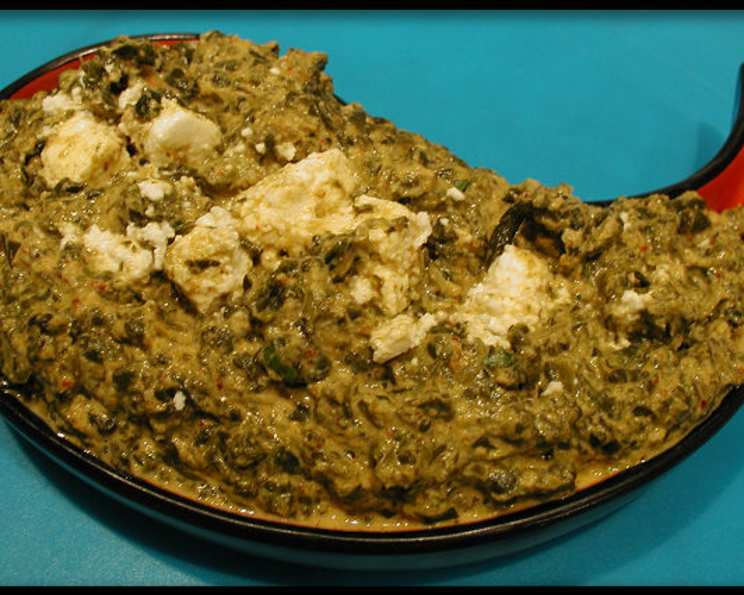
Saag Paneer: A Culinary Journey to Comfort
My first encounter with Saag Paneer was in a tiny, unassuming restaurant tucked away in a bustling Houston neighborhood. The aroma alone, a symphony of earthy greens and warm spices, drew me in. I remember the creamy texture coating my palate, the subtle bitterness of the spinach perfectly balanced by the richness of the paneer. Each bite was a revelation, a comforting embrace that transported me to a place of culinary bliss. It wasn’t just a meal; it was an experience that sparked a lifelong love affair with Indian cuisine.
Recipe Overview
- Prep Time: 15 minutes
- Cook Time: 35-45 minutes
- Total Time: 50-60 minutes
- Servings: 4-6
- Yield: Varies depending on spinach volume
- Dietary Type: Vegetarian
Ingredients
- 1 large onion
- 6 garlic cloves
- 1 ounce fresh ginger
- 1 lb frozen spinach, thawed
- 1 cup plain yogurt
- 4 ounces buttermilk
- 2 teaspoons red chili powder
- 2 teaspoons garam masala
- 1 cup half-and-half
- 6 ounces paneer cheese
- Salt (to taste)
Equipment Needed
- Medium saucepan
- Blender or food processor
- Potato masher
Instructions
-
Begin by preparing your base. Roughly chop the onion, garlic, and ginger. Then, in a blender or food processor, grind these ingredients into a fine paste. The finer the paste, the smoother your final saag will be.
-
In a medium saucepan, combine the onion-garlic-ginger paste, thawed spinach, plain yogurt, buttermilk, red chili powder, and garam masala. Ensure the spinach is thoroughly thawed and excess water is squeezed out. This prevents a watery final product.
-
Bring the mixture to a simmer over medium heat. Cover the saucepan and let it simmer for 20 to 30 minutes, stirring occasionally to prevent sticking. This allows the flavors to meld and the spinach to soften completely.
-
Remove from heat and use a potato masher to mash the ingredients. You can mash to your preferred consistency; some people prefer a smoother saag, while others enjoy a slightly more textured result. Alternatively, for an ultra-smooth texture, use an immersion blender carefully directly in the pot.
-
Stir in the half-and-half. Return the saucepan to low heat and simmer until the mixture has a creamy consistency, typically 10 to 15 minutes. Stir frequently to prevent scorching.
-
Dice the paneer cheese into approximately 1/2-inch cubes. Gently fold the paneer into the saag. Simmer for an additional 5 minutes, allowing the paneer to warm through and absorb the flavors of the saag. Be gentle to avoid breaking the paneer.
-
Season with salt to taste. Start with a teaspoon and adjust as needed, bearing in mind the yogurt and paneer may already contribute some saltiness.
Expert Tips & Tricks
- Ginger-Garlic Paste Power: Make a big batch of ginger-garlic paste and freeze it in ice cube trays. Pop out a cube whenever you need it for Indian cooking.
- Spinach Squeeze: Squeezing out all the excess water from the thawed spinach is crucial. It concentrates the spinach flavor and prevents a watery saag. A cheesecloth or clean kitchen towel works best for this.
- Paneer Perfection: For a richer flavor, you can lightly pan-fry the paneer in a little ghee or butter before adding it to the saag. This adds a lovely golden crust and nutty flavor.
- Spice Adjustment: Adjust the amount of red chili powder to control the level of spiciness. If you prefer a milder dish, start with 1 teaspoon and add more to taste. Kashmiri chili powder adds beautiful color with less heat.
- Creamy Consistency: If the saag is too thick, add a splash more half-and-half or even a little water to reach your desired consistency. Conversely, if it’s too thin, simmer for a few more minutes, uncovered, to allow some of the liquid to evaporate.
Serving & Storage Suggestions
Serve your Saag Paneer hot, garnished with a swirl of cream or a dollop of plain yogurt and a sprinkle of garam masala. It pairs perfectly with naan bread, roti, or basmati rice. A side of raita (yogurt dip) complements the richness of the dish beautifully.
Leftovers can be stored in an airtight container in the refrigerator for up to 3 days. Reheat gently on the stovetop over low heat, adding a little water or half-and-half if necessary to loosen the sauce. You can also microwave it, but be careful not to overcook the paneer. Saag paneer can be frozen for up to 2 months. Thaw overnight in the refrigerator before reheating.
Nutritional Information
| Nutrient | Amount per Serving | % Daily Value (approximate) |
|---|---|---|
| Calories | 250 kcal | 13% |
| Total Fat | 15g | 23% |
| Saturated Fat | 9g | 45% |
| Cholesterol | 45mg | 15% |
| Sodium | 300mg | 13% |
| Total Carbohydrate | 15g | 5% |
| Dietary Fiber | 5g | 20% |
| Sugars | 8g | |
| Protein | 12g | 24% |
Note: Nutritional information is an estimate and can vary based on specific ingredients and portion sizes.
Variations & Substitutions
- Vegan Saag: Substitute the yogurt and buttermilk with plant-based alternatives like coconut yogurt and almond milk. Use a vegan paneer substitute or firm tofu.
- Mustard Greens Magic: Add a handful of chopped mustard greens along with the spinach for a bolder, more peppery flavor.
- Creamy Cashews: Blend a handful of soaked cashews into the saag for added creaminess and richness, especially if you’re making a vegan version.
- Spiced Up: Experiment with adding other spices like turmeric, coriander powder, or cumin powder to customize the flavor profile.
- Leafy Greens Galore: Use a mix of different leafy greens such as kale, collard greens, or chard in addition to or in place of some of the spinach.
FAQs (Frequently Asked Questions)
Q: Can I use fresh spinach instead of frozen?
A: Yes, you can! Use about 2 pounds of fresh spinach. Be sure to wash it thoroughly and remove any tough stems. You may need to wilt it down in a pan before adding it to the recipe to reduce its volume.
Q: What is paneer and where can I find it?
A: Paneer is a fresh, non-melting cheese common in Indian cuisine. It has a mild, milky flavor and a firm texture. You can usually find it in the refrigerated section of Indian grocery stores or specialty cheese shops, and sometimes in well-stocked supermarkets.
Q: Can I make Saag Paneer ahead of time?
A: Absolutely! Saag Paneer actually tastes even better the next day as the flavors have time to meld. Prepare it a day or two in advance and store it in the refrigerator until you’re ready to serve.
Q: How do I prevent the yogurt from curdling?
A: Temper the yogurt before adding it to the hot pan by whisking in a tablespoon or two of the hot saag mixture into the yogurt. This helps to gradually raise the yogurt’s temperature and prevent curdling. Also, keep the heat on low.
Q: My Saag Paneer is too bitter. What can I do?
A: A touch of sweetness can help balance the bitterness. Try adding a small pinch of sugar or a drizzle of honey to the saag.
Final Thoughts
Saag Paneer is more than just a dish; it’s a warm, comforting hug in a bowl. I encourage you to try this recipe and experience the magic for yourself. Don’t be afraid to experiment with the spices and adjust the flavors to your liking. Once you’ve mastered this classic, you’ll be well on your way to exploring the rich and diverse world of Indian cuisine. I’m eager to hear about your culinary creations – share your feedback and any exciting variations you discover! Pair your Saag Paneer with a crisp Indian lager or a refreshing mango lassi for the ultimate dining experience. Happy cooking!