
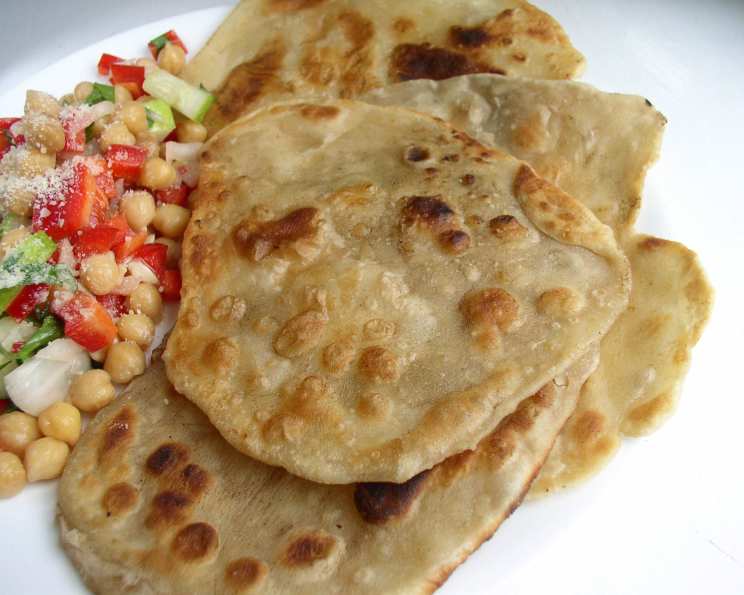
Sabaayad: A Taste of Home
The scent of sabaayad sizzling on a hot griddle instantly transports me back to my childhood. I remember standing beside my grandmother, watching her deft hands work the dough with practiced ease. The rhythmic slap of the dough against the counter, the gentle hiss as it hit the hot pan, and the warm, comforting aroma filling the kitchen – these are memories etched in my heart. More than just a flatbread, sabaayad is a symbol of family, warmth, and the simple joys of home.
Recipe Overview
- Prep Time: 30 minutes
- Cook Time: 20 minutes
- Total Time: 50 minutes
- Yields: 8 breads
- Serves: 8
- Dietary Type: Vegetarian
Ingredients
- 3 cups flour
- 1 – 1 ½ cups water
- ½ teaspoon salt, to taste
- 2 tablespoons oil, plus more for cooking
Equipment Needed
- Large mixing bowl
- Rolling pin
- Clean kitchen towel
- Griddle or large frying pan
- Paper towels
Instructions
- In a large, deep bowl, combine the flour, oil, and salt.
- Gradually add the water, using your fingers to incorporate it into the dry ingredients. Add the water slowly, as you may not need the full amount.
- Knead the dough for 5 to 10 minutes, until it becomes very smooth and elastic. The dough should be soft but not sticky. If it’s too sticky, add a little more flour, one tablespoon at a time.
- Brush the dough with a thin layer of oil.
- Cover the bowl with a clean kitchen towel or plastic wrap and set aside for at least 30 minutes. This resting period allows the gluten to relax, making the dough easier to roll out. You can let it rest for up to an hour.
- Divide the dough into 8 equal-sized balls.
- On a lightly floured surface, roll out each ball into a rough circle, about 8 inches in diameter. Don’t worry if the circles aren’t perfect; the rustic shape adds to the charm of sabaayad.
- Brush one side of the rolled-out dough with oil, spreading it evenly to the edges.
- Fold two opposite edges of the oiled dough inward to meet in the center, creating a rectangle.
- Fold the other two edges inward to meet in the center, forming a square. This creates layers within the flatbread.
- Set aside the folded squares and repeat the oiling and folding process with the remaining dough balls.
- Again, on a lightly floured surface, roll out each folded square into a circle. Be gentle as you roll to avoid tearing the dough.
- Heat a griddle or large frying pan over medium heat. The pan should be hot enough that a drop of water sizzles and evaporates quickly.
- Lightly oil the hot griddle.
- Place one sabaayad on the hot griddle.
- Fry the sabaayad for 2-3 minutes per side, or until golden brown and slightly puffed up. Use a spatula to gently press down on the flatbread as it cooks to ensure even browning.
- Flip the sabaayad and fry the other side for another 2-3 minutes, until golden brown.
- The sabaayad will puff slightly as it cooks, indicating that it’s forming layers.
- Remove the cooked sabaayad from the griddle and drain it on paper towels to remove excess oil.
- Repeat the frying process with the remaining sabaayad.
- Serve warm.
Expert Tips & Tricks
- Dough Consistency is Key: The texture of the dough is crucial for achieving the perfect sabaayad. It should be soft, pliable, and slightly elastic. If the dough is too dry, it will be difficult to roll out and may crack. If it’s too wet, it will be sticky and hard to manage. Adjust the amount of water accordingly to achieve the right consistency.
- Resting the Dough: Don’t skip the resting period! This allows the gluten in the flour to relax, making the dough easier to roll out and preventing it from shrinking back. A well-rested dough will result in a more tender and pliable sabaayad.
- Temperature Control: Maintaining the right heat is essential for even cooking. If the griddle is too hot, the sabaayad will burn on the outside before it’s cooked through. If it’s not hot enough, the sabaayad will be pale and greasy. Aim for medium heat and adjust as needed.
- Layering for Flakiness: The folding and oiling technique creates layers within the sabaayad, resulting in a flaky and slightly chewy texture. Be sure to brush the dough evenly with oil before folding to ensure that the layers separate properly.
- Pressing While Cooking: Gently pressing down on the sabaayad with a spatula while it’s cooking helps to ensure even browning and prevents it from puffing up too much. This also helps to create a slightly crispier texture.
Serving & Storage Suggestions
Sabaayad is best served warm, straight from the griddle. It can be enjoyed in a variety of ways:
- With tea: A classic pairing is a cup of Somali tea (shaah) sweetened with sugar and milk.
- With stews and sauces: Sabaayad makes a delicious accompaniment to savory stews, curries, and sauces. Use it to scoop up the sauce or tear it into pieces and dip it in.
- With butter and sugar or honey: For a sweet treat, spread warm sabaayad with butter and sprinkle with sugar or drizzle with honey.
- As a wrap: Use sabaayad as a wrap for grilled meats, vegetables, or salads.
Storage:
- Room Temperature: Cooked sabaayad can be stored at room temperature for up to 2 days in an airtight container.
- Refrigerator: For longer storage, store the sabaayad in an airtight container in the refrigerator for up to 5 days.
- Freezer: Sabaayad can be frozen for up to 2 months. Wrap each piece individually in plastic wrap and then place them in a freezer-safe bag.
Reheating:
- Griddle: Reheat sabaayad on a hot griddle for a few minutes per side, until warmed through.
- Oven: Preheat the oven to 350°F (175°C) and reheat the sabaayad for 5-10 minutes, or until warmed through.
- Microwave: Reheat sabaayad in the microwave for 30-60 seconds, or until warmed through. However, microwaving can make the sabaayad a bit soft.
Nutritional Information
| Nutrient | Amount per Serving | % Daily Value |
|---|---|---|
| Calories | 200.7 kcal | – |
| Calories from Fat | 34 g | 17% |
| Total Fat | 3.9 g | 5% |
| Saturated Fat | 0.5 g | 2% |
| Cholesterol | 0 mg | 0% |
| Sodium | 147.2 mg | 6% |
| Total Carbohydrate | 35.8 g | 11% |
| Dietary Fiber | 1.3 g | 5% |
| Sugars | 0.1 g | 0% |
| Protein | 4.8 g | 9% |
Note: Nutritional information is an estimate and may vary based on specific ingredients and cooking methods.
Variations & Substitutions
- Whole Wheat Sabaayad: Substitute half or all of the all-purpose flour with whole wheat flour for a nuttier flavor and added fiber.
- Spiced Sabaayad: Add a pinch of ground cardamom, cinnamon, or nutmeg to the dough for a warm and aromatic twist.
- Garlic Sabaayad: Mix minced garlic into the oil before brushing it onto the dough.
- Herb Sabaayad: Sprinkle chopped fresh herbs, such as cilantro, parsley, or dill, onto the dough before folding.
- Gluten-Free Sabaayad: Use a gluten-free flour blend designed for bread making. You may need to adjust the amount of water to achieve the right consistency.
FAQs (Frequently Asked Questions)
Q: Why is my sabaayad tough?
A: Over-kneading the dough or using too much flour can result in a tough sabaayad. Be sure to knead the dough for only 5-10 minutes and avoid adding too much flour. Also, ensure the dough has rested adequately.
Q: How do I prevent my sabaayad from sticking to the griddle?
A: Make sure your griddle is properly heated and lightly oiled before placing the sabaayad on it. Use a non-stick griddle if you have one.
Q: Can I make the dough ahead of time?
A: Yes, you can make the dough ahead of time and store it in the refrigerator for up to 2 days. Bring the dough to room temperature before rolling it out.
Q: Why isn’t my sabaayad puffing up?
A: This could be due to the griddle not being hot enough, or the dough not being rolled out thin enough. Ensure the griddle is at medium heat and the dough is rolled out to about 8 inches in diameter.
Q: Can I freeze the cooked sabaayad?
A: Yes, cooked sabaayad freezes well. Wrap each piece individually in plastic wrap and then place them in a freezer-safe bag for up to 2 months.
Final Thoughts
Sabaayad is more than just a recipe; it’s a cultural experience, a taste of tradition, and a simple pleasure to be shared. I encourage you to try this recipe and experience the warmth and comfort of this beloved flatbread. Don’t be afraid to experiment with different variations and make it your own. Whether you enjoy it with a cup of tea, a savory stew, or a simple smear of butter and sugar, I hope this sabaayad recipe brings a little bit of home to your table. Enjoy!