
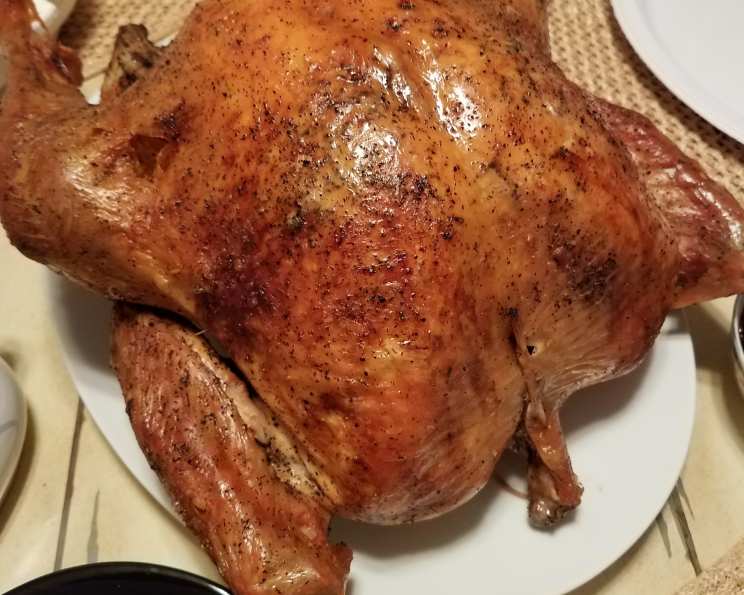
The Two-Hour Thanksgiving Turkey: A Culinary Revelation
Thanksgiving in our house was always a marathon. My grandmother, bless her heart, would start prepping days in advance, turning the kitchen into a flurry of flour, cranberries, and nervous energy. The centerpiece, of course, was the turkey – a majestic bird that seemed to demand a week-long commitment. So, imagine my surprise when I stumbled upon a recipe promising a fully cooked, golden-brown turkey in just two hours! I was skeptical, to say the least, but the thought of reclaiming my Thanksgiving Day was too tempting to resist. The result? A beautifully roasted turkey, juicy and flavorful, that freed up precious time for family, friends, and maybe even a well-deserved nap.
Recipe Overview
- Prep Time: 20 minutes
- Cook Time: 50 minutes to 2 hours 30 minutes (depending on size)
- Total Time: 1 hour 10 minutes to 2 hours 50 minutes
- Servings: 8-10 (depending on turkey size)
- Yield: 1 roasted turkey
- Dietary Type: Gluten-Free, Dairy-Free
Ingredients
- 1 (10 lb – 24 lb) whole turkey (if frozen, fully thawed)
- 1-2 tablespoons extra virgin olive oil
- Kosher salt
- Pepper
Equipment Needed
- 13 x 16 x 3-inch roasting pan
- Adjustable V-shaped roasting rack
- Oven-safe meat thermometer
- Aluminum foil
Instructions
-
Begin by prepping the turkey. Remove and discard any truss that holds the turkey legs together. You’ll find this is usually some sort of plastic or metal clip. Next, pull or trim off and discard any excess fat located in the neck or body cavity of the turkey. Be sure to remove the giblets and neck from the cavity. These can be reserved for making gravy if desired.
-
Rinse the turkey thoroughly inside and out with warm water. Once rinsed, pat the turkey completely dry with paper towels. This step is crucial for achieving crispy skin.
-
Place the adjustable V-shaped rack in a 13 x 16 x 3-inch roasting pan. Adjust the rack sides so that the bird sits a minimum of 2 inches from the bottom of the pan. This allows for better air circulation and prevents the turkey from steaming.
-
Rub the turkey skin generously all over with extra virgin olive oil. The olive oil helps the skin to crisp and brown beautifully. Then, liberally sprinkle the entire turkey with kosher salt and pepper. Don’t be shy with the seasoning!
-
Set the turkey breast-side-up on the rack. Pull the wings away from the body, then firmly twist them to push the wing tips under the bird. This will help prevent the wing tips from burning during roasting.
-
Using aluminum foil, form caps over the tips of the end of each drumstick. This will also prevent the drumsticks from over-browning. If any parts of the turkey extend beyond the pan rim, fashion a foil collar underneath to ensure drippings flow back into the pan. Important: Do not tie the legs together, add stuffing, or close the body cavity.
-
Insert an oven-safe meat thermometer near the center of the breast, through the thickest part, until the tip touches bone. This is the most accurate spot to check for doneness.
-
Roasting Times: These times are estimates and should be used in conjunction with a meat thermometer.
- 10-13 lb: 50 minutes to 1 hour 15 minutes
- 13-16 lb: 1 hour 15 minutes to 1 hour 50 minutes
- 16-19 lb: 1 hour 15 minutes to 2 hours
- 19-22 lb: 1 hour 30 minutes to 2 hours
- 22-24 lb: 1 hour 30 minutes to 2 hours 30 minutes
-
Continue to check the internal temperature as directed during cooking until the thermometer reaches 160°F (71°C). Halfway through the roasting time, rotate the pan in the oven to assure even cooking and browning. If areas on the turkey breast start to get browner than you like, lay a piece of foil over the dark areas.
-
Remove the pan from the oven, set it in a warm spot, and loosely cover the pan with foil to keep the turkey warm. Rearrange the oven racks to accommodate any side dishes like potatoes and dressing. Decrease the oven temperature to 400°F (200°C). Let the turkey rest for 30 to 60 minutes. This resting period allows the internal temperature to reach 165°F (74°C), the USDA safe cooking temperature for poultry.
-
Drain any juices from the body cavity (often plentiful in unstuffed birds) into the roasting pan. Transfer the turkey to a platter or rimmed cutting board. Set aside the juices for gravy.
-
Cut off the turkey legs at the thigh joint. If the joint is red or pink, return the legs to the oven for 3 to 5 minutes (at 300°F to 475°F / 150°C to 245°C) or heat in a microwave oven for 3 to 4 minutes to ensure they are fully cooked.
-
Carve the rest of the turkey. Carving juices may be clear to pink or rosy; both are fine. Save the juices to pour into gravy if desired.
Expert Tips & Tricks
- Thawing Time is Key: For a frozen turkey, plan ahead and place it in the refrigerator to thaw 4-6 days before Thanksgiving.
- Bringing to Room Temperature: Take the turkey out of the refrigerator an hour before cooking to bring it to room temperature. This allows for more even cooking.
- Smoke Prevention: If you notice any smoke, check the pan and wings for drips into the oven. Adjust the foil under the wings, or slide the roasting pan onto a larger shallow rimmed pan. Wipe any drips from the oven bottom.
- Crispy Skin Secret: Ensure the turkey skin is completely dry before rubbing it with olive oil. Moisture is the enemy of crispy skin.
- Don’t Overcrowd the Pan: Use the appropriately sized roasting pan to allow for good air circulation and even cooking.
- Use a Reliable Thermometer: A good-quality meat thermometer is your best friend when roasting a turkey. Don’t rely solely on time estimates.
Serving & Storage Suggestions
Serve the roasted turkey immediately after carving. Arrange the sliced turkey on a platter and garnish with fresh herbs, such as rosemary or thyme. Serve with your favorite Thanksgiving sides, such as mashed potatoes, stuffing, cranberry sauce, and gravy.
Leftover turkey should be stored in an airtight container in the refrigerator within two hours of cooking. It will keep for 3-4 days. For longer storage, freeze leftover turkey in freezer-safe bags or containers. It can be stored in the freezer for up to 2-3 months. Reheat leftover turkey in the oven, microwave, or skillet until heated through. Adding a little broth or gravy during reheating will help to keep the turkey moist.
Nutritional Information
| Nutrient | Amount per Serving | % Daily Value |
|---|---|---|
| Calories | 678.9 kcal | N/A |
| Calories from Fat | 314 g | 46% |
| Total Fat | 35 g | 53% |
| Saturated Fat | 9.6 g | 48% |
| Cholesterol | 282.2 mg | 94% |
| Sodium | 269.8 mg | 11% |
| Total Carbohydrate | 0 g | 0% |
| Dietary Fiber | 0 g | 0% |
| Sugars | 0 g | 0% |
| Protein | 84.7 g | 169% |
Note: Nutritional information is an estimate and may vary based on specific ingredients and portion sizes.
Variations & Substitutions
- Herb Butter Infusion: Before roasting, loosen the skin over the breast and rub herb butter (made with softened butter, chopped herbs like rosemary and thyme, garlic, and lemon zest) underneath. This adds incredible flavor and moisture.
- Citrus and Herb Cavity: Stuff the turkey cavity with quartered lemons, oranges, onions, and fresh herbs for aromatic flavor.
- Spiced Turkey: For a unique flavor profile, try using a spice rub made with smoked paprika, cumin, chili powder, and a touch of cayenne pepper.
- Maple-Glazed Turkey: During the last 30 minutes of roasting, brush the turkey with a maple-mustard glaze for a sweet and savory finish.
FAQs (Frequently Asked Questions)
Q: Why is it important to let the turkey rest before carving?
A: Resting the turkey allows the juices to redistribute throughout the meat, resulting in a more tender and flavorful bird. It also makes carving easier.
Q: Can I stuff this turkey?
A: This recipe is specifically designed for an unstuffed turkey to reduce cooking time and ensure even cooking. Stuffing the turkey will significantly increase the cooking time and may result in unevenly cooked meat.
Q: How do I know when the turkey is done?
A: The most reliable way to determine doneness is to use an oven-safe meat thermometer inserted into the thickest part of the breast. The turkey is done when the thermometer reaches 165°F (74°C).
Q: My turkey skin isn’t browning enough. What can I do?
A: Increase the oven temperature slightly during the last 15-20 minutes of roasting or use the broiler for a few minutes (watching carefully to prevent burning). Brushing the skin with melted butter or olive oil can also help with browning.
Q: Can I use this method for a smaller or larger turkey?
A: Yes, you can, but you’ll need to adjust the cooking time accordingly. Use the roasting time guidelines provided and always rely on a meat thermometer to ensure the turkey is cooked to a safe internal temperature.
Final Thoughts
This two-hour turkey recipe is a game-changer for Thanksgiving, allowing you to spend less time in the kitchen and more time with loved ones. Don’t be intimidated by the prospect of roasting a turkey; this method is surprisingly simple and yields delicious results. Give it a try this year and discover the joy of a stress-free and flavorful Thanksgiving feast. And if you try one of the variations, be sure to leave a comment and let me know how it turns out! Maybe pair this turkey with a crisp, dry white wine like Sauvignon Blanc for a truly memorable meal.