
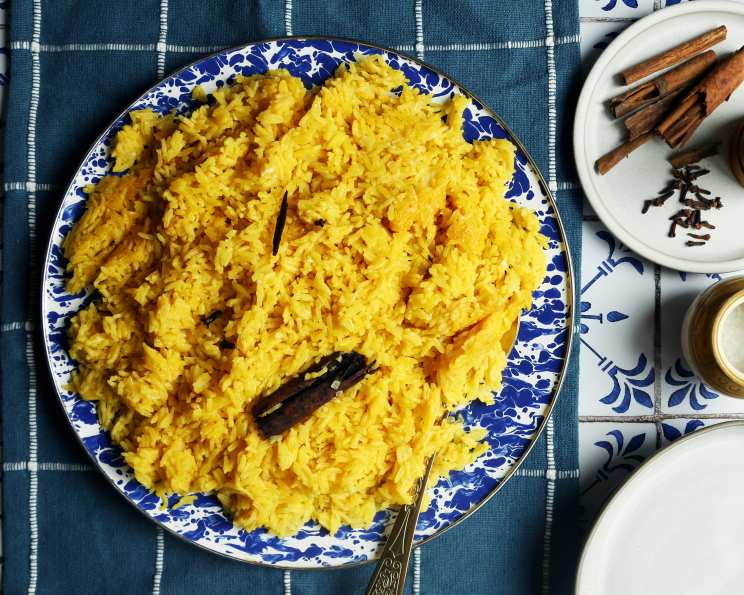
The Golden Standard: Mastering Saffron Rice
My grandmother, a woman who could coax magic from the humblest ingredients, always served saffron rice alongside her fragrant lamb tagine. The vibrant yellow hue, the delicate aroma, and the subtle, almost floral flavor transformed a simple grain into something truly special. It wasn’t just a side dish; it was a celebration, a symbol of generosity, and a reminder that even the simplest meals could be elevated with a touch of love and a sprinkle of saffron. The memory of sharing those meals, filled with laughter and the warmth of family, remains one of my most cherished culinary inspirations.
Recipe Overview
- Prep Time: 15 minutes
- Cook Time: 25 minutes
- Total Time: 40 minutes
- Servings: 4
- Yield: Approximately 6 cups cooked rice
- Dietary Type: Gluten-Free
Ingredients
- 2 cups basmati rice
- 1 teaspoon saffron threads
- 3 tablespoons boiling water or 3 tablespoons chicken broth, plus
- 4 cups boiling water or 4 cups chicken broth
- 6 tablespoons ghee or 6 tablespoons butter
- 2 inches cinnamon sticks
- 4 whole cloves
- 1 cup finely chopped onion
- 1 minced garlic clove
- 2 teaspoons salt
- 1/4 teaspoon ground cardamom
Equipment Needed
- Small bowl
- Large (3 or 4 quart) stockpot with lid
Instructions
-
Begin by preparing the saffron infusion. Place the saffron threads in a small bowl and pour 3 tablespoons of boiling water (or chicken broth) over them. Let this steep for at least 10 minutes. This process extracts the color and flavor from the saffron, creating a vibrant liquid that will permeate the rice.
-
While the saffron is steeping, prepare the aromatic base. In a large, heavy-bottomed stockpot (3 or 4 quart size is ideal), melt the ghee (or butter) over medium heat. Once melted and shimmering, add the cinnamon sticks and whole cloves. Stir well to release their fragrance into the fat. Be careful not to burn the butter or spices; adjust the heat as needed.
-
Add the finely chopped onion and minced garlic clove to the pot. Sauté them for about 2 minutes, stirring frequently, until the onions are softened and translucent but not browned. This step builds the flavor foundation of the rice.
-
Now, add the basmati rice to the pot. Stir the rice continuously for about 5 minutes, ensuring that each grain is coated with the ghee and aromatics. This toasting process helps to prevent the rice from sticking together during cooking and enhances its nutty flavor.
-
Pour in the 4 cups of boiling water (or chicken broth), followed by the salt and ground cardamom. Stir well to combine all the ingredients. The cardamom adds a warm, slightly spicy note that complements the saffron beautifully.
-
Gently pour in the saffron infusion (both the liquid and the saffron threads) into the pot. Stir gently to distribute the saffron evenly throughout the rice mixture. Avoid over-stirring at this stage, as it can make the rice sticky.
-
Bring the mixture to a boil over high heat. Once boiling, immediately reduce the heat to the lowest setting possible, cover the pot tightly, and cook for 25 minutes. It is crucial to maintain a gentle simmer throughout the cooking process to ensure that the rice cooks evenly and absorbs all the liquid. Resist the urge to lift the lid during this time, as this can release steam and affect the cooking time.
-
After 25 minutes, remove the pot from the heat and let it rest, covered, for 5-10 minutes. This allows the rice to finish steaming and become perfectly fluffy.
-
Finally, fluff the rice gently with a fork to separate the grains. Remove the cinnamon sticks and whole cloves before serving.
Expert Tips & Tricks
- Rice Quality Matters: Using high-quality basmati rice is key to achieving the best results. Look for rice that is aged, as it tends to cook up fluffier and less sticky.
- Pre-Soaking the Rice: For even more tender rice, consider soaking the basmati rice in cold water for 30 minutes before cooking. Rinse the rice thoroughly before adding it to the pot.
- Adjusting Liquid: If you find that your rice is consistently too wet or too dry, adjust the amount of liquid slightly. Remember that different stoves and pots can affect cooking times and moisture levels.
- Perfecting the Saffron Infusion: For a more intense saffron flavor, you can gently crush the saffron threads with a mortar and pestle before steeping them in hot water.
- Make-Ahead Tip: The saffron rice can be prepared ahead of time and reheated gently. Store it in an airtight container in the refrigerator for up to 3 days. When reheating, add a tablespoon or two of water or broth to prevent it from drying out.
Serving & Storage Suggestions
Serve the saffron rice hot as a side dish with grilled meats, roasted vegetables, stews, or curries. It pairs particularly well with dishes that have rich, savory sauces. Garnish with fresh herbs, such as chopped parsley or cilantro, for a touch of freshness and color.
Leftover saffron rice can be stored in an airtight container in the refrigerator for up to 3 days. To reheat, add a tablespoon or two of water or broth per cup of rice and microwave until heated through, or reheat gently in a saucepan over low heat.
Nutritional Information
| Nutrient | Amount per Serving | % Daily Value |
|---|---|---|
| Calories | 420 kcal | 21% |
| Total Fat | 15g | 23% |
| Saturated Fat | 9g | 45% |
| Cholesterol | 30mg | 10% |
| Sodium | 480mg | 20% |
| Total Carbohydrate | 65g | 22% |
| Dietary Fiber | 2g | 8% |
| Sugars | 1g | – |
| Protein | 6g | 12% |
Note: Nutritional information is an estimate and may vary based on specific ingredients and portion sizes.
Variations & Substitutions
- Vegan Option: Ensure you are using ghee alternative or butter-flavored coconut oil for a completely vegan dish.
- Herbs: Incorporate fresh herbs like chopped parsley, cilantro, or dill during the last few minutes of cooking for added flavor.
- Nuts and Dried Fruit: Add toasted nuts, such as almonds or pistachios, and dried fruit, such as raisins or cranberries, for a festive twist.
- Spices: Experiment with other spices like turmeric, cumin, or ginger to customize the flavor profile.
FAQs (Frequently Asked Questions)
Q: Why is my saffron rice sometimes sticky?
A: Over-stirring the rice during cooking can release excess starch, leading to stickiness. Also, using too much water or not rinsing the rice before cooking can contribute to this issue.
Q: Can I use regular long-grain rice instead of basmati?
A: While you can use other types of rice, basmati rice is preferred for its delicate flavor and fluffy texture. Long-grain rice may require slightly different cooking times and water ratios.
Q: How can I tell if the rice is cooked properly?
A: The rice is done when all the liquid has been absorbed and the grains are tender and fluffy. You can test this by gently pressing a few grains with a fork. They should be soft and easily separate.
Q: Can I make saffron rice in a rice cooker?
A: Yes, you can adapt this recipe for a rice cooker. Follow the manufacturer’s instructions for cooking rice and adjust the water ratio accordingly. Add the saffron infusion, spices, and other ingredients to the rice cooker before starting the cooking cycle.
Q: Is it necessary to use ghee? Can I use oil instead?
A: Ghee adds a rich, nutty flavor to the rice, but you can substitute it with butter or vegetable oil if you prefer. The flavor will be slightly different, but the rice will still be delicious.
Final Thoughts
Now that you’re armed with this recipe, it’s time to bring the golden glow of saffron rice into your kitchen! Don’t be intimidated by the ingredient list; the process is simpler than it seems, and the results are well worth the effort. Experiment with different variations, share your creations with loved ones, and let the aroma of saffron transport you to a place of culinary delight. Whether you’re serving it alongside a hearty stew or a simple grilled chicken, this saffron rice is sure to elevate any meal into a special occasion. I would love to hear how it turns out for you!