
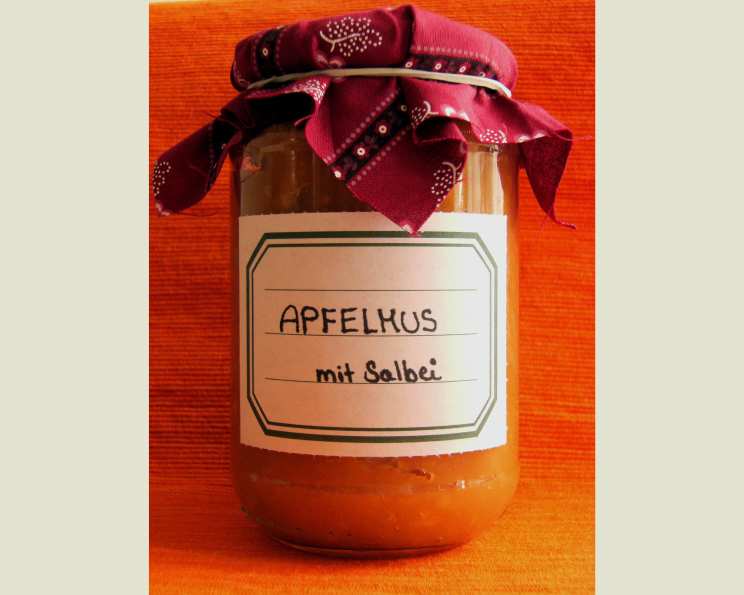
Sage Honey Applesauce: A Taste of Autumn
My grandmother’s garden was a riot of colors and scents, but nothing captivated me more than the unruly sage bush near the apple trees. Its velvety leaves, so unlike the glossy apples hanging heavy on their branches, held a fragrance that promised cozy autumn days. One afternoon, she surprised me with a simple applesauce, subtly infused with the very sage I loved. It wasn’t just a snack; it was a memory in the making, a taste of her love and the changing seasons. This Sage Honey Applesauce brings that memory back to me every time I make it.
Recipe Overview
- Prep Time: 15 minutes
- Cook Time: 30-40 minutes
- Total Time: 45-55 minutes
- Servings: 4
- Yield: Approximately 3 cups
- Dietary Type: Gluten-Free, Dairy-Free
Ingredients
- 6 apples, cored and chopped
- ⅓ cup honey
- 3 sage leaves
Equipment Needed
- Medium saucepan
- Wooden spoon or spatula
- Food mill or fine-mesh strainer
Instructions
- Begin by preparing the apples. Wash them thoroughly, then core and chop them into roughly 1-inch pieces. You don’t need to peel them, as the peels will add both flavor and fiber to the final sauce.
- In a medium saucepan, combine the chopped apples, honey, and sage leaves.
- Place the saucepan over low heat. It’s crucial to use low heat to prevent the apples from scorching and to allow the flavors to meld together gently.
- Cook the mixture, stirring occasionally, for 30-40 minutes, or until the apples are very soft and easily mashed with a spoon. The exact cooking time will depend on the type of apples you use. Firmer apples will require more time.
- Once the apples are tender, remove the saucepan from the heat.
- Take out the sage leaves. Their purpose was to infuse the applesauce with their aroma and flavor, and they are not meant to be eaten whole.
- Now it’s time to achieve the desired texture. Traditionally, this recipe calls for straining the applesauce through a food mill or a fine-mesh strainer. If using a food mill, simply process the cooked apple mixture through it. This will remove the skins and any remaining chunks, resulting in a smooth, velvety sauce. If using a fine-mesh strainer, place the strainer over a bowl and press the applesauce through it using a spoon or spatula. This will require a bit more effort, but it will still yield a beautifully smooth sauce. If you prefer a chunkier applesauce, you can skip this step and simply mash the apples with a potato masher.
Expert Tips & Tricks
- Apple Variety Matters: Different apples will yield slightly different flavors and textures. For a sweeter applesauce, use varieties like Fuji, Gala, or Honeycrisp. For a more tart flavor, use Granny Smith or Braeburn. A combination of both sweet and tart apples creates a balanced and complex flavor.
- Adjust Sweetness: The amount of honey can be adjusted to your preference. Start with ⅓ cup and add more if needed, tasting as you go. Remember that the apples themselves contain natural sugars, so you may not need much additional sweetener.
- Sage Intensity: The number of sage leaves can also be adjusted to your taste. If you prefer a more pronounced sage flavor, you can add an extra leaf or two. Be careful not to overdo it, as sage can be quite strong.
- Slow and Steady: Cooking the applesauce over low heat is essential to prevent scorching and to allow the flavors to meld together properly. Don’t be tempted to turn up the heat to speed up the process. Patience is key!
- Spice it Up: For a warmer, more complex flavor, consider adding a pinch of ground cinnamon, nutmeg, or cloves to the applesauce while it’s cooking. A tiny bit of lemon zest can also brighten the flavors.
Serving & Storage Suggestions
This Sage Honey Applesauce can be served warm or cold, depending on your preference. It’s delicious on its own as a simple snack or dessert. It also makes a wonderful accompaniment to savory dishes, such as roasted pork, chicken, or even grilled cheese sandwiches.
For storage, allow the applesauce to cool completely before transferring it to an airtight container. It will keep in the refrigerator for up to 5 days. For longer storage, you can freeze the applesauce in freezer-safe containers for up to 3 months. To reheat, simply thaw the applesauce in the refrigerator overnight and then warm it gently in a saucepan or microwave.
Nutritional Information
| Nutrient | Amount per Serving | % Daily Value |
|---|---|---|
| Calories | 193 kcal | N/A |
| Total Fat | 0.3 g | 0% |
| Saturated Fat | 0.1 g | 0% |
| Cholesterol | 0 mg | 0% |
| Sodium | 3 mg | 0% |
| Total Carbohydrate | 52 g | 17% |
| Dietary Fiber | 5 g | 20% |
| Sugars | 45 g | N/A |
| Protein | 1 g | 1% |
Note: Nutritional information is an estimate and may vary based on specific ingredients and serving sizes.
Variations & Substitutions
- Spice it up! A pinch of cinnamon or nutmeg adds warmth.
- Lemon twist: Add a teaspoon of lemon juice for brightness.
- Maple instead of honey: Substitute maple syrup for a different flavor profile.
- Vegan option: Use agave nectar or maple syrup instead of honey.
- Different Herbs: Try other herbs, such as thyme or rosemary, for a unique twist.
FAQs (Frequently Asked Questions)
Q: Can I use different types of apples?
A: Absolutely! Experimenting with different apple varieties can create exciting flavor combinations. A mix of sweet and tart apples is often a good choice.
Q: Do I need to peel the apples?
A: Peeling is optional. Leaving the peels on adds fiber and nutrients. If you prefer a smoother texture, you can peel the apples before cooking.
Q: Can I use dried sage instead of fresh?
A: Fresh sage is recommended for the best flavor, but you can use dried sage in a pinch. Use about 1 teaspoon of dried sage for every 3 fresh leaves.
Q: How do I make it sweeter?
A: Add more honey to taste. You can also use other natural sweeteners like maple syrup or agave nectar.
Q: Can I freeze the applesauce?
A: Yes, applesauce freezes well. Store it in an airtight container or freezer bag for up to 3 months. Thaw it in the refrigerator overnight before serving.
Final Thoughts
This Sage Honey Applesauce is more than just a recipe; it’s a celebration of simple, seasonal ingredients and the memories they evoke. It’s a dish that connects me to my past and reminds me of the simple joys of cooking and sharing good food. I encourage you to try this recipe and experience the delightful combination of sweet apples, aromatic sage, and golden honey. Feel free to adapt it to your own taste and share your creations with friends and family. It pairs wonderfully with a warm cup of herbal tea or a crisp glass of hard cider. Happy cooking!