
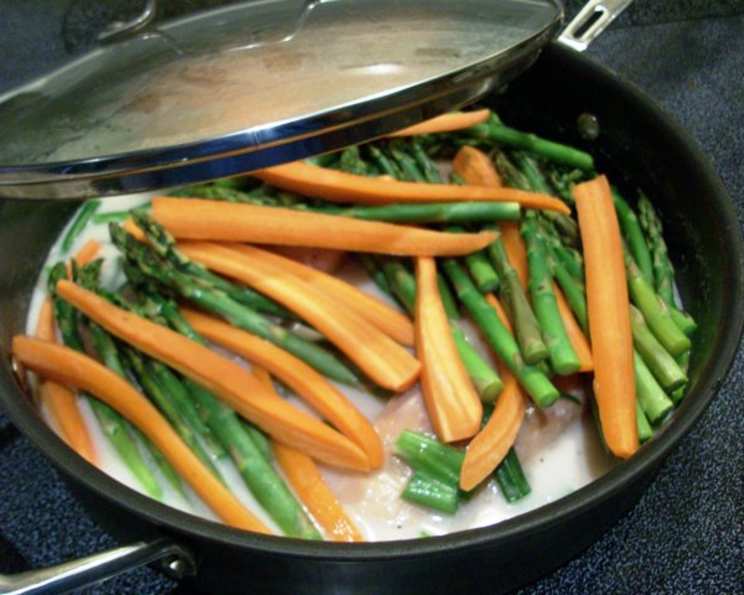
Salmon and Asparagus in Fragrant Coconut Sauce
There’s something undeniably comforting about the creamy sweetness of coconut milk, especially when it mingles with the delicate flakiness of perfectly cooked salmon. I remember the first time I tasted a similar dish at a tiny beachside restaurant in Thailand. The salty air, the warmth of the sun, and the explosion of flavors – ginger, coconut, and the freshest seafood – created a memory I’ve tried to recreate in my own kitchen ever since. This Salmon and Asparagus in Coconut Sauce is my attempt to capture that magic, a simple yet elegant dish that always feels like a mini-vacation.
Recipe Overview
- Prep Time: 10 minutes
- Cook Time: 15 minutes
- Total Time: 25 minutes
- Servings: 4
- Dietary Type: Dairy-Free
Ingredients
- 8 ounces light coconut milk (canned)
- 4 scallions (sliced, white part separated from green)
- 2 teaspoons garlic (minced)
- 2 teaspoons ginger (minced)
- 1/4 teaspoon salt
- 1/4 teaspoon pepper
- 4 (6 ounce) salmon fillets
- 1 lb asparagus (woody ends snapped off, spears cut in thirds)
- 1 cup carrot (sliced thin)
- Lime wedges for serving (optional)
Equipment Needed
- Large Skillet
- Microwave or Steamer
- Broad Spatula
Instructions
- In a large skillet, combine the coconut milk, the white parts of the scallions, minced garlic, minced ginger, salt, and pepper.
- Stir the mixture over medium heat until it is well blended. This should only take a few minutes – you’re just looking to meld the flavors.
- Prepare the asparagus and carrot. You can either steam or microwave them. If microwaving, place the asparagus spears and carrot slices in a microwave-safe dish with a tablespoon or two of water. Cover and cook on high for about 2-3 minutes, or until they are slightly tender but still crisp.
- Gently place the salmon fillets in a single layer on top of the coconut milk mixture in the skillet.
- Scatter the cooked asparagus pieces and carrot slices over and around the salmon fillets.
- Bring the mixture to a gentle simmer. Cover the skillet and cook for 10-15 minutes, or until the salmon is cooked through and the asparagus is crisp-tender. The internal temperature of the salmon should reach 145°F (63°C).
- Using a broad spatula, carefully transfer the salmon fillets to individual serving plates.
- Spoon the fragrant coconut sauce and vegetables generously over each serving of salmon.
- Sprinkle the green part of the scallions over the top as a garnish.
- Serve immediately with lime wedges, if desired. A squeeze of fresh lime juice brightens the flavors beautifully.
Expert Tips & Tricks
- Don’t overcook the salmon. Overcooked salmon is dry and loses its delicate flavor. Keep a close eye on it and test for doneness by flaking it gently with a fork. It should be opaque throughout and easily flake apart.
- Use fresh ginger and garlic. The flavor is significantly better than pre-minced versions. Mince them yourself for the best results.
- For a richer sauce, you can use full-fat coconut milk instead of light. However, be aware that this will increase the calorie and fat content of the dish.
- If the sauce is too thin, remove the salmon and vegetables from the skillet and simmer the sauce over medium heat until it reduces to your desired consistency. Be careful not to burn it. A cornstarch slurry (1 tablespoon cornstarch mixed with 2 tablespoons cold water) can also be used to thicken the sauce quickly. Add it gradually while simmering, stirring constantly.
- To prevent the salmon from sticking to the skillet, make sure the skillet is well-seasoned or use a non-stick skillet. You can also add a tablespoon of coconut oil to the skillet before adding the salmon.
- Make ahead: The sauce can be prepared a day in advance and stored in the refrigerator. Simply reheat it gently before adding the salmon and vegetables.
Serving & Storage Suggestions
Serve this Salmon and Asparagus in Coconut Sauce immediately for the best flavor and texture. The vibrant colors of the salmon, asparagus, and carrots make for an appealing presentation. A side of brown rice or quinoa complements the dish perfectly and helps to soak up the delicious sauce.
Leftovers can be stored in an airtight container in the refrigerator for up to 2 days. Reheat gently in a skillet over low heat, or in the microwave. Be careful not to overcook the salmon during reheating.
I don’t recommend freezing this dish, as the texture of the salmon and the coconut sauce may change upon thawing.
Nutritional Information
| Nutrient | Amount per Serving | % Daily Value |
|---|---|---|
| Calories | 262 kcal | N/A |
| Total Fat | 7.8g | 12% |
| Saturated Fat | 1.5g | 7% |
| Cholesterol | 77.4mg | 25% |
| Sodium | 312.4mg | 13% |
| Total Carbohydrate | 10g | 3% |
| Dietary Fiber | 3.8g | 15% |
| Sugars | 3.4g | N/A |
| Protein | 38g | 75% |
Variations & Substitutions
- Vegetarian: Substitute the salmon with firm tofu or tempeh for a vegetarian option. Pan-fry or bake the tofu/tempeh before adding it to the coconut sauce.
- Spicy: Add a pinch of red pepper flakes or a small chopped chili pepper to the coconut milk mixture for a spicy kick.
- Other Vegetables: Feel free to experiment with other vegetables such as broccoli florets, snow peas, or bell peppers. Add them to the skillet along with the asparagus and carrots.
- Herbs: Fresh cilantro or basil can be used as a garnish instead of scallions.
- Citrus: Try using lemon or orange juice instead of lime juice for a different citrusy flavor.
- Coconut Aminos: For a soy-free alternative to salt, use coconut aminos.
FAQs (Frequently Asked Questions)
Q: Can I use frozen salmon for this recipe?
A: Yes, you can use frozen salmon, but make sure to thaw it completely before cooking. Pat it dry with paper towels to remove any excess moisture.
Q: How do I know when the salmon is cooked through?
A: The salmon is cooked through when it is opaque throughout and flakes easily with a fork. The internal temperature should reach 145°F (63°C).
Q: Can I use different types of fish?
A: Yes, you can substitute the salmon with other types of fish such as cod, halibut, or tilapia. Adjust the cooking time accordingly.
Q: Is it possible to make this recipe in the oven?
A: Yes, you can bake the salmon and vegetables in the oven. Preheat the oven to 375°F (190°C). Place the coconut milk mixture, salmon, and vegetables in an oven-safe dish. Cover with foil and bake for 15-20 minutes, or until the salmon is cooked through.
Q: Can I add curry powder to the sauce?
A: While this recipe isn’t traditionally curry-based, you can certainly add a teaspoon or two of curry powder to the coconut milk mixture for a curried twist.
Final Thoughts
This Salmon and Asparagus in Coconut Sauce is more than just a recipe; it’s an experience. The combination of tender salmon, crisp-tender vegetables, and the creamy, fragrant coconut sauce is simply irresistible. I encourage you to try this recipe and make it your own. Experiment with different vegetables, herbs, and spices to create a dish that perfectly suits your taste. And don’t forget to share your creations and feedback – I’d love to hear about your culinary adventures! This dish pairs beautifully with a crisp Sauvignon Blanc or a light-bodied Pinot Grigio. Bon appétit!