
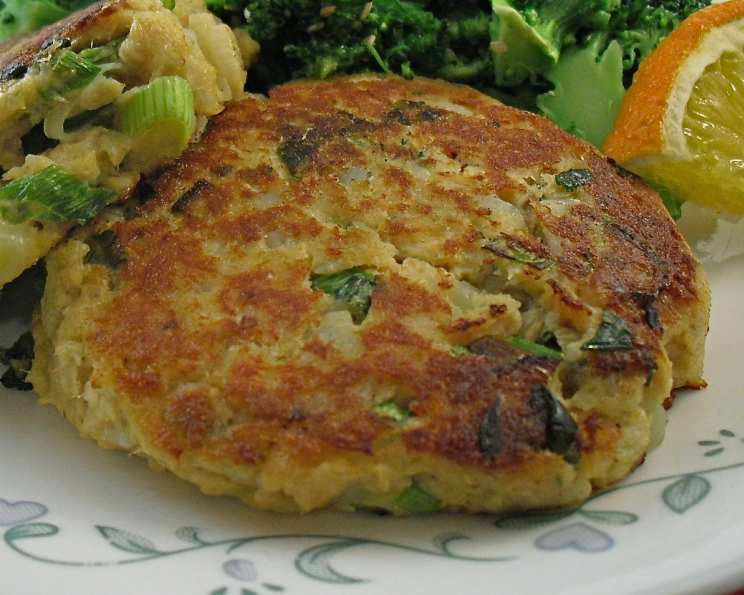
Salmon Cakes: A Canadian Classic Reimagined
My grandmother, bless her heart, wasn’t exactly known for her culinary prowess. Her attempts at “fancy” dinners often resulted in dry roasts and suspiciously grey vegetables. But there was one dish, a simple, unassuming creation, that always hit the spot: her salmon cakes. They weren’t anything like the sophisticated versions I make now, but the memory of those humble patties, fragrant with dill and pan-fried to a perfect golden crisp, still warms my soul. These aren’t my grandmother’s, but inspired by, and improved upon, those simple beginnings, they’re salmon cakes that are sure to become a family favourite.
Recipe Overview
- Prep Time: 15 minutes
- Cook Time: 20 minutes
- Total Time: 35 minutes
- Yields: 8 patties
- Serves: 8
- Dietary Type: Dairy-Free (can be made gluten-free with adjustments – see Variations)
Ingredients
- 1 lb potato, cooked (Russets preferred)
- 3 green onions, chopped
- 1/4 cup parsley, chopped
- 1 tablespoon Dijon mustard
- 1/2 teaspoon salt
- 1/4 teaspoon lemon zest
- 1/4 teaspoon black pepper
- 1/4 teaspoon Tabasco sauce
- 1 egg, beaten
- 2 (213 g) cans salmon, drained and flaked
Equipment Needed
- Large bowl
- Potato masher
- Measuring cups and spoons
- Large nonstick skillet
Instructions
- In a large bowl, mash the cooked potatoes until smooth. Russet potatoes are recommended, as their drier, starchier texture helps bind the cakes together.
- Stir in the chopped green onions, parsley, Dijon mustard, salt, lemon zest, black pepper, and Tabasco sauce into the mashed potatoes. Ensure everything is well combined. The Tabasco adds a subtle kick that complements the richness of the salmon.
- Blend in the beaten egg. The egg acts as a further binder, helping the salmon cakes hold their shape during cooking.
- Fold in the drained and flaked salmon. Be gentle as you fold to avoid breaking the salmon into tiny pieces. You want to retain some texture. When draining the salmon, remove the skin, but feel free to mash the soft bones into the mixture for an added calcium boost.
- Let the mixture cool for 5 minutes. This allows the flavors to meld and the mixture to firm up slightly, making it easier to shape into patties.
- Using your hands, shape the salmon mixture into eight 3/4-inch (2 cm) thick patties. Aim for a uniform size and shape for even cooking.
- In a large nonstick skillet, cook the salmon patties on medium heat using a little oil or cooking spray. Be careful not to overcrowd the pan; work in batches if necessary.
- Cook for about 5 minutes per side, or until the patties are golden brown and heated through. Adjust the heat as needed to prevent burning. The internal temperature should reach 165°F (74°C).
Expert Tips & Tricks
- Potato Power: As noted earlier, the type of potato used significantly impacts the texture of the salmon cakes. Russet potatoes are ideal because their higher starch content acts as a binder. If using other potatoes, ensure they are well-drained after cooking to remove excess moisture.
- Chill Out: For firmer patties, chill the formed salmon cakes in the refrigerator for 15-20 minutes before cooking. This helps them hold their shape better in the pan.
- Crisp Factor: To achieve extra-crispy salmon cakes, lightly coat them in panko breadcrumbs before pan-frying.
- Flavor Boost: Experiment with adding other herbs and spices, such as dill, chives, Old Bay seasoning, or a pinch of cayenne pepper, to customize the flavor profile.
Serving & Storage Suggestions
Serve these delightful salmon cakes immediately while they are hot and crispy. They are fantastic on their own with a dollop of tartar sauce, aioli, or lemon wedges. Alternatively, serve them on a bed of mixed greens for a light lunch or atop a toasted bun as a delicious salmon burger.
Storage:
-
Room Temperature: Do not leave cooked salmon cakes at room temperature for more than 2 hours.
-
Refrigerator: Store leftover salmon cakes in an airtight container in the refrigerator for up to 3 days.
-
Freezer: For longer storage, freeze the cooked salmon cakes individually on a baking sheet until solid, then transfer them to a freezer bag or container. They can be stored in the freezer for up to 2 months.
Reheating: -
Skillet: Reheat salmon cakes in a skillet over medium heat until heated through and crispy.
-
Oven: Reheat in a preheated oven at 350°F (175°C) for 10-15 minutes.
-
Microwave: While not ideal for crispness, you can reheat salmon cakes in the microwave for a quick meal.
Nutritional Information
| Nutrient | Amount per Serving | % Daily Value |
|---|---|---|
| Calories | 118.6 kcal | N/A |
| Calories from Fat | 23 g | 20% |
| Total Fat | 2.6 g | 4% |
| Saturated Fat | 0.5 g | 2% |
| Cholesterol | 54.1 mg | 18% |
| Sodium | 217.1 mg | 9% |
| Total Carbohydrate | 10.7 g | 3% |
| Dietary Fiber | 1.5 g | 6% |
| Sugars | 0.7 g | 2% |
| Protein | 12.8 g | 25% |
Variations & Substitutions
- Gluten-Free: To make these salmon cakes gluten-free, substitute the breadcrumbs (if used for coating) with gluten-free panko or almond flour. Ensure your Dijon mustard is also gluten-free.
- Spicy Kick: Add a finely chopped jalapeño or a pinch of cayenne pepper to the mixture for a spicier flavor.
- Herb Infusion: Experiment with different herbs like dill, chives, or cilantro to customize the flavor.
- Potato Swap: While Russets are preferred, you can use Yukon Gold or red potatoes. However, be mindful of their moisture content and adjust the amount of binder accordingly.
- Smoked Salmon: For a richer, smokier flavor, use a combination of canned salmon and flaked smoked salmon.
- Egg-Free: For an egg-free version, you can use a flax egg (1 tablespoon ground flaxseed mixed with 3 tablespoons water, let sit for 5 minutes) as a binder.
FAQs (Frequently Asked Questions)
Q: Why are my salmon cakes falling apart?
A: This is often due to excessive moisture or not enough binder. Make sure to drain the salmon and potatoes thoroughly. Russet potatoes are best for this recipe due to their drier texture. Adding more egg or a tablespoon of flour can also help.
Q: Can I bake these salmon cakes instead of pan-frying?
A: Yes, you can bake them. Preheat your oven to 375°F (190°C), place the salmon cakes on a baking sheet lined with parchment paper, and bake for 15-20 minutes, or until golden brown.
Q: Can I use fresh salmon instead of canned?
A: Absolutely! If using fresh salmon, be sure to cook it thoroughly, flake it, and let it cool before adding it to the mixture. You’ll need about 1 pound of cooked salmon.
Q: What’s the best sauce to serve with salmon cakes?
A: Tartar sauce is a classic choice, but aioli, a lemon-dill sauce, or even a simple Greek yogurt sauce with herbs are also delicious options.
Q: How do I prevent the salmon cakes from sticking to the pan?
A: Use a nonstick skillet and ensure it is properly heated before adding the salmon cakes. Using a little oil or cooking spray can also help prevent sticking. Avoid overcrowding the pan.
Final Thoughts
These salmon cakes are more than just a recipe; they’re a celebration of simple ingredients transformed into something truly special. Whether you’re seeking a quick weeknight dinner, a satisfying lunch, or a delicious appetizer, these salmon cakes are sure to deliver. Don’t hesitate to experiment with different herbs, spices, and serving suggestions to create your own signature version. Gather your ingredients, get cooking, and share these delightful salmon cakes with your loved ones. They are guaranteed to ask for the recipe!