
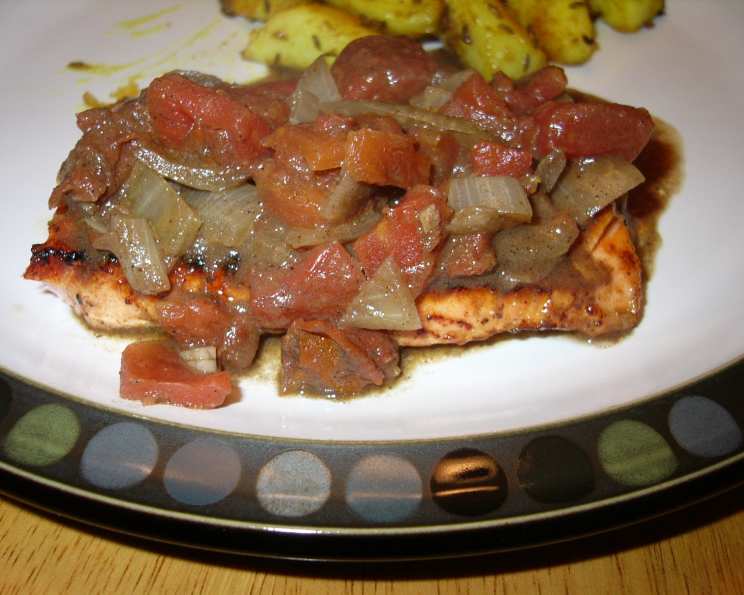
Salmon Cutlets in Indian Creamy Sauce: A Culinary Journey
The memory is still so vivid – the aroma of warm spices mingling with the delicate scent of salmon, a symphony of flavors that transported me straight to a bustling Indian market, even though I was sitting at my friend Priya’s cozy apartment. She presented this dish with such pride, and after one bite of the tender salmon bathed in that rich, creamy sauce, I knew I had to recreate this magic in my own kitchen. This wasn’t just food; it was an experience, a story told through the perfect balance of heat, spice, and the ocean’s bounty.
Recipe Overview
- Prep Time: 15 minutes
- Cook Time: 35 minutes
- Total Time: 50 minutes
- Servings: 4
- Dietary Type: Gluten-Free
Ingredients
- 4 salmon fillets, skin on or off, depending on preference
- 2 onions, medium-sized
- 2 garlic cloves
- 1 (13.5 ounce) can coconut milk (full-fat for best flavor)
- 1 (14.5 ounce) can chopped tomatoes, undrained
- 2 tablespoons Indian spices (garam masala, or a mix of your own favorite spices like turmeric, cumin, coriander, and chili powder)
- Salt and pepper, to taste
- Olive oil, for sautéing
Equipment Needed
- Large saucepan or Dutch oven
- Frying pan or skillet
- Cutting board
- Chef’s knife
- Measuring spoons
Instructions
- Begin by chopping the onions and garlic into small, even pieces. This ensures even cooking and releases maximum flavor.
- In a large saucepan or Dutch oven, heat 4 tablespoons of olive oil over medium heat. Allow the oil to shimmer slightly before adding the onions.
- Add the chopped onions to the heated oil and fry them over medium heat for about 5 minutes, or until they become translucent and slightly softened. Stir occasionally to prevent burning.
- Add the minced garlic and the Indian spices to the softened onions. This allows the spices to bloom and release their aromatic oils.
- Mix the garlic and spices well with the onions and continue to cook for another 5 minutes, stirring frequently, until the spices become fragrant. Be careful not to burn the garlic, as it can become bitter.
- Pour in the canned chopped tomatoes and coconut milk into the saucepan. The coconut milk adds richness and creaminess to the sauce, while the tomatoes provide acidity and body.
- Season the sauce generously with salt and pepper to taste. Remember that the flavor will intensify as the sauce simmers, so start with a moderate amount and adjust later if needed.
- Cover the saucepan and reduce the heat to low. Allow the sauce to simmer gently for 20 minutes, stirring occasionally to prevent sticking. This simmering time allows the flavors to meld together and create a complex and harmonious sauce.
- While the sauce is simmering, prepare the salmon cutlets. In a separate frying pan or skillet, heat a tablespoon of olive oil over medium-high heat.
- Season the salmon fillets generously with salt and pepper on both sides. You can also add a pinch of your favorite Indian spices for an extra layer of flavor.
- Once the oil is hot, carefully place the seasoned salmon cutlets into the frying pan.
- Fry the salmon for about 3-4 minutes per side, or until they are cooked through and slightly golden brown. The exact cooking time will depend on the thickness of the fillets. The salmon is done when it flakes easily with a fork. Avoid overcooking the salmon, as it can become dry and rubbery.
- After the sauce has simmered for 20 minutes, taste and adjust the seasoning if necessary. You can add more salt, pepper, or spices to suit your preference.
- Serve the fried salmon cutlets immediately with the creamy Indian sauce. Spoon the sauce generously over the salmon and garnish with fresh cilantro or parsley for added flavor and visual appeal. Serve with a side of fluffy basmati rice to soak up all that delicious sauce.
Expert Tips & Tricks
- For a richer and more intense flavor, toast the spices in a dry pan for a minute or two before adding them to the onions and garlic.
- If you prefer a smoother sauce, you can use an immersion blender to puree the sauce before adding the salmon.
- To prevent the salmon from sticking to the pan, make sure the pan is hot and the oil is shimmering before adding the fillets. You can also use a non-stick pan.
- If you’re short on time, you can use pre-made Indian curry paste instead of making the spice blend from scratch. Just be sure to adjust the amount to your liking, as some curry pastes can be quite spicy.
- For a crispier salmon skin, pat the skin dry with a paper towel before frying it.
- Don’t overcrowd the pan when frying the salmon, as this will lower the temperature of the oil and prevent the salmon from browning properly. Work in batches if necessary.
Serving & Storage Suggestions
Serve the salmon cutlets immediately while they are hot and the sauce is creamy. Garnish with fresh cilantro, chopped parsley, or a swirl of yogurt for an extra touch of flavor and visual appeal. This dish pairs perfectly with basmati rice, naan bread, or roasted vegetables.
Leftovers can be stored in an airtight container in the refrigerator for up to 3 days. To reheat, gently warm the salmon and sauce in a saucepan over low heat or in the microwave. Be careful not to overcook the salmon when reheating, as it can become dry. Freezing is not recommended, as it can affect the texture of the salmon and sauce.
Nutritional Information
| Nutrient | Amount per Serving | % Daily Value |
|---|---|---|
| Calories | 450 kcal | 23% |
| Total Fat | 28g | 43% |
| Saturated Fat | 18g | 90% |
| Cholesterol | 120mg | 40% |
| Sodium | 300mg | 13% |
| Total Carbohydrate | 15g | 5% |
| Dietary Fiber | 3g | 12% |
| Sugars | 7g | – |
| Protein | 35g | 70% |
Note: Nutritional information is an estimate and may vary based on specific ingredients and portion sizes.
Variations & Substitutions
- Vegetarian Option: Substitute the salmon with paneer (Indian cheese) or tofu for a vegetarian-friendly version.
- Spice Level: Adjust the amount of Indian spices to your liking. For a milder flavor, use less chili powder or omit it altogether. For a spicier dish, add a pinch of cayenne pepper or finely chopped green chilies.
- Dairy-Free: This recipe is naturally dairy-free thanks to the use of coconut milk.
- Vegetable Additions: Add vegetables like spinach, peas, or cauliflower to the sauce for extra nutrients and flavor.
- Herb Variations: Experiment with different herbs, such as mint, dill, or Thai basil, to create unique flavor profiles.
- Lemon or Lime: A squeeze of fresh lemon or lime juice at the end can brighten up the flavors of the dish.
FAQs (Frequently Asked Questions)
Q: Can I use frozen salmon fillets for this recipe?
A: Yes, you can use frozen salmon fillets. Make sure to thaw them completely before cooking and pat them dry with a paper towel to remove any excess moisture.
Q: What if I don’t have coconut milk?
A: While coconut milk provides a unique richness, you can substitute it with heavy cream or cashew cream for a similar texture. However, the flavor will be slightly different.
Q: How do I know when the salmon is cooked through?
A: The salmon is cooked through when it flakes easily with a fork and the internal temperature reaches 145°F (63°C).
Q: Can I make this dish ahead of time?
A: Yes, you can make the sauce ahead of time and store it in the refrigerator for up to 3 days. However, it’s best to cook the salmon just before serving to ensure it’s fresh and moist.
Q: What kind of rice goes best with this dish?
A: Basmati rice is the traditional choice, but jasmine rice or brown rice also work well. Choose a rice that complements the flavors of the sauce and salmon.
Final Thoughts
This recipe for Salmon Cutlets in Indian Creamy Sauce is more than just a meal; it’s an invitation to explore the vibrant flavors of India and the delicate goodness of salmon. It’s a dish that’s both comforting and exciting, perfect for a weeknight dinner or a special occasion. I encourage you to try it, experiment with your favorite spices, and make it your own. Don’t be afraid to share your creations and feedback – I can’t wait to hear about your culinary adventures! Perhaps a crisp Sauvignon Blanc would pair beautifully with this, or even a light-bodied Pinot Noir. Happy cooking!