
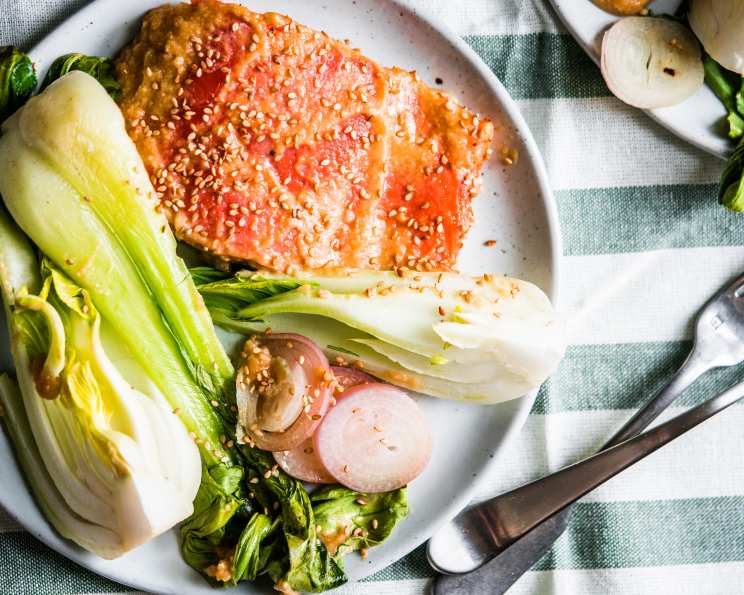
Salmon in a Paper Bag With Miso, Bok Choy, and Shallots
The scent of miso always takes me back to my tiny Tokyo apartment, where my neighbor, Mrs. Sato, taught me the magic of umami. We’d sit on her tatami mats, sipping green tea, as she showed me how to coax the most profound flavors from the simplest ingredients. This salmon dish, baked in a humble paper bag, evokes that same sense of comforting simplicity, transforming everyday flavors into something extraordinary. The gentle steaming inside the bag infuses the salmon with the savory miso, while the bok choy and shallots become tender and sweet.
Recipe Overview
- Prep Time: 7 minutes
- Cook Time: 8 minutes
- Total Time: 15 minutes
- Servings: 2
- Dietary Type: Pescatarian
Ingredients
- Two skin-on salmon fillets (6-ounce)
- Kosher salt & freshly ground black pepper
- 2 tablespoons white miso
- 2 tablespoons rice wine vinegar
- 1 teaspoon sesame oil
- 1 tablespoon minced ginger
- 1 tablespoon unsalted butter, softened
- 2 shallots, peeled and thinly sliced
- 2 bok choy, quartered
- Toasted sesame seeds, for serving
Equipment Needed
- Small bowl
- Whisk
- Two small brown paper lunch bags
- Rimmed baking sheet
- Knife or scissors
Instructions
- Preheat oven to 400 degrees.
- Season the salmon lightly with salt and pepper. Remember that miso is already quite salty, so go easy on the salt.
- In a small bowl, whisk together the miso, rice wine vinegar, sesame oil, and ginger.
- Add the softened butter to the miso mixture and whisk until well combined and smooth. Season the mixture to taste with salt and pepper.
- Divide the thinly sliced shallots and quartered bok choy between the two small brown paper lunch bags.
- Place one salmon fillet on top of the vegetables in each bag.
- Carefully spoon or brush the miso mixture over the salmon, allowing any excess to drip off and coat the vegetables underneath. This ensures that the bok choy and shallots are infused with the delicious miso flavor.
- Fold the tops of the paper bags over to close tightly. Ensure they are well sealed to trap the steam inside.
- Carefully place the sealed paper bags on a rimmed baking sheet. This prevents any potential drips from making a mess in your oven.
- Transfer the baking sheet to the preheated oven and bake until the bags are puffed up and slightly charred, approximately 8 minutes for medium-rare salmon. The cooking time may vary slightly depending on the thickness of the salmon fillets.
- Remove the baking sheet from the oven and immediately open the bags by carefully slicing the tops with a knife or scissors. Be extremely careful when opening the bags, as hot steam will escape. This is crucial to prevent overcooking the salmon.
- Serve immediately, garnished with toasted sesame seeds.
Expert Tips & Tricks
- Miso Quality Matters: Use a high-quality white miso for the best flavor. Different types of miso have varying levels of saltiness and sweetness. White miso is generally milder and sweeter than red miso.
- Don’t Overcook: The beauty of this method is the perfectly steamed salmon. Overcooking will result in dry fish. Err on the side of undercooked, as the residual heat will continue to cook the salmon slightly after it’s removed from the oven.
- Paper Bag Selection: Ensure you use plain, unbleached brown paper lunch bags. Avoid using plastic bags or bags with any coatings, as they are not suitable for oven use.
- Aromatics Boost: Feel free to add other aromatics to the paper bags, such as a few slices of lemon or lime, or a sprig of fresh cilantro or dill.
- Butter Alternative: For a dairy-free version, you can substitute the butter with a tablespoon of olive oil or avocado oil.
Serving & Storage Suggestions
Serve the salmon immediately after opening the paper bags to enjoy the flavors at their peak. The aroma of the miso and the perfectly cooked salmon are best experienced fresh from the oven. Garnish with toasted sesame seeds for added flavor and visual appeal.
If you have leftovers, carefully remove the salmon and vegetables from the paper bags and store them in an airtight container in the refrigerator. Leftovers can be stored for up to 2 days.
To reheat, gently warm the salmon and vegetables in a skillet over medium-low heat, or microwave briefly until heated through. Be careful not to overcook the salmon when reheating, as it can become dry.
Nutritional Information
| Nutrient | Amount per Serving | % Daily Value |
|---|---|---|
| Calories | 300 kcal | 15% |
| Total Fat | 18g | 28% |
| Saturated Fat | 5g | 25% |
| Cholesterol | 70mg | 23% |
| Sodium | 1200mg | 50% |
| Total Carbohydrate | 15g | 5% |
| Dietary Fiber | 3g | 12% |
| Sugars | 5g | N/A |
| Protein | 25g | 50% |
Note: Nutritional information is an estimate and may vary based on specific ingredients and portion sizes.
Variations & Substitutions
- Vegetable Variations: Feel free to substitute the bok choy with other vegetables such as broccoli florets, asparagus spears, or sliced bell peppers.
- Miso Alternatives: If you don’t have white miso on hand, you can use yellow or red miso, but keep in mind that they have a stronger flavor, so you may want to use a little less.
- Salmon Substitute: This recipe also works well with other types of fish, such as cod, halibut, or sea bass. Adjust the cooking time accordingly.
- Spice It Up: Add a pinch of red pepper flakes to the miso mixture for a touch of heat.
- Gluten-Free: This recipe is naturally gluten-free, but be sure to use gluten-free miso if you are sensitive to gluten.
FAQs (Frequently Asked Questions)
Q: Can I use parchment paper instead of a paper bag?
A: While parchment paper can be used for baking fish, it won’t create the same steamy environment as a paper bag, which helps to keep the salmon incredibly moist. If you do use parchment paper, create a tightly sealed packet.
Q: Can I prepare the bags ahead of time?
A: You can assemble the bags a few hours in advance, but it’s best to cook them immediately before serving for the best flavor and texture.
Q: How do I know when the salmon is cooked?
A: The salmon is cooked when it flakes easily with a fork and is opaque throughout. For medium-rare, it should still be slightly translucent in the center.
Q: What if the paper bag catches fire?
A: While it’s unlikely, if the paper bag starts to char excessively or catches fire, carefully remove the baking sheet from the oven and turn off the heat. Ensure the bags are properly sealed and not touching the heating elements.
Q: Can I use frozen salmon for this recipe?
A: Yes, but be sure to thaw the salmon completely before using it. Pat it dry with paper towels to remove any excess moisture.
Final Thoughts
This Salmon in a Paper Bag with Miso, Bok Choy, and Shallots is a quick, easy, and delicious way to enjoy a healthy and flavorful meal. The combination of the savory miso, tender vegetables, and perfectly cooked salmon is a culinary delight that will impress your family and friends. Don’t be intimidated by the simplicity of the method – the results are truly exceptional. I encourage you to try this recipe and experiment with different vegetables and flavor combinations to create your own signature dish. Pair it with a crisp glass of Sauvignon Blanc or a light-bodied Pinot Noir for a complete and satisfying dining experience. Enjoy!