
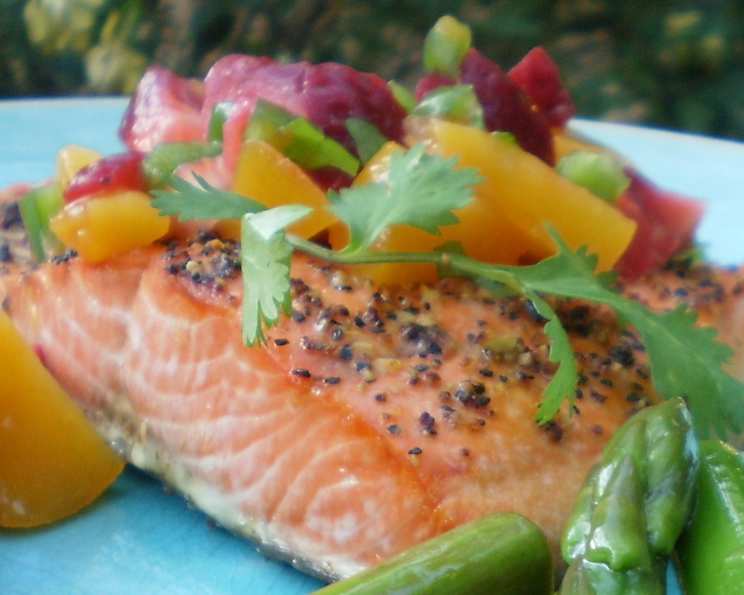
Salmon or Halibut with Vibrant Fruit Salsa
I remember the first time I tasted fish paired with fruit salsa. It was a warm summer evening at a small coastal restaurant, the air thick with the scent of salt and grilling seafood. The unexpected combination of the flaky, savory fish and the bright, sweet salsa was a revelation. It felt like a party in my mouth, a culinary dance of flavors that I knew I had to recreate at home. That experience sparked a lifelong love for this delightful pairing, and it’s been a staple in my summer cooking ever since.
Recipe Overview
- Prep Time: 15 minutes
- Cook Time: 8-12 minutes
- Total Time: 23-27 minutes
- Servings: 4
- Yield: 4 servings
- Dietary Type: Gluten-Free, Dairy-Free
Ingredients
- 14-16 ounces salmon fillets (about 1 inch thick, fresh or frozen) or 14-16 ounces halibut fillets (about 1 inch thick, fresh or frozen)
- ¾ cup chopped peeled peaches or ¾ cup chopped nectarines
- ⅓ cup chopped peeled kiwi fruit or ⅓ cup chopped fresh apricot
- 1 tablespoon snipped fresh cilantro
- 1 tablespoon orange juice or 1 tablespoon apple juice
- 1 fresh jalapeno pepper, seeded and chopped*
- 1 teaspoon olive oil or 1 teaspoon cooking oil
- ¼ teaspoon lemon-pepper seasoning
- Nonstick cooking spray
- Fresh cilantro sprig (optional)
*Note: Because chile peppers contain volatile oils that can burn your skin and eyes, avoid direct contact with them as much as possible. When working with chile peppers, wear plastic or rubber gloves. If your bare hands do touch the peppers, wash your hands and nails well with soap and warm water.
Equipment Needed
- Medium bowl
- Broiler pan
- Baking Rack
- Cutting board
- Knife
- Paper towels
Instructions
-
If using frozen fish, ensure the salmon or halibut is completely thawed. The best way to thaw fish is overnight in the refrigerator. For a quicker thaw, place the sealed fish in a cold-water bath, changing the water every 30 minutes until thawed.
-
Rinse the fish fillets under cold water and pat them dry thoroughly with paper towels. Excess moisture will prevent the fish from browning properly.
-
Cut the fish into 4 equal serving-size pieces. Aim for even portions to ensure uniform cooking.
-
Prepare the fruit salsa: In a medium bowl, stir together the chopped peaches (or nectarines), chopped kiwi fruit (or apricots), snipped fresh cilantro, orange juice (or apple juice), and chopped jalapeno chile pepper. Mix gently to combine the flavors without crushing the fruit.
-
Set aside the fruit salsa to allow the flavors to meld. The longer it sits, the more the flavors will harmonize.
-
Brush both sides of each fish piece with olive oil (or cooking oil). This will help the fish to brown and prevent it from sticking to the rack.
-
Sprinkle the lemon-pepper seasoning evenly over both sides of the fish fillets. This adds a zesty and savory flavor that complements the sweetness of the salsa.
-
Coat the unheated rack of a broiler pan generously with nonstick cooking spray. This is crucial to prevent the fish from sticking.
-
Place the fish fillets on the prepared rack. Ensure they are spaced apart to allow for even cooking.
-
Broil the fish 4 inches from the heat source for 8 to 12 minutes, or until the fish flakes easily when tested with a fork. Turn the fish over once halfway through broiling to ensure even cooking on both sides. The exact cooking time will depend on the thickness of the fish fillets and the intensity of your broiler.
-
To check for doneness, gently insert a fork into the thickest part of the fish and twist. If the fish flakes easily and is opaque throughout, it is cooked through.
-
Serve the broiled fish immediately with the prepared fruit salsa. Spoon the salsa generously over each fillet.
-
If desired, garnish with fresh cilantro sprigs for an added touch of freshness and visual appeal.
Expert Tips & Tricks
- Don’t overcook the fish! Salmon and halibut are best when cooked to just the point of doneness. Overcooked fish will be dry and less flavorful.
- Spice it up (or down): Adjust the amount of jalapeno pepper to your taste. For a milder salsa, remove the seeds and membranes completely. For extra heat, leave some seeds in.
- Marinate for Flavor: For a deeper flavor profile, consider marinating the fish in a simple marinade of olive oil, lemon juice, and herbs for 30 minutes before cooking.
- Grilling Variation: For a smoky flavor, grill the fish instead of broiling. Preheat your grill to medium heat and grill for 8-12 minutes, turning once halfway through.
- Salsa Shortcut: If you’re short on time, use a pre-made fruit salsa from the grocery store, but be sure to choose one with fresh ingredients and no added sugar.
Serving & Storage Suggestions
Serve this dish immediately after cooking for the best flavor and texture. The warm, flaky fish pairs beautifully with the cool, refreshing salsa. Consider serving it alongside a bed of quinoa or brown rice for a complete and healthy meal.
Leftovers can be stored in an airtight container in the refrigerator for up to 2 days. Reheat gently in a skillet or microwave until warmed through. The salsa is best consumed fresh, but any leftover salsa can also be stored in the refrigerator for up to 2 days.
This dish is not recommended for freezing, as the texture of the fish and fruit salsa may deteriorate upon thawing.
Nutritional Information
| Nutrient | Amount per Serving | % Daily Value |
|---|---|---|
| Calories | 155.5 kcal | N/A |
| Calories from Fat | 50 g | 33% |
| Total Fat | 5.6 g | 8% |
| Saturated Fat | 1 g | 4% |
| Cholesterol | 45.2 mg | 15% |
| Sodium | 74.7 mg | 3% |
| Total Carbohydrate | 5 g | 1% |
| Dietary Fiber | 1.1 g | 4% |
| Sugars | 3.1 g | N/A |
| Protein | 20.6 g | 41% |
Note: Nutritional information is an estimate and may vary based on specific ingredients and portion sizes.
Variations & Substitutions
- Mango Salsa: Substitute mango for the peaches or nectarines for a tropical twist.
- Avocado Addition: Add diced avocado to the salsa for a creamy texture and healthy fats.
- Herb Variations: Experiment with different herbs in the salsa, such as mint, basil, or parsley.
- Citrus Zest: Add a teaspoon of lime or lemon zest to the salsa for extra zing.
- Different Fish: Try this recipe with other types of fish, such as cod, mahi-mahi, or tuna.
- Spicy Kick: Add a pinch of red pepper flakes to the salsa for an extra kick of heat.
FAQs (Frequently Asked Questions)
Q: Can I use frozen fruit in the salsa?
A: Fresh fruit is best for the salsa, but you can use frozen fruit if necessary. Thaw it completely and drain any excess liquid before adding it to the salsa.
Q: How can I prevent the fish from sticking to the grill?
A: Make sure your grill grates are clean and well-oiled. You can also use a grill basket or a piece of aluminum foil to prevent sticking.
Q: Can I make the salsa ahead of time?
A: Yes, you can make the salsa a few hours ahead of time. Store it in the refrigerator until ready to serve. The flavors will meld together even more over time.
Q: What’s the best way to tell if the fish is cooked through?
A: The fish is cooked through when it flakes easily with a fork and is opaque throughout. Use a fork to gently separate the layers of the fish; if it separates easily, it’s done.
Q: Can I use a different type of juice in the salsa?
A: Yes, you can substitute lime juice or pineapple juice for the orange juice or apple juice. Just make sure that the flavor profile complements the fruit you’re using.
Final Thoughts
This Salmon or Halibut with Fruit Salsa is a delightful and healthy dish that’s perfect for any occasion. The combination of the savory fish and the sweet, tangy salsa is a true culinary experience. Don’t be afraid to experiment with different fruits and herbs to create your own unique variation. I encourage you to try this recipe and share your feedback. Pair it with a crisp white wine or a refreshing salad for a complete and satisfying meal. Happy cooking!