
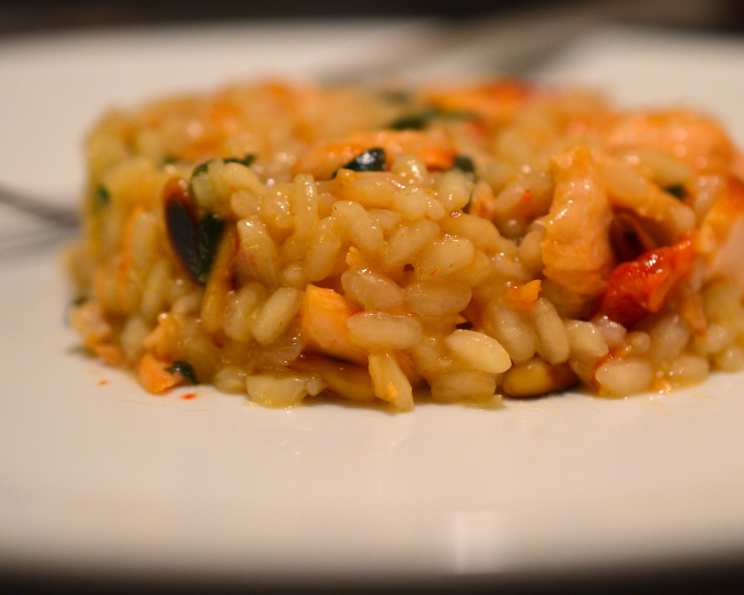
Salmon Risotto: A Culinary Symphony
My first encounter with risotto wasn’t exactly love at first bite. I was a wide-eyed culinary student, intimidated by the constant stirring and the pursuit of that elusive “creamy consistency.” It felt like a high-wire act, but then I tried salmon risotto. The richness of the fish, the bright burst of basil, the satisfying chew of the rice… it all clicked. It transformed risotto from a chore into an experience, and it remains a comforting dish I turn to when I want something elegant yet approachable.
Recipe Overview
- Prep Time: 10 minutes
- Cook Time: 30 minutes
- Total Time: 40 minutes
- Servings: 4
- Dietary Type: Gluten-Free
Ingredients
- 9 ounces salmon, skinned and cubed
- 1 pint chicken stock
- 1 tablespoon oil
- 1 tablespoon butter
- 1 large onion, finely chopped
- 8 ounces risotto rice or arborio rice
- 1⁄4 pint white wine
- 1⁄4 cup fresh basil (or to taste)
- 1 ounce pine nuts, toasted
- 2 sun-dried tomatoes, finely chopped
- 1 tablespoon parmesan cheese, grated
Equipment Needed
- Medium saucepan
- Large pan or Dutch oven
Instructions
-
Begin by heating the chicken stock in a medium saucepan and keeping it at a gentle simmer over low heat. Maintaining a simmer ensures the stock is hot and ready to be incorporated into the rice, which helps it cook evenly.
-
In a large pan or Dutch oven, heat the oil and butter over medium heat. Once the butter is melted and the mixture is shimmering, add the finely chopped onion and cook for about 4 minutes, or until the onion becomes soft and translucent. Avoid browning the onion, as this will affect the final color and flavor of the risotto.
-
Add the risotto rice (or arborio rice) to the pan with the onions. Stir continuously for about 2 minutes, ensuring that each grain of rice is coated with the oil and butter mixture. This process, known as toasting the rice, helps to develop its flavor and create a barrier that prevents it from becoming mushy during cooking. The rice should become slightly transparent around the edges.
-
Pour in a ladleful (about 1/2 cup) of the hot chicken stock, along with a splash of white wine. Stir continuously until all the liquid is absorbed by the rice. This is the fundamental technique for making risotto. The constant stirring releases starches from the rice, creating the characteristic creamy texture.
-
Continue adding the chicken stock and white wine mixture, one ladleful at a time, stirring continuously and allowing each addition to be absorbed before adding the next. This process should take about 20-25 minutes, or until the rice is cooked through but still has a slight bite to it – what Italians call “al dente.” The risotto should have a creamy consistency, not soupy or dry.
-
Once the rice is cooked to your liking, gently stir in the cubed salmon, chopped fresh basil, toasted pine nuts, finely chopped sun-dried tomatoes, and grated Parmesan cheese. Season generously with salt and pepper to taste. The heat from the risotto will gently cook the salmon, infusing the dish with its rich flavor. Be careful not to overcook the salmon, as it will become dry.
-
Serve the salmon risotto immediately, garnished with extra basil or Parmesan cheese, if desired.
Expert Tips & Tricks
- Warm the stock: Always keep your stock warm in a separate pot. Adding cold stock will lower the temperature of the rice and disrupt the cooking process.
- Don’t rinse the rice: Unlike other rice dishes, you want to keep the starch on risotto rice. Rinsing will hinder the creamy texture.
- Wine choice: Use a dry white wine like Pinot Grigio or Sauvignon Blanc. Avoid sweet wines, as they will unbalance the flavor of the risotto.
- Salmon quality: Choose high-quality, fresh salmon for the best flavor and texture.
- Make ahead tip: While risotto is best served immediately, you can partially cook it ahead of time. Stop the cooking process when the rice is still slightly undercooked, then cool it quickly and store it in the refrigerator. When you’re ready to serve, simply add the remaining stock and finish cooking.
Serving & Storage Suggestions
Serve your salmon risotto immediately while it’s hot and creamy. A sprinkle of fresh basil and a dusting of Parmesan cheese make for a lovely presentation. This dish pairs beautifully with a crisp white wine, such as a Pinot Grigio or a dry Rosé.
Leftover salmon risotto can be stored in an airtight container in the refrigerator for up to 2 days. To reheat, add a splash of chicken stock or water to the risotto and gently heat it in a saucepan over low heat, stirring frequently, until warmed through. You can also reheat it in the microwave, but be careful not to overcook it. Reheated risotto may not be as creamy as freshly made, but it will still be delicious. Freezing is not recommended as the texture will suffer.
Nutritional Information
| Nutrient | Amount per Serving | % Daily Value |
|---|---|---|
| Calories | 406.8 kcal | N/A |
| Calories from Fat | 143 g | 35% |
| Total Fat | 15.9 g | 24% |
| Saturated Fat | 3.8 g | 18% |
| Cholesterol | 41.7 mg | 13% |
| Sodium | 291.6 mg | 12% |
| Total Carbohydrate | 28.2 g | 9% |
| Dietary Fiber | 1.1 g | 4% |
| Sugars | 5.1 g | N/A |
| Protein | 19.6 g | 39% |
Variations & Substitutions
- Vegetarian Option: Omit the salmon and use vegetable stock instead of chicken stock for a delicious vegetarian risotto. Consider adding roasted vegetables like asparagus, zucchini, or bell peppers.
- Lemon and Dill: Add lemon zest and fresh dill for a bright and refreshing twist.
- Smoked Salmon: Substitute fresh salmon with smoked salmon for a bolder flavor. Add it towards the end of the cooking process to prevent it from becoming too salty.
- Seafood Medley: Combine salmon with other seafood like shrimp or scallops for a more complex seafood risotto.
- Cheese Variations: Try using Pecorino Romano instead of Parmesan cheese for a sharper flavor.
FAQs (Frequently Asked Questions)
Q: Can I use brown rice instead of arborio rice?
A: While technically possible, brown rice will yield a different texture. Arborio rice is preferred because of its high starch content, which contributes to the creamy texture of risotto. Brown rice will require a longer cooking time and may not achieve the same creaminess.
Q: How do I know when the risotto is done?
A: The rice should be cooked through but still have a slight bite to it (al dente). The risotto should have a creamy consistency, not soupy or dry.
Q: Can I use a different type of wine?
A: Yes, a dry white wine like Pinot Grigio, Sauvignon Blanc, or even a dry sherry will work well. Avoid sweet wines. You can also omit the wine altogether and simply use more chicken stock.
Q: Why is constant stirring so important?
A: Constant stirring releases starches from the rice, creating the creamy texture that is characteristic of risotto. It also helps to ensure that the rice cooks evenly.
Q: Can I add other vegetables to this risotto?
A: Absolutely! Asparagus, peas, mushrooms, and zucchini are all excellent additions to salmon risotto. Add them towards the end of the cooking process so they retain some of their texture.
Final Thoughts
Salmon risotto is more than just a dish; it’s an experience. The methodical stirring, the gradual absorption of the stock, the layering of flavors – it all comes together to create something truly special. Don’t be intimidated by the process; embrace it! Gather your ingredients, put on some music, and let the aromas fill your kitchen. Whether you’re cooking for a romantic dinner or a cozy night in, this recipe is sure to impress. I encourage you to try it, experiment with different variations, and share your creations with friends and family. Bon appétit!