
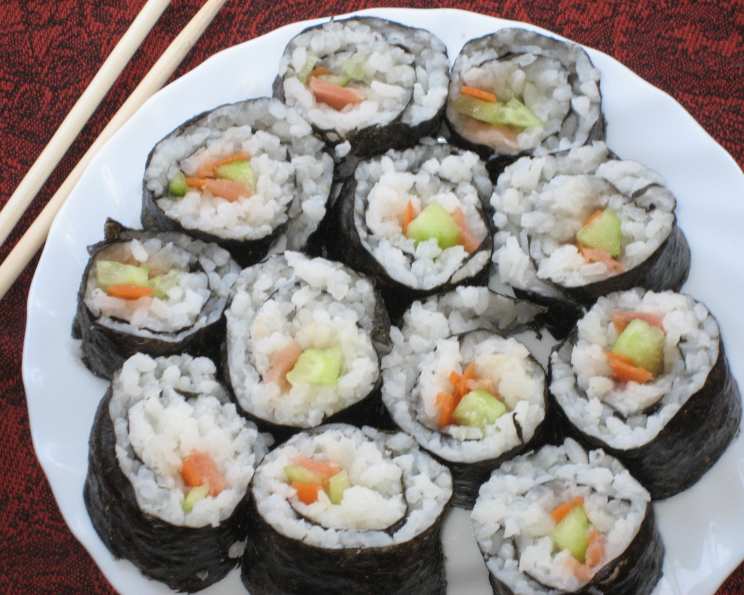
Salmon Sushi Rolls: A Taste of the Ocean at Home
I remember the first time I had truly amazing sushi. It wasn’t in a fancy restaurant, but at a small, unassuming place tucked away in a Tokyo side street. The salmon, glistening with freshness, simply melted in my mouth, and the perfectly seasoned rice was a revelation. That experience ignited a lifelong passion for sushi, and I’ve been experimenting with making it at home ever since. These Salmon Sushi Rolls are a delicious and accessible way to bring that same joy to your own kitchen.
Recipe Overview
- Prep Time: 15 minutes
- Cook Time: 0 minutes
- Total Time: 15 minutes
- Servings: 2
- Yield: 2 rolls (8 pinwheels)
- Dietary Type: Gluten-Free (if using gluten-free soy sauce)
Ingredients
- 1 sheet nori (dried seaweed)
- 1 cup cooked sushi rice (short-grain rice)
- ½ cup thinly sliced smoked salmon
- ½ small carrot, peeled and cut into thin strips
- 1 small cucumber, sliced into thin strips
Equipment Needed
- Bamboo sushi rolling mat
- Sharp knife
- Cutting board
Instructions
- Prepare the bamboo mat: Lay the bamboo mat on a clean, flat surface. If desired, wrap the mat in plastic wrap to prevent the rice from sticking.
- Place the nori: Place one sheet of nori, shiny side down, on top of the bamboo mat. Make sure the nori covers the entire mat surface.
- Add the rice: Wet your hands slightly to prevent the rice from sticking. Take approximately ½ cup of the cooked sushi rice and spread it evenly over the nori, leaving a small (about ½ inch) strip of nori uncovered at the top edge furthest from you. This uncovered strip will help seal the roll. Be careful not to overfill the nori with too much rice, or it will be difficult to roll.
- Layer the fillings: Arrange the smoked salmon slices evenly across the rice. Then, place two strips of carrot and two strips of cucumber lengthwise across the salmon. Distribute the fillings so that each slice will contain a good portion of each ingredient.
- Roll the sushi: Using the bamboo mat, lift the edge closest to you and begin rolling the sushi tightly. Keep your fingers tucked underneath the mat to prevent them from getting caught in the roll. Apply gentle pressure as you roll to ensure a firm, compact roll.
- Seal the roll: Once you’ve rolled the sushi to the end, use the bamboo mat to press gently on the roll to seal it. The uncovered strip of nori will adhere to the rice, creating a secure closure.
- Slice the roll: Place the finished roll on a cutting board. Using a sharp knife, first moisten the blade with water to prevent sticking. Cut the roll in half, then cut each half into two equal pieces. Repeat until you have eight pinwheels. Wipe the knife clean and re-moisten it between cuts if necessary.
- Repeat: Repeat steps 2-7 with the remaining nori, rice, salmon, carrot, and cucumber to make the second roll.
Expert Tips & Tricks
- Rice is Key: Properly cooked and seasoned sushi rice is essential for great sushi. Use short-grain rice, and follow the package instructions for cooking. After cooking, season with a mixture of rice vinegar, sugar, and salt to taste. Let the rice cool slightly before using.
- Sharp Knife: A sharp knife is crucial for clean cuts. Dull knives will tear the nori and make the sushi look messy. Sharpen your knife before you start, or use a very sharp serrated knife.
- Don’t Overfill: Overfilling the sushi roll is a common mistake. It makes the roll difficult to close and can result in a messy presentation. Use a moderate amount of each ingredient.
- Tight Rolls: Apply gentle, even pressure when rolling to create a tight, compact roll. This will prevent the sushi from falling apart.
- Wet Hands: Keeping your hands slightly wet when handling the rice will prevent it from sticking to your fingers.
Serving & Storage Suggestions
Serve the Salmon Sushi Rolls immediately with your favorite sushi condiments, such as soy sauce, wasabi, and ginger. Freshly made sushi is best, but leftovers can be stored in an airtight container in the refrigerator for up to 24 hours. Note that the texture of the rice may change slightly upon refrigeration. It’s not recommended to freeze sushi rolls. Sushi is not safe to leave at room temperature for longer than two hours.
Nutritional Information
Note: Nutritional information is an estimate and can vary based on specific ingredients and portion sizes.
| Nutrient | Amount per Serving | % Daily Value |
|---|---|---|
| Calories | 300 kcal | 15% |
| Total Fat | 12g | 18% |
| Saturated Fat | 3g | 15% |
| Cholesterol | 30mg | 10% |
| Sodium | 400mg | 17% |
| Total Carbohydrate | 35g | 12% |
| Dietary Fiber | 2g | 7% |
| Sugars | 4g | – |
| Protein | 15g | 30% |
Variations & Substitutions
- Vegetarian Option: Substitute the smoked salmon with avocado, cucumber, or marinated tofu for a vegetarian-friendly version.
- Spicy Sushi: Add a touch of Sriracha or chili mayo to the rice or salmon for a spicy kick.
- Brown Rice: Use brown sushi rice instead of white rice for a healthier alternative.
- Different Vegetables: Experiment with other vegetables, such as bell peppers, asparagus, or sprouts.
- Different Fish: Try other types of fish like tuna or yellowtail.
- Temaki Style: If rolling seems intimidating, serve the ingredients as a “hand roll,” letting everyone assemble their own.
FAQs (Frequently Asked Questions)
Q: Can I use regular rice instead of sushi rice?
A: While you can, it’s not recommended. Sushi rice is short-grain and has a stickier texture, which helps the rolls hold their shape. Regular long-grain rice will be too dry and won’t bind well.
Q: What if my nori is stale and cracks easily?
A: You can lightly toast the nori over a gas flame or in a dry pan for a few seconds to crisp it up and make it easier to work with. Be careful not to burn it.
Q: How do I prevent the rice from sticking to the bamboo mat?
A: Wrapping the bamboo mat in plastic wrap is the easiest way to prevent the rice from sticking. You can also use a damp cloth.
Q: Can I make these sushi rolls ahead of time?
A: Sushi is best when eaten fresh, but you can prepare the rolls a few hours in advance and store them in the refrigerator. Cover them tightly with plastic wrap to prevent them from drying out.
Q: What’s the best way to clean my sushi knife?
A: Wash your sushi knife by hand with warm, soapy water. Dry it immediately to prevent rust. Avoid putting it in the dishwasher.
Final Thoughts
Creating your own Salmon Sushi Rolls at home is a rewarding culinary experience. Don’t be afraid to experiment with different fillings and seasonings to create your own signature rolls. The possibilities are endless! Whether you’re a seasoned sushi enthusiast or a curious beginner, I hope this recipe inspires you to embark on your own sushi-making journey. So gather your ingredients, sharpen your knife, and let the rolling begin! I’d love to hear about your own sushi creations and any variations you try. Enjoy!