
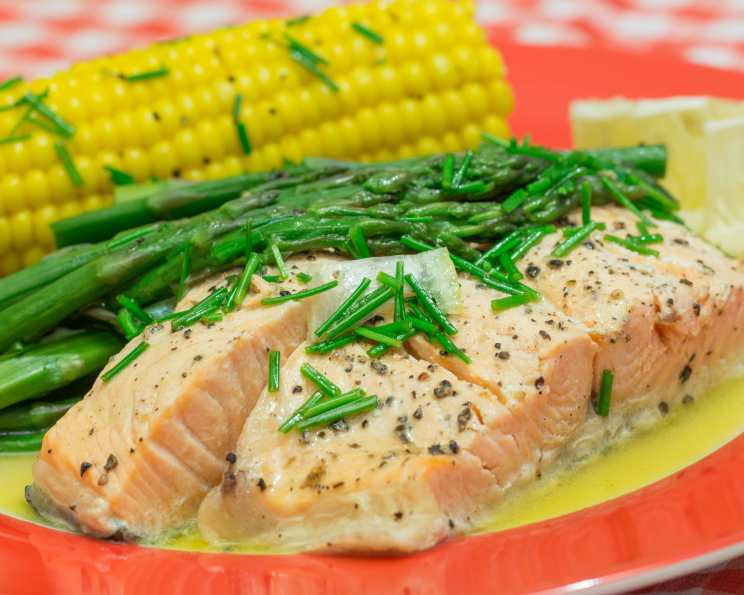
Salmon With Asparagus and Chive Butter Sauce: A Symphony of Spring Flavors
The first time I made this dish, I was trying to impress a date, and frankly, I was terrified. I remember the delicate fragrance of the salmon filling my tiny apartment, mingled with the earthy aroma of the asparagus. The anxiety melted away as I whisked the butter into the reduced wine sauce, watching it transform into a glossy, fragrant cloud. It was pure magic. That night, not only did I win over my date, but I also discovered a dish that has become a constant in my kitchen – a simple yet elegant celebration of fresh flavors.
Recipe Overview
- Prep Time: 5 minutes
- Cook Time: 20 minutes
- Total Time: 25 minutes
- Servings: 4
- Dietary Type: Pescatarian, Gluten-Free
Ingredients
- 1 lb thick asparagus, trimmed
- 1 cup water
- Salt
- 4 (6-8 ounce) salmon fillets, skinless and 1-inch thick
- Pepper
- ½ cup dry white wine
- 3 tablespoons unsalted butter
- 2 tablespoons chopped fresh chives
- 1 lemon, cut into wedges
Equipment Needed
- Large Skillet with Lid
- Whisk
- Platter
Instructions
-
Begin by preparing the asparagus. Lay the trimmed asparagus spears in a single layer on the bottom of a large skillet. Using a skillet large enough to comfortably hold both the asparagus and the salmon is crucial for even cooking.
-
Add 1 cup of water and ¼ teaspoon of salt to the skillet. This will create a gentle steaming environment that will cook the asparagus to tender perfection.
-
Next, season the salmon fillets generously with salt and pepper. Place the seasoned salmon directly on top of the asparagus spears in the skillet. Ensure the salmon isn’t overcrowded for even cooking.
-
Bring the water to a boil over high heat. Once boiling, immediately cover the skillet with a tight-fitting lid.
-
Reduce the heat to medium and cook until the salmon is cooked through – it should just flake easily with a fork – and the asparagus is tender. This should take approximately 8 minutes, but cooking time will vary based on the thickness of the salmon and asparagus. Check the salmon for doneness by gently pressing down on the thickest part with a fork.
-
Carefully transfer the cooked asparagus and salmon fillets to a serving platter. Keep warm while you prepare the sauce.
-
Now, it’s time to create the flavorful chive butter sauce. Add the ½ cup of dry white wine to the skillet. Increase the heat to medium-high and simmer the wine until it reduces slightly, concentrating the flavors, about 5 minutes. Keep a close eye on the pan to prevent the wine from burning.
-
Remove the skillet from the heat. Immediately whisk in 3 tablespoons of unsalted butter until it’s fully incorporated and the sauce is smooth and emulsified. The residual heat from the pan will gently melt the butter, creating a luscious, velvety texture.
-
Stir in 2 tablespoons of chopped fresh chives. Season the sauce with salt and pepper to taste.
-
Pour the chive butter sauce generously over the salmon and asparagus on the platter.
-
Serve immediately with lemon wedges for squeezing. The bright citrus complements the richness of the salmon and butter sauce.
Expert Tips & Tricks
- For a richer sauce, consider using clarified butter (ghee). This will prevent the butter from separating as easily during the reduction.
- If you don’t have chives, you can substitute with finely chopped scallions or parsley, though the flavor profile will be slightly different.
- To ensure the salmon cooks evenly, choose fillets that are of uniform thickness.
- Avoid overcooking the salmon. It should be opaque and flake easily, but still moist. An instant-read thermometer inserted into the thickest part should read 145°F (63°C).
- If the sauce breaks (separates), try whisking in a tablespoon of cold water or adding another pat of butter to help re-emulsify it.
- Make sure your asparagus spears are of similar size for even cooking. Thicker spears may require a minute or two longer in the skillet.
Serving & Storage Suggestions
This Salmon With Asparagus and Chive Butter Sauce is best served immediately, while the salmon is still warm and the sauce is glossy. Serve with a side of quinoa or rice to soak up the delicious sauce.
Leftovers can be stored in an airtight container in the refrigerator for up to 2 days. To reheat, gently warm the salmon and asparagus in a skillet over low heat or in a microwave. Be careful not to overcook the salmon during reheating, as it can become dry. The sauce may separate slightly upon reheating, but you can whisk it to re-emulsify. Freezing is not recommended, as it can affect the texture of the salmon and asparagus.
Nutritional Information
| Nutrient | Amount per Serving | % Daily Value |
|---|---|---|
| Calories | 327 kcal | N/A |
| Total Fat | 14.8g | 22% |
| Saturated Fat | 6.5g | 32% |
| Cholesterol | 110.4mg | 36% |
| Sodium | 133.3mg | 5% |
| Total Carbohydrate | 8.4g | 2% |
| Dietary Fiber | 3.6g | 14% |
| Sugars | 1.8g | 7% |
| Protein | 36.8g | 73% |
Variations & Substitutions
- Dairy-Free: Substitute the unsalted butter with a plant-based butter alternative or olive oil.
- Herb Variations: Experiment with different herbs in the sauce, such as dill, tarragon, or basil.
- Vegetable Variations: Substitute the asparagus with other seasonal vegetables like green beans, broccolini, or sugar snap peas. Adjust cooking times accordingly.
- Wine Substitution: If you don’t have white wine, you can use chicken broth or vegetable broth for the sauce.
- Spicy Kick: Add a pinch of red pepper flakes to the sauce for a subtle heat.
FAQs (Frequently Asked Questions)
Q: Can I use frozen salmon fillets?
A: Yes, you can use frozen salmon fillets. Be sure to thaw them completely before cooking and pat them dry with paper towels to remove excess moisture.
Q: How do I know when the salmon is cooked through?
A: The salmon is cooked through when it flakes easily with a fork and is opaque throughout. An instant-read thermometer inserted into the thickest part should read 145°F (63°C).
Q: Can I make the sauce ahead of time?
A: The sauce is best made fresh, but you can prepare the chives and measure out the wine and butter ahead of time to save time during cooking.
Q: What if I don’t have a large skillet?
A: If you don’t have a large skillet, you can cook the asparagus and salmon in batches or use a baking sheet instead.
Q: Can I grill the salmon instead?
A: Yes, you can grill the salmon for a smoky flavor. Grill the salmon over medium heat for about 4-5 minutes per side, or until cooked through. Prepare the sauce separately and pour over the grilled salmon and steamed asparagus.
Final Thoughts
This Salmon With Asparagus and Chive Butter Sauce is more than just a recipe; it’s an invitation to savor the simple pleasures of fresh ingredients and mindful cooking. I urge you to try this dish and experience the joy of creating something truly delicious. Don’t be afraid to experiment with variations and make it your own. And if you do, please share your feedback – I’d love to hear how it turns out! Consider pairing it with a crisp Sauvignon Blanc or a light Pinot Grigio for a perfect meal. Happy cooking!