
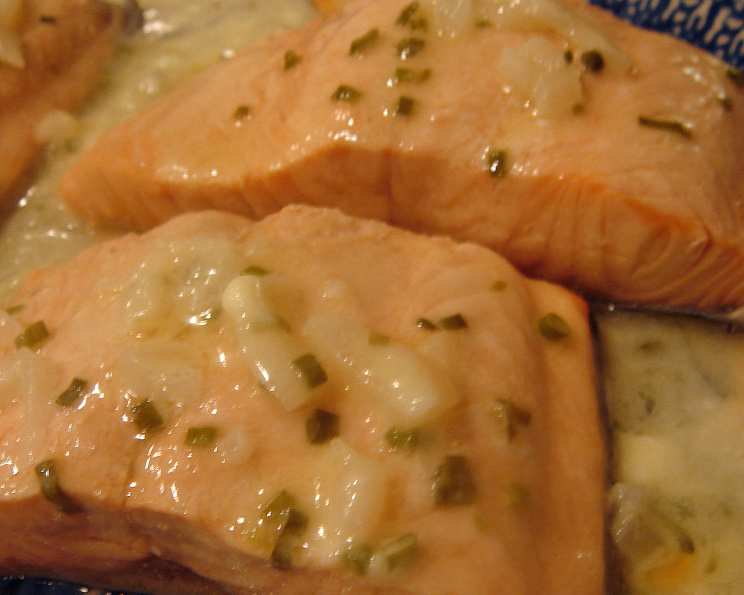
Salmon With Butter Sauce: A Symphony of Flavors
The first time I tasted salmon with a rich butter sauce, I was a young apprentice working in a small French bistro. The aroma alone was intoxicating – the delicate scent of the fish mingling with the nutty fragrance of browned butter and the bright herbaceousness of fresh tarragon. I watched, mesmerized, as the chef carefully spooned the shimmering sauce over the perfectly poached salmon. That first bite was transformative – the flaky, tender salmon melting in my mouth, the buttery sauce coating my palate in a symphony of flavors. It was a culinary revelation that ignited my passion for classic French cuisine and continues to inspire my cooking today.
Recipe Overview
- Prep Time: 15 minutes
- Cook Time: 10-15 minutes
- Total Time: 30 minutes
- Servings: 6
- Dietary Type: Pescatarian
Ingredients
- 3 lbs skinned salmon fillets
- 1/3 cup lemon juice or 1 cup white wine
- 2 shallots, finely chopped
- 1/2 cup white distilled vinegar
- 8 ounces lightly-salted butter, softened to room temperature
- Optional: 1-2 tablespoons chopped fresh basil
- Optional: Chopped chives
- Optional: Chopped fresh tarragon
Equipment Needed
- Large skillet
- Small saucepan
- Whisk
- Paper towels
Instructions
-
Begin by cutting the salmon fillets into individual serving sizes. This ensures even cooking and elegant presentation.
-
In a large skillet, bring enough water to a boil to cover the salmon by about 1 inch. The depth of the water is important to ensure the salmon poaches evenly.
-
If you’re using previously frozen salmon, or if you want to add extra flavor, add either the lemon juice, white wine, or white distilled vinegar to the boiling water. This step is optional but will enhance the final taste.
-
Gently add the salmon to the simmering water. Immediately reduce the heat to a gentle simmer. The water should barely move to prevent the salmon from toughening.
-
Cook the salmon for about 10 minutes per inch of thickness. To check for doneness, gently flake the salmon with a fork. It should be opaque throughout and easily separate into flakes.
-
Once the salmon is cooked, carefully remove it from the skillet and drain on paper towels to remove excess water. This step is important to prevent a watery sauce.
-
While the salmon is simmering, prepare the butter sauce. In a small saucepan, combine the finely chopped shallots and the white distilled vinegar.
-
Cook the shallots and vinegar over low to medium heat until only about 1 tablespoon of liquid remains. This reduction concentrates the flavor of the shallots and vinegar, creating a complex base for the sauce. Watch carefully to avoid burning the shallots.
-
Remove the saucepan from the heat. This is crucial to prevent the butter from separating.
-
Whisk the softened butter, two tablespoons at a time, into the shallot mixture. Ensure each addition of butter is fully melted and incorporated before adding the next. This slow emulsification process is the key to a smooth and velvety sauce.
-
If desired, stir in the chopped fresh basil, chives, or tarragon. These herbs will add a burst of freshness to the sauce.
-
Serve the sauce immediately over the poached salmon. Garnish with extra herbs, if desired.
Expert Tips & Tricks
- Don’t Overcook the Salmon: Overcooked salmon is dry and rubbery. Use a gentle simmer and check for doneness frequently. The salmon should be just cooked through and still slightly moist.
- Use High-Quality Butter: The flavor of the butter is crucial to the success of this sauce. Choose a high-quality, European-style butter for the best flavor.
- Keep the Butter Cold: Ensure the butter is softened but still cool. If the butter is too warm, the sauce may separate.
- Emulsification is Key: The butter sauce relies on a stable emulsion of butter and vinegar. Adding the butter gradually and whisking constantly will prevent the sauce from breaking.
- If the Sauce Separates: If the sauce separates, try whisking in a tablespoon of cold water or a small ice cube. This may help to bring the emulsion back together.
- Make Ahead Tip: While best served immediately, the sauce can be made ahead of time and kept warm in a double boiler.
Serving & Storage Suggestions
Serve the salmon with butter sauce immediately after preparation for the best flavor and texture. This dish pairs beautifully with steamed potatoes, rice pilaf, or a simple green salad. A crisp Chardonnay or a dry Sauvignon Blanc complements the flavors of the salmon and sauce perfectly.
Leftovers should be stored in an airtight container in the refrigerator. They will keep for up to 2 days. Reheat gently in a saucepan over low heat, whisking constantly to prevent the sauce from separating. Be careful not to overcook the salmon during reheating. Salmon can also be flaked into salads or used in salmon cakes. Due to the nature of the butter sauce, freezing is not recommended.
Nutritional Information
| Nutrient | Amount per Serving | % Daily Value |
|---|---|---|
| Calories | 547.8 kcal | N/A |
| Calories from Fat | 348 g | 64% |
| Total Fat | 38.8 g | 59% |
| Saturated Fat | 20.8 g | 104% |
| Cholesterol | 200.1 mg | 66% |
| Sodium | 373.2 mg | 15% |
| Total Carbohydrate | 1.2 g | 0% |
| Dietary Fiber | 0 g | 0% |
| Sugars | 0 g | 0% |
| Protein | 45.8 g | 91% |
Note: Nutritional information is an estimate and can vary based on specific ingredients and portion sizes.
Variations & Substitutions
- Herbed Butter Sauce: Experiment with different herbs to customize the flavor of the sauce. Dill, parsley, and thyme are all excellent choices.
- Brown Butter Sauce: For a nuttier flavor, brown the butter slightly before adding it to the shallot mixture. Be careful not to burn the butter.
- Citrus Butter Sauce: Add a touch of lemon or orange zest to the sauce for a brighter, more citrusy flavor.
- Spicy Butter Sauce: Add a pinch of red pepper flakes to the sauce for a hint of heat.
- Different Fish: While this recipe is designed for salmon, it can also be used with other thick, firm-fleshed fish such as halibut, cod, or sea bass. Adjust the cooking time as needed.
- Wine Reduction: Substitute dry vermouth or a quality dry white wine for the white wine vinegar for a richer, more complex sauce.
FAQs (Frequently Asked Questions)
Q: Can I use salted butter instead of lightly-salted butter?
A: Yes, but reduce or eliminate any additional salt in the recipe to avoid an overly salty sauce. Taste and adjust accordingly.
Q: How do I know when the salmon is cooked through?
A: The salmon is done when it flakes easily with a fork and is opaque throughout. An internal temperature of 145°F (63°C) is ideal.
Q: Can I use dried herbs instead of fresh herbs?
A: While fresh herbs are preferred for their vibrant flavor, you can use dried herbs in a pinch. Use about 1/3 of the amount called for fresh herbs.
Q: What if my butter sauce separates?
A: This can happen if the butter is too hot or if it’s added too quickly. Try whisking in a tablespoon of cold water or a small ice cube to re-emulsify the sauce.
Q: Can I grill the salmon instead of poaching it?
A: Yes, grilled salmon with butter sauce is delicious! Grill the salmon until cooked through, then top with the prepared butter sauce. Adjust grilling time according to the thickness of the salmon.
Final Thoughts
Salmon with butter sauce is a timeless classic for a reason. Its simple elegance and exquisite flavors make it a dish that is both impressive and comforting. Don’t be intimidated by the seemingly fancy sauce – with a few simple techniques, you can create a restaurant-quality dish in your own kitchen. I encourage you to try this recipe and experience the magic for yourself. Feel free to experiment with different herbs and flavor combinations to create your own signature version. Pair it with a crisp white wine and enjoy a truly memorable meal!