
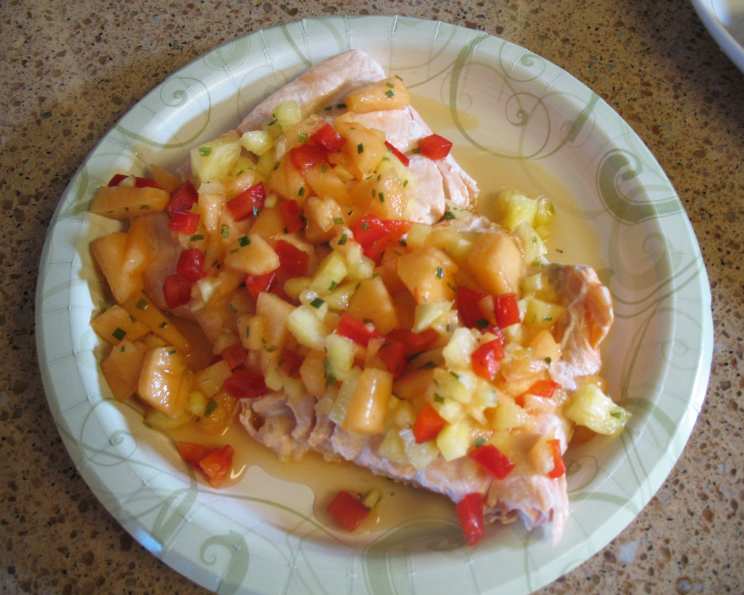
Salmon With Fresh Fruit Salsa – Diabetic Friendly
I’ll never forget the first time I made this dish. It was a hot summer day, and I was craving something light, flavorful, and healthy. I had some beautiful salmon fillets and a bounty of fresh fruit from the farmer’s market. The combination of the savory salmon and the sweet and tangy salsa was a revelation. It was the perfect balance of flavors and textures. It instantly became a family favorite. I’ve made it countless times since, and it’s always a hit, especially with those watching their blood sugar.
Recipe Overview
- Prep Time: 15 minutes
- Cook Time: 35 minutes
- Total Time: 50 minutes
- Servings: 4
- Yield: 4 salmon filets with 1/2 cup salsa each
- Dietary Type: Diabetic Friendly
Ingredients
FISH INGREDIENTS
- 1 lb salmon fillet, cut into 4 portions
- ½ teaspoon no-salt chili powder
SALSA INGREDIENTS
- 1 cup diced fresh pineapple
- 1 cup diced fresh cantaloupe
- ½ cup diced red bell pepper
- ¼ cup seasoned rice wine vinegar
- 2 tablespoons finely chopped fresh cilantro
- ¼ teaspoon crushed red pepper flakes
Equipment Needed
- 9×9-inch baking pan
- Olive oil cooking spray
- Small bowl
Instructions
-
Preheat your oven to 350 degrees F (175 degrees C). Lightly spray a 9×9-inch baking pan with olive oil cooking spray. This will prevent the salmon from sticking and make cleanup easier.
-
Place the salmon fillets in the prepared pan in a single layer. Be sure they are not overlapping, as this will ensure even cooking.
-
Sprinkle the chili powder evenly over the salmon fillets. The chili powder adds a subtle warmth and enhances the flavor of the salmon.
-
Lightly spray the fillets with olive oil cooking spray. This helps to keep the salmon moist and prevents it from drying out during baking.
-
Bake the salmon, uncovered, for 35 minutes, or until the thickest part of the fillet is translucent and flakes easily with a fork. The internal temperature should reach 145 degrees F (63 degrees C). Cooking time may vary depending on the thickness of the fillets, so check for doneness after 30 minutes.
-
While the salmon is baking, prepare the salsa. In a small bowl, combine the diced pineapple, diced cantaloupe, diced red bell pepper, seasoned rice wine vinegar, chopped fresh cilantro, and crushed red pepper flakes.
-
Gently stir all the ingredients together until well combined. The rice wine vinegar adds a nice tanginess, while the red pepper flakes give it a little kick. The cilantro provides a fresh, herbaceous note.
-
Set the salsa aside to allow the flavors to meld while the salmon finishes cooking. This allows the salsa to become more flavorful and balanced.
-
Once the salmon is cooked through, remove it from the oven.
-
Top each fillet with ½ cup of the fresh fruit salsa and serve immediately. The combination of the warm, flaky salmon and the cool, refreshing salsa is a delight.
Expert Tips & Tricks
- For an extra layer of flavor, marinate the salmon in a mixture of lemon juice, olive oil, and garlic for 30 minutes before baking.
- If you don’t have seasoned rice wine vinegar, you can use regular rice wine vinegar and add a pinch of sugar and salt to taste.
- To prevent the salsa from becoming too watery, drain any excess juice from the diced fruit before combining the ingredients.
- If you prefer a spicier salsa, add more crushed red pepper flakes or a pinch of cayenne pepper.
- If you’re short on time, you can use pre-cut fruit salad from the grocery store. Just be sure to choose one that is low in sugar.
- Leftover salsa can be stored in an airtight container in the refrigerator for up to 2 days.
- To ensure the salmon is cooked perfectly, use an instant-read thermometer to check the internal temperature. It should reach 145 degrees F (63 degrees C).
- If the salmon starts to brown too quickly during baking, cover the pan loosely with aluminum foil.
- Don’t overcook the salmon, as it will become dry and rubbery.
- For a more intense cilantro flavor, add the cilantro to the salsa just before serving.
Serving & Storage Suggestions
Serve the Salmon with Fresh Fruit Salsa immediately after cooking for the best flavor and texture. The contrast between the warm salmon and the cool salsa is delightful. It pairs well with a side of quinoa, brown rice, or a simple green salad.
Leftovers can be stored in an airtight container in the refrigerator for up to 2 days. Reheat gently in the oven or microwave until warmed through. Keep in mind that the salmon may become slightly drier upon reheating. It is best enjoyed fresh, but leftovers are still a tasty and healthy option for lunch or a quick dinner.
I don’t recommend freezing cooked salmon, as the texture can become compromised. However, the salsa can be frozen for up to 1 month. Thaw it in the refrigerator overnight before serving.
Nutritional Information
| Nutrient | Amount per Serving | % Daily Value |
|---|---|---|
| Calories | 185.6 kcal | N/A |
| Calories from Fat | 47 g | 25% |
| Total Fat | 5.2 g | 8% |
| Saturated Fat | 1 g | 4% |
| Cholesterol | 52.3 mg | 17% |
| Sodium | 98.6 mg | 4% |
| Total Carbohydrate | 10 g | 3% |
| Dietary Fiber | 1.5 g | 5% |
| Sugars | 8 g | N/A |
| Protein | 24.1 g | N/A |
Variations & Substitutions
- Grilled Salmon: Instead of baking, grill the salmon fillets over medium heat for 4-5 minutes per side, or until cooked through. This will give the salmon a smoky flavor.
- Different Fruit: Feel free to substitute other fruits in the salsa, such as mango, strawberries, or kiwi. Just be sure to adjust the amount of vinegar and sweetener as needed.
- Spicier Salsa: Add a finely chopped jalapeño pepper to the salsa for extra heat.
- Herb Variations: Try using other fresh herbs in the salsa, such as mint or basil.
- Citrus Zest: Add a teaspoon of lime or lemon zest to the salsa for a brighter flavor.
- Vinegar Substitutions: If you don’t have rice wine vinegar, you can use apple cider vinegar or white wine vinegar.
- Salmon Alternative: Try this recipe with other types of fish, such as cod, halibut, or tuna.
FAQs (Frequently Asked Questions)
Q: Can I make the salsa ahead of time?
A: Yes, you can make the salsa up to 24 hours in advance. Store it in an airtight container in the refrigerator. The flavors will meld together even more, but the fruit might release some liquid.
Q: Is this recipe suitable for people with diabetes?
A: Yes, this recipe is diabetic-friendly because it is low in carbohydrates and high in protein and healthy fats. The use of fresh fruit provides natural sweetness without added sugars. Portion control is still important.
Q: Can I use frozen salmon fillets?
A: Yes, you can use frozen salmon fillets. Thaw them completely in the refrigerator before cooking. Pat them dry with paper towels before seasoning to remove excess moisture.
Q: How can I tell if the salmon is cooked through?
A: The salmon is cooked through when the thickest part of the fillet is translucent and flakes easily with a fork. The internal temperature should reach 145 degrees F (63 degrees C).
Q: What if I don’t like cilantro?
A: If you don’t like cilantro, you can substitute it with another fresh herb, such as parsley or mint. Or, simply omit it altogether.
Final Thoughts
This Salmon with Fresh Fruit Salsa recipe is a testament to the fact that healthy eating can be both delicious and satisfying. The vibrant colors and flavors of the salsa perfectly complement the rich, flaky salmon, creating a dish that is as pleasing to the eye as it is to the palate. I encourage you to give this recipe a try and experience the delightful combination of textures and tastes for yourself. Feel free to experiment with different fruits and herbs to create your own unique twist. And don’t forget to share your feedback – I’d love to hear how it turns out! Perhaps a crisp Sauvignon Blanc would make a lovely pairing. Enjoy!