
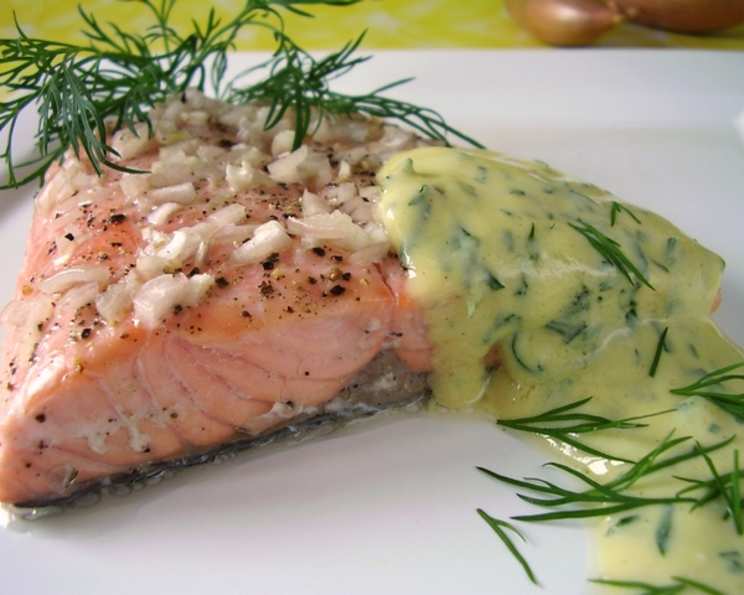
Salmon With Mustard Sauce: A Culinary Delight
I remember the first time I made this salmon with mustard sauce. It was a chilly autumn evening, and I was trying to impress a date with my culinary skills. The aroma of dill and Dijon filled my small apartment, a warm and inviting scent that promised something special. The salmon, flaky and moist, paired perfectly with the tangy-sweet mustard sauce, creating a symphony of flavors that was both comforting and sophisticated. It was a culinary success, and thankfully, so was the date! This recipe has been a staple in my kitchen ever since, a testament to its simplicity and elegance.
Recipe Overview
- Prep Time: 10 minutes
- Cook Time: 12-15 minutes
- Total Time: 22-25 minutes
- Servings: 4
- Dietary Type: Pescatarian
Ingredients
- 4 (6 ounce) salmon steaks
- 1⁄4 teaspoon pepper
- 1 cup dry white wine
- 2 shallots, minced
- 3 tablespoons minced fresh dill
- 1⁄4 cup nonfat plain yogurt (or sour cream)
- 1⁄4 cup Dijon mustard
- 2 tablespoons honey
- 1⁄8 cup lemon juice
Equipment Needed
- Large, deep baking pan
- Small mixing bowl
- Whisk
Instructions
- Preheat your oven to 400°F (200°C). Make sure the oven is fully preheated before proceeding.
- Place the salmon steaks in a large, deep baking pan. Ensure the pan is large enough to accommodate all the steaks without overcrowding.
- Sprinkle the salmon with pepper. This simple seasoning enhances the natural flavor of the fish.
- Cover the salmon with dry white wine. The wine adds moisture and subtle flavor as the salmon bakes.
- Sprinkle the minced shallots over the salmon. The shallots will infuse the wine and salmon with their delicate onion flavor.
- Bake for 12 to 15 minutes, basting often with the wine from the pan. Basting helps keep the salmon moist and flavorful. The cooking time may vary slightly depending on the thickness of the salmon steaks.
- While the salmon is baking, prepare the mustard sauce. In a small bowl, mix together the dill, yogurt (or sour cream), Dijon mustard, honey, and lemon juice until smooth. Whisk the ingredients thoroughly to ensure a creamy and well-combined sauce.
- Check the salmon for doneness. The salmon is done when it flakes easily with a fork. Be careful not to overcook it, as it will become dry.
- Once the salmon is cooked through, remove it from the oven.
- Serve the salmon immediately with the creamy mustard sauce spooned generously over the top.
Expert Tips & Tricks
- Wine Selection: Choose a crisp, dry white wine like Sauvignon Blanc or Pinot Grigio for the best flavor. Avoid overly sweet wines.
- Doneness Check: To ensure the salmon is perfectly cooked, use a fork to gently flake the thickest part. If it separates easily and appears opaque throughout, it’s ready. An internal temperature of 145°F (63°C) is ideal.
- Basting Technique: Basting is key to a moist and flavorful salmon. Use a spoon to regularly pour the wine from the pan back over the salmon every few minutes during baking.
- Sauce Consistency: If you prefer a thinner sauce, add a tablespoon or two of milk or water. For a thicker sauce, use sour cream instead of yogurt.
- Make-Ahead Tip: The mustard sauce can be made a day in advance and stored in the refrigerator. This allows the flavors to meld together even more. Just give it a good stir before serving.
- Flavor Boost: Add a pinch of red pepper flakes to the sauce for a subtle kick of heat.
Serving & Storage Suggestions
Serve the salmon with mustard sauce immediately after cooking for the best flavor and texture. It pairs wonderfully with steamed asparagus, roasted potatoes, or a simple green salad. Garnish with a sprig of fresh dill and a lemon wedge for an elegant presentation.
Leftover salmon should be stored in an airtight container in the refrigerator. It will keep for up to 2 days. To reheat, gently warm the salmon in a skillet over low heat or in the microwave. Be careful not to overheat it, as it can become dry. The mustard sauce can also be stored separately in the refrigerator and reheated gently.
The salmon is best enjoyed fresh, but it can be frozen if necessary. Wrap each piece individually in plastic wrap and then place them in a freezer-safe bag. Frozen salmon can be stored for up to 2 months. Thaw it in the refrigerator overnight before reheating.
Nutritional Information
| Nutrient | Amount per Serving | % Daily Value |
|---|---|---|
| Calories | 462.2 kcal | N/A |
| Calories from Fat | N/A | N/A |
| Total Fat | 23.5 g | 36% |
| Saturated Fat | 5.2 g | 26% |
| Cholesterol | 93.8 mg | 31% |
| Sodium | 293.6 mg | 12% |
| Total Carbohydrate | 14.5 g | 4% |
| Dietary Fiber | 0.6 g | 2% |
| Sugars | 10.7 g | N/A |
| Protein | 36.6 g | 73% |
Variations & Substitutions
- Spicy Salmon: Add a pinch of red pepper flakes to the mustard sauce for a touch of heat.
- Honey-Lime Salmon: Substitute lime juice for lemon juice and add a tablespoon of lime zest to the sauce.
- Herbaceous Salmon: Use a mix of fresh herbs like parsley, chives, and tarragon instead of just dill.
- Dairy-Free Salmon: Use a dairy-free yogurt alternative like coconut yogurt or almond yogurt in the sauce.
- Maple-Mustard Salmon: Substitute maple syrup for honey in the mustard sauce.
- Wine Substitute: If you prefer not to cook with wine, you can use chicken broth or vegetable broth instead.
FAQs (Frequently Asked Questions)
Q: Can I use frozen salmon steaks for this recipe?
A: Yes, you can. Just make sure to thaw them completely before cooking and pat them dry with a paper towel to remove excess moisture.
Q: Can I grill the salmon instead of baking it?
A: Absolutely! Preheat your grill to medium heat, lightly oil the grates, and grill the salmon for about 4-5 minutes per side, or until cooked through. Baste with the wine while grilling.
Q: What if I don’t have shallots? Can I use onions instead?
A: Yes, you can substitute with a small, finely chopped onion. Shallots have a milder flavor, so use the onion sparingly.
Q: How do I know when the salmon is cooked properly?
A: The salmon is done when it flakes easily with a fork and is opaque throughout. An internal temperature of 145°F (63°C) is ideal.
Q: Can I make the mustard sauce ahead of time?
A: Yes, the mustard sauce can be made up to a day in advance and stored in the refrigerator. This allows the flavors to meld together even more. Just give it a good stir before serving.
Final Thoughts
This Salmon with Mustard Sauce recipe is a testament to the fact that delicious and elegant meals don’t have to be complicated. It’s a dish that’s both satisfying and impressive, perfect for a weeknight dinner or a special occasion. I encourage you to try this recipe and make it your own by experimenting with different variations and substitutions. Don’t hesitate to adjust the flavors to suit your personal taste. And most importantly, enjoy the process of creating a beautiful and flavorful meal! Share your creations and feedback, and perhaps pair it with a chilled glass of white wine to complete the experience. Bon appétit!