
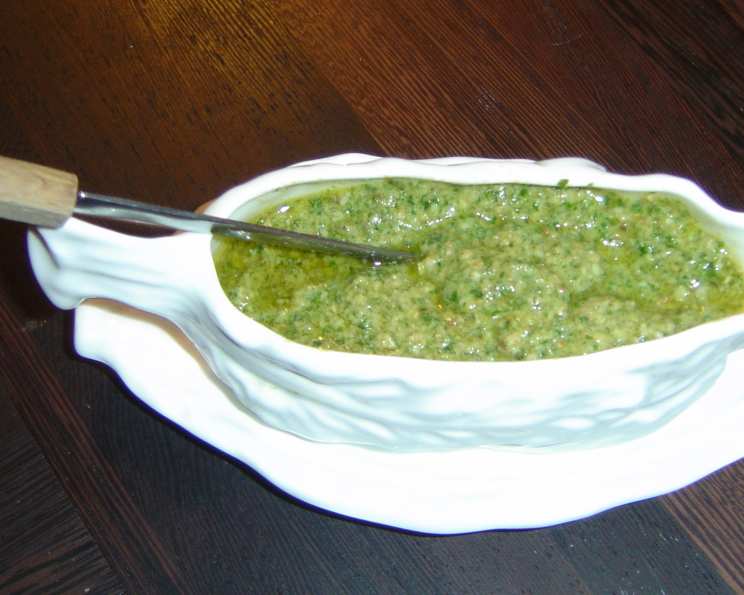
Salsa Verde: A Vibrant Italian Green Sauce
The first time I tasted Salsa Verde, it was drizzled over grilled swordfish at a tiny trattoria overlooking the Ligurian Sea. The briny air mingled with the herbaceous aroma of the sauce, instantly transporting me. The bright, tangy, and utterly fresh flavors were a revelation, a symphony of greens that cut through the richness of the fish. It was so simple, yet so incredibly complex – a testament to the power of fresh, quality ingredients. From that moment on, I was hooked, determined to recreate that magic in my own kitchen.
Recipe Overview
- Prep Time: 15 minutes
- Cook Time: 0 minutes
- Total Time: 15 minutes
- Servings: 6-8
- Yield: About 1 cup
- Dietary Type: Gluten-Free, Dairy-Free (naturally), Vegetarian, Vegan
Ingredients
- 1 cup fresh parsley leaves only, tightly packed
- ¼ cup pine nuts
- 2 tablespoons capers, drained
- 1 garlic clove, peeled
- 3 anchovy fillets, packed in oil, drained
- Red wine vinegar, to taste
- ½ cup extra virgin olive oil
- Salt and pepper, to taste
- 1 cup basil leaves (optional)
- ½ cup mint leaves (optional)
- 1 tablespoon Dijon mustard (optional)
- ½ cup Parmesan cheese, grated (optional)
Equipment Needed
- Blender or food processor (or mortar and pestle)
- Measuring cups and spoons
- Cutting board
- Knife
Instructions
-
Prepare the Herbs: Thoroughly wash and dry the parsley, and any optional basil and mint you are using. Remove the stems from the parsley and any large stems from the basil and mint. Pat the herbs dry to prevent a watery sauce.
-
Combine Initial Ingredients: Place the parsley leaves, pine nuts, capers, garlic clove, and anchovy fillets into the blender or food processor.
-
Process to a Coarse Paste: Pulse the mixture until it forms a coarse paste. Avoid over-processing, as you don’t want a completely smooth puree. The texture should still have some character. If using a mortar and pestle, grind these ingredients together until a coarse paste forms. This method takes longer but offers a more rustic texture.
-
Incorporate the Olive Oil: With the blender or food processor running on low, slowly drizzle in the extra virgin olive oil until the sauce emulsifies and reaches your desired consistency. If using a mortar and pestle, gradually stir in the olive oil, ensuring it’s fully incorporated.
-
Add Optional Ingredients (if using): If you’re using basil, mint, Dijon mustard, or Parmesan cheese, add them to the blender or food processor and pulse briefly to combine. If using a mortar and pestle, stir these ingredients in until evenly distributed.
-
Season to Taste: Add red wine vinegar a little at a time, tasting as you go, until you achieve the desired tanginess. Season with salt and pepper to taste. Remember that the anchovies and capers are already salty, so be cautious with the salt.
-
Let the Flavors Meld: For the best flavor, allow the Salsa Verde to stand at room temperature for at least 30 minutes before serving. This allows the flavors to meld and deepen.
Expert Tips & Tricks
- Quality Matters: The key to a great Salsa Verde is using high-quality, fresh ingredients, especially the extra virgin olive oil. Use the best you can afford; it will make a noticeable difference.
- Don’t Over-Process: Avoid over-processing the sauce. The texture should be somewhat coarse, not completely smooth. This allows the individual flavors to shine through.
- Taste as You Go: Adjust the amount of red wine vinegar, salt, and pepper to your liking. The balance of flavors is crucial, so taste and adjust as needed.
- Anchovy Alternative: If you are averse to anchovies, you can substitute them with a small pinch of red pepper flakes for a little heat or a few drops of Worcestershire sauce (though this isn’t strictly traditional).
- Herbs: Feel free to experiment with other herbs, such as oregano or tarragon, but keep parsley as the base.
- Make it Ahead: Salsa Verde can be made a day or two in advance. The flavors will deepen over time. Store it in an airtight container in the refrigerator.
- Freezing: While not ideal, you can freeze Salsa Verde. The texture may change slightly upon thawing, but the flavor will still be good. Store in an airtight container or ice cube trays for easy portioning.
Serving & Storage Suggestions
Salsa Verde is incredibly versatile. It’s fantastic served as a condiment with:
- Grilled meats: Steak, chicken, pork, or lamb.
- Roasted or grilled fish: Salmon, tuna, swordfish, or halibut.
- Vegetables: Roasted potatoes, grilled asparagus, or blanched green beans.
- Eggs: Scrambled eggs, omelets, or frittatas.
- Pasta: Tossed with cooked pasta for a simple and flavorful meal.
Store leftover Salsa Verde in an airtight container in the refrigerator for up to 3-4 days. The color may darken slightly over time, but the flavor will still be good. It is not recommended to leave at room temperature for more than 2 hours.
Nutritional Information
Estimates will vary based on specific ingredients used.
| Nutrient | Amount per Serving | % Daily Value* |
|---|---|---|
| Calories | 200 kcal | 10% |
| Total Fat | 18g | 28% |
| Saturated Fat | 3g | 15% |
| Cholesterol | 3mg | 1% |
| Sodium | 150mg | 6% |
| Total Carbohydrate | 3g | 1% |
| Dietary Fiber | 1g | 4% |
| Sugars | 1g | |
| Protein | 2g | 4% |
*Percent Daily Values are based on a 2,000 calorie diet.
Variations & Substitutions
- Vegan Salsa Verde: Omit the anchovy fillets and substitute with a pinch of red pepper flakes or a teaspoon of seaweed flakes for umami. Also, skip the Parmesan cheese.
- Spicy Salsa Verde: Add a pinch of red pepper flakes or a finely chopped small chili pepper to the blender or food processor.
- Lemon Salsa Verde: Substitute red wine vinegar with lemon juice for a brighter, more citrusy flavor.
- Nut-Free Salsa Verde: Replace the pine nuts with sunflower seeds or pumpkin seeds.
- Herb Combinations: Experiment with different herb combinations. Try adding tarragon, chives, or marjoram for a unique twist.
FAQs (Frequently Asked Questions)
Q: Can I make Salsa Verde without a blender or food processor?
A: Yes! Traditionally, Salsa Verde is made with a mortar and pestle. It takes more time and effort, but the resulting texture is wonderfully rustic.
Q: How long does Salsa Verde last in the refrigerator?
A: Properly stored in an airtight container, Salsa Verde will last for 3-4 days in the refrigerator.
Q: Can I freeze Salsa Verde?
A: Yes, you can freeze Salsa Verde, but the texture may change slightly upon thawing. It’s best to freeze it in small portions, such as in ice cube trays.
Q: Can I use dried herbs instead of fresh?
A: Fresh herbs are essential for the best flavor. Dried herbs will not provide the same vibrant taste and texture.
Q: My Salsa Verde is too bitter. What can I do?
A: Bitterness can come from over-processing the herbs or using too much garlic. Try adding a little more olive oil or a touch of honey to balance the flavors.
Final Thoughts
Salsa Verde is more than just a sauce; it’s a celebration of fresh, vibrant flavors. It’s a taste of Italy that you can easily bring to your own table. Don’t be afraid to experiment with different herbs and ingredients to create your own signature version. I encourage you to try this recipe and share your feedback. Serve it alongside grilled fish, roasted vegetables, or simply spread it on crusty bread for a delightful appetizer. Buon appetito!