
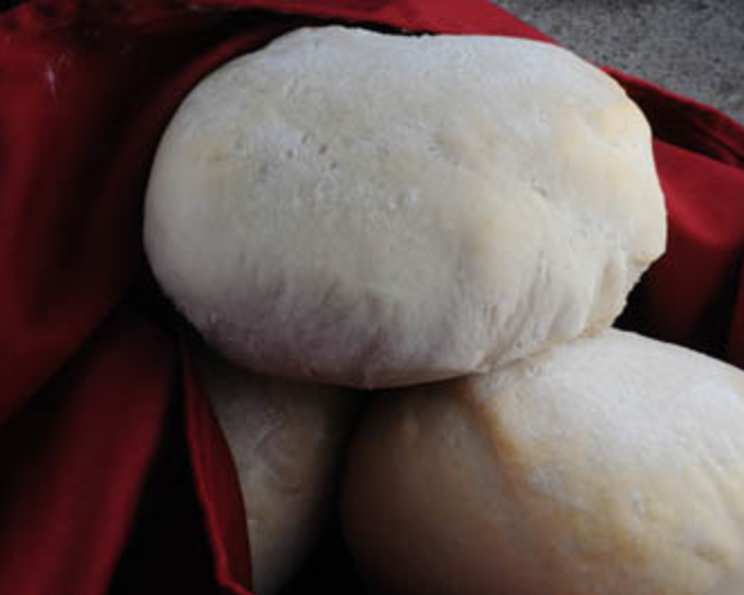
Bajan Salt Bread: A Taste of Barbados
The first time I had Bajan salt bread, I was wandering through a Bridgetown market, drawn in by the aroma of freshly baked goods. A vendor, seeing my curiosity, offered me a warm roll, its slightly rough exterior hinting at the satisfying chew within. The simple flavor, a subtle dance of salt and yeast, was unexpectedly captivating. Paired with a bit of local butter, it was the perfect fuel for exploring the vibrant colors and sounds of Barbados. This humble bread has since become synonymous with the island for me, a reminder of its warmth and simple pleasures.
Recipe Overview
- Prep Time: 1 hour 20 minutes
- Cook Time: 25-30 minutes
- Total Time: 1 hour 45-50 minutes
- Servings: 4 Large rolls
- Yield: 4 Large rolls
- Dietary Type: Vegetarian
Ingredients
- 3 1⁄2 cups white flour
- 3 3⁄4 teaspoons active dry yeast
- 1 1⁄2 teaspoons salt
- 3 1⁄2 teaspoons turbinado sugar
- 2 tablespoons lard
- 1 cup water
Equipment Needed
- Large Mixing Bowl
- Measuring Cups and Spoons
- Baking Sheet
- Pastry Brush (optional)
Instructions
- In a large bowl, combine the white flour, active dry yeast, salt, turbinado sugar, and lard.
- Using your fingers or a pastry blender, blend the dry ingredients and lard together until the mixture resembles fine crumbs. It’s crucial to ensure the lard is well incorporated to create a tender crumb in the final bread.
- Gradually add the water to the mixture.
- Knead the dough for approximately two minutes, or until it comes together into a relatively smooth ball. The dough will be somewhat firm.
- Place the dough in a lightly oiled bowl, turning to coat. Cover the bowl with a clean kitchen towel or plastic wrap.
- Let the dough rise in a warm place until it has doubled in size. This usually takes about an hour, but rising time can vary depending on the temperature of your kitchen. A slightly warm oven (turned off!) can be a great place to encourage rising.
- Once the dough has doubled, punch it down gently to release the air.
- Divide the dough into four equal portions.
- Shape each portion into a round or oval roll.
- Lightly brush each roll with water (this helps with crust development).
- Turn the rolls over onto the baking sheet.
- Let the rolls rest for 15 minutes, then turn them over again and let them rest for another 15 minutes. This double resting period helps the gluten relax and creates a softer, more even crumb.
- Before baking, sprinkle the tops of the rolls generously with flour. This gives them that characteristic rustic look.
- Preheat your oven to 325 degrees Fahrenheit (160 degrees Celsius).
- Bake the rolls in the preheated oven for 15 minutes, or until they are golden brown. Keep a close eye on them, as baking times can vary depending on your oven. Mine typically require between 25 and 30 minutes to achieve the desired color.
- Remove the salt bread from the oven and let them cool slightly on a wire rack before serving.
Expert Tips & Tricks
- Lard Substitute: If you don’t have lard, you can substitute vegetable shortening. However, lard contributes to a slightly richer flavor and a more tender crumb.
- Yeast Activation: Ensure your active dry yeast is fresh by blooming it in a little warm water with a pinch of sugar before adding it to the other ingredients. If it doesn’t foam within 5-10 minutes, your yeast might be too old.
- Oven Temperature: Ovens can vary. It’s better to start checking the bread for doneness at the 20-minute mark. If the tops are browning too quickly, tent them loosely with foil.
- Soft Bread Secret: The double resting period is crucial for achieving a soft, light texture. Don’t skip this step!
- Crispy Crust: For a slightly crispier crust, you can brush the rolls with a little olive oil or melted butter just before baking.
Serving & Storage Suggestions
Bajan salt bread is best enjoyed fresh, warm from the oven, with a pat of butter. It’s also excellent served alongside soups, stews, or any Bajan dish like cou-cou and flying fish. Leftover salt bread can be stored at room temperature in an airtight container for up to 2 days. For longer storage, wrap the bread tightly and freeze it for up to 2 months. To reheat, thaw completely and warm in a 350°F (175°C) oven for 5-10 minutes, or until heated through. A quick zap in the microwave will also work, but the bread will be softer.
Nutritional Information
| Nutrient | Amount per Serving | % Daily Value |
|---|---|---|
| Calories | 468 kcal | N/A |
| Calories from Fat | N/A | N/A |
| Total Fat | 7.8 g | 11% |
| Saturated Fat | 2.7 g | 13% |
| Cholesterol | 6.1 mg | 2% |
| Sodium | 877.9 mg | 36% |
| Total Carbohydrate | 85 g | 28% |
| Dietary Fiber | 4 g | 15% |
| Sugars | 0.3 g | 1% |
| Protein | 12.8 g | 25% |
Note: Nutritional information is an estimate and may vary based on specific ingredients and portion sizes.
Variations & Substitutions
- Vegan Salt Bread: Substitute the lard with an equal amount of vegetable shortening or a vegan butter alternative.
- Whole Wheat Salt Bread: Replace up to half of the white flour with whole wheat flour for a nuttier flavor and added fiber. You may need to add a little more water if the dough seems dry.
- Garlic Herb Salt Bread: Add 1-2 teaspoons of minced garlic and 1-2 tablespoons of chopped fresh herbs (such as thyme, rosemary, or chives) to the dough during the kneading process for a flavorful twist.
- Spiced Salt Bread: Incorporate a pinch of ground nutmeg or cinnamon into the dough for a warm, aromatic variation.
FAQs (Frequently Asked Questions)
Q: Why is it called “salt bread” if it also has sugar?
A: The bread’s name comes from the prominent salty flavor that balances the subtle sweetness of the turbinado sugar. The sugar enhances the yeast activity and adds a slight richness, but the salt is the defining characteristic.
Q: Can I use a stand mixer to knead the dough?
A: Yes, you can use a stand mixer with a dough hook attachment. Knead on low speed for about 5-7 minutes until the dough comes together into a smooth ball.
Q: My dough isn’t rising. What could be the problem?
A: Several factors can affect rising. Ensure your yeast is fresh and that the water you use is lukewarm, not too hot or too cold. Also, make sure the rising environment is warm and draft-free.
Q: How do I know when the bread is done baking?
A: The bread is done when it is golden brown on top and sounds hollow when tapped on the bottom. Since this is a soft bread, it won’t sound very hollow, so rely more on the color.
Q: Can I make the dough ahead of time?
A: Yes, you can prepare the dough ahead of time. After the initial kneading, place the dough in a lightly oiled bowl, cover it, and refrigerate it for up to 24 hours. Let it come to room temperature for about an hour before punching it down and continuing with the recipe.
Final Thoughts
Bajan salt bread is more than just a recipe; it’s a taste of Caribbean sunshine and simple, honest flavors. Don’t be intimidated by the baking process; the reward of warm, freshly baked rolls is well worth the effort. So, gather your ingredients, preheat your oven, and embark on a culinary journey to Barbados. Share your creations with friends and family, and let the warm, comforting aroma fill your home. I encourage you to adapt this recipe to your liking and discover your own unique twist on this classic Bajan bread. Enjoy!