
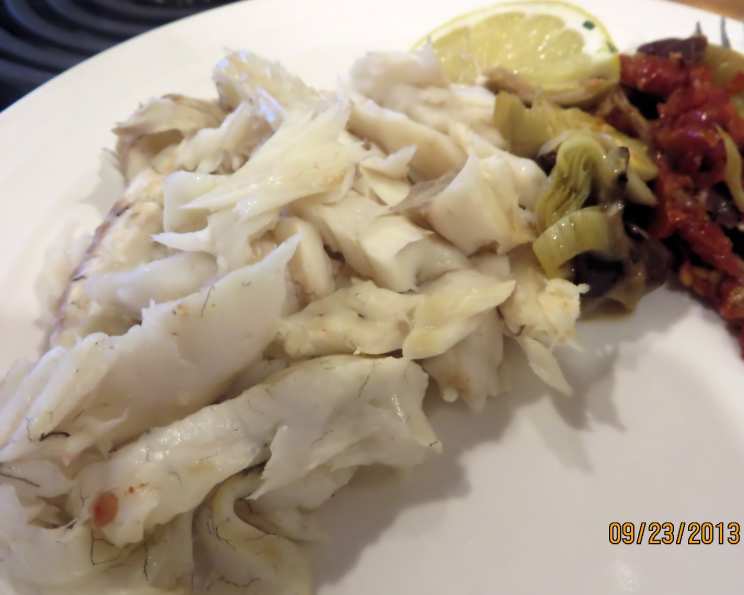
Salt Crusted Whole Fish: A Mediterranean Masterpiece
I remember the first time I tasted salt-crusted fish. It was at a tiny trattoria nestled along the Amalfi Coast. The sea air mingled with the aroma of lemons and herbs, and the simplicity of the dish was astounding. The waiter cracked open the salty shell, revealing perfectly steamed, flaky white fish, infused with the flavors of the Mediterranean. It was a revelation, a testament to how few ingredients, combined with the right technique, can create pure magic. I’ve been chasing that experience ever since, trying to recreate that taste of Italy in my own kitchen.
Recipe Overview
- Prep Time: 20 minutes
- Cook Time: 20 minutes
- Total Time: 40 minutes
- Servings: 2
- Yield: 1 fish
- Dietary Type: Pescatarian
Ingredients
- 3 egg whites
- 2 cups sea salt
- 2 cups all-purpose flour
- 3 tablespoons Italian parsley, chopped and divided
- ½ cup water
- 1 (2 ½ lb) fresh whole white fish, such as striped bass
- 2 tablespoons sun-dried tomatoes, julienned
- 1 tablespoon kalamata olives, chopped
- 2 tablespoons artichoke hearts, chopped
- 2 slices lemons, sliced in half, plus more for garnish
- 1 tablespoon garlic, minced
- ½ teaspoon cracked black pepper
Equipment Needed
- Baking sheet
- Parchment paper
- Medium bowl
- Large knife
- Serving platter or cutting board
Instructions
-
Preheat your oven to 400 degrees F (200 degrees C).
-
Line a baking sheet with parchment paper. Trim the paper so that it extends approximately 3 inches beyond the outline of the fish you’ll be baking. This extra paper will allow you to easily transfer the cooked fish.
-
In a medium bowl, prepare the salt crust. Combine the egg whites, sea salt, all-purpose flour, and 2 tablespoons of the chopped Italian parsley. Gradually add the ½ cup of water, mixing everything together with your hands. Continue mixing until a thick, slightly sticky paste forms. This paste will be your salt crust. The consistency should be firm enough to hold its shape but pliable enough to be molded around the fish.
-
Prepare the fish cavity. Combine the sun-dried tomatoes, kalamata olives, artichoke hearts, and lemon slices.
-
Rub the exterior of the fish with the minced garlic. Then, sprinkle the fish with the remaining 1 tablespoon of chopped Italian parsley and the cracked black pepper. This step adds a wonderful aromatic layer that infuses the fish during baking.
-
Place the prepared fish on the parchment-lined baking sheet.
-
Evenly mound the salt paste over the entire fish, completely encasing it. Be sure to cover the head and tail as well.
-
Gently but firmly press the salt mixture down onto the baking sheet around the edges of the fish. This seals the crust and prevents steam from escaping during baking. Pay special attention to sealing any cracks or gaps in the crust to ensure even cooking.
-
Bake the fish until the salt crust is golden brown and very firm to the touch, approximately 18 to 20 minutes. The exact baking time may vary depending on the size and thickness of your fish. A thermometer inserted into the thickest part of the fish should read about 145 degrees F (63 degrees C) when it’s done.
-
Carefully slide the parchment paper and the salt-crusted fish onto a serving platter or cutting board.
-
Using the handle of a large knife, carefully crack open the salt crust along the top of the fish. Be careful as the steam released will be very hot.
-
Slide a spoon under the top fillet, over the spine, and gently lift the fillet to a serving platter.
-
Turn the fish over and repeat the process to remove the second fillet.
-
Garnish with fresh lemon slices and serve immediately. The fish is best enjoyed while still warm, allowing you to fully appreciate its delicate flavor and moist texture.
Expert Tips & Tricks
- Don’t be afraid of the salt! While the crust is made of salt, it doesn’t penetrate the fish significantly. The salt steams the fish from the outside, resulting in incredibly moist and flavorful meat.
- Choose your fish wisely. A firm, white-fleshed fish like striped bass, sea bass, or even snapper works best. Avoid oily fish like salmon or mackerel, as they can become too rich when cooked in this manner.
- Get creative with the filling. Feel free to experiment with different herbs, vegetables, and citrus fruits inside the fish cavity. Fresh herbs like thyme, rosemary, or oregano would be delicious additions.
- For an extra burst of flavor: Add a splash of white wine or lemon juice to the fish cavity before sealing it in the salt crust. This will create a flavorful steam that infuses the fish.
- The salt crust can be made ahead of time: Store it in an airtight container in the refrigerator for up to 24 hours. This can save you time on the day you plan to cook the fish.
Serving & Storage Suggestions
Serve the salt-crusted fish immediately after cracking the crust to enjoy it at its peak freshness. The fish is delicious on its own or served with a simple side salad, roasted vegetables, or a lemon-butter sauce.
Leftover cooked fish can be stored in an airtight container in the refrigerator for up to 2 days. Reheat gently in a low oven (around 250 degrees F or 120 degrees C) or in a skillet over low heat until warmed through. Avoid microwaving, as this can dry out the fish.
Do not freeze the cooked fish, as it will lose its texture and flavor.
Nutritional Information
| Nutrient | Amount per Serving | % Daily Value |
|---|---|---|
| Calories | 511 kcal | N/A |
| Calories from Fat | 162 kcal | N/A |
| Total Fat | 18 g | 3% |
| Saturated Fat | 0.3 g | 1% |
| Cholesterol | 0 mg | 0% |
| Sodium | 111820 mg | 4659% |
| Total Carbohydrate | 101.8 g | 33% |
| Dietary Fiber | 5.4 g | 21% |
| Sugars | 2.3 g | 9% |
| Protein | 19.7 g | 39% |
Variations & Substitutions
- Gluten-Free Crust: Substitute the all-purpose flour with a gluten-free flour blend. Be sure to use a blend that contains xanthan gum or another binding agent to help hold the crust together.
- Herb Crust: Add other fresh herbs like rosemary, thyme, or oregano to the salt crust for an even more aromatic dish.
- Spicy Kick: Add a pinch of red pepper flakes to the salt crust for a subtle heat.
- Different Fish: While striped bass is a great choice, you can also use other whole white fish like snapper, sea bass, or branzino.
- Citrus Infusion: Instead of just lemon slices, use a combination of lemon, orange, and lime slices to fill the fish cavity for a more complex citrus flavor.
FAQs (Frequently Asked Questions)
Q: Why use so much salt? Won’t the fish be too salty?
A: The salt crust acts as an insulator and steams the fish, preventing it from becoming overly salty. The fish absorbs only a small amount of salt, resulting in a perfectly seasoned and incredibly moist dish.
Q: Can I use kosher salt instead of sea salt?
A: Sea salt is preferred for its coarser texture, which helps to create a more solid crust. However, you can use kosher salt in a pinch. Just be sure to use a similar volume of salt.
Q: How do I know when the fish is done?
A: The crust should be golden brown and very firm to the touch. You can also insert a thermometer into the thickest part of the fish. It should read about 145 degrees F (63 degrees C) when done.
Q: What if the salt crust cracks while baking?
A: Don’t worry if the crust cracks slightly. It won’t affect the flavor or cooking process. You can patch up any large cracks with extra salt paste if desired.
Q: Can I reuse the salt crust?
A: No, the salt crust should be discarded after use. It will have absorbed moisture and oils from the fish and will not be suitable for reuse.
Final Thoughts
Salt-crusted fish is more than just a recipe; it’s an experience. The dramatic presentation, the satisfying crack of the crust, and the incredibly flavorful, moist fish inside make it a truly special dish. Don’t be intimidated by the seemingly large amount of salt – trust the process and prepare to be amazed. I encourage you to try this recipe and bring a taste of the Mediterranean to your own table. Share your creations and experiences, and let’s continue to explore the magic of simple, flavorful cooking together!