
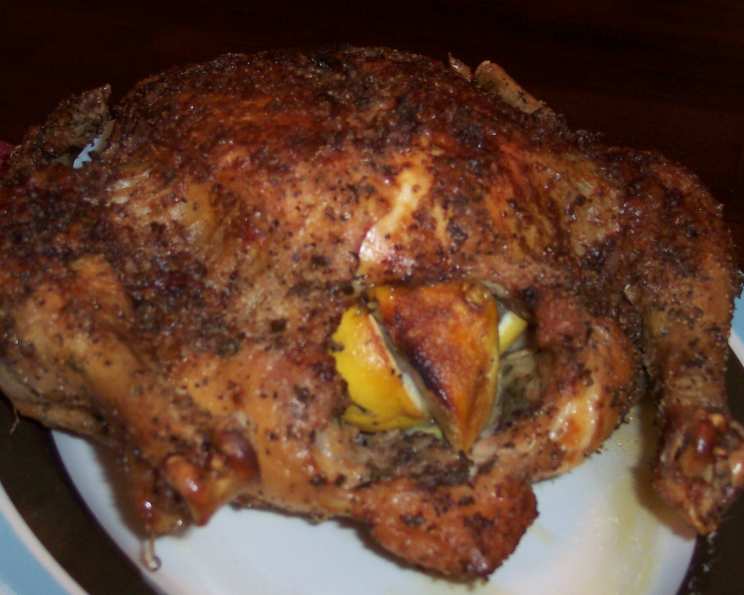
Salt-Rubbed Roast Chicken with Lemon & Thyme
My grandmother, bless her heart, always roasted chicken on Sundays. It was a tradition as reliable as the church bells, and the aroma that filled her cozy kitchen is forever etched in my memory. While her classic version was comforting, it was…well, let’s just say it wasn’t winning any culinary awards. The first time I made this salt-rubbed chicken, the deeply savory, almost caramelized skin and the incredibly moist meat transported me back to those Sunday dinners, but with a sophisticated, modern twist that made my grandmother’s recipe feel a little…ordinary. This is Sunday supper, elevated.
Recipe Overview
- Prep Time: 15 minutes + 8 hours (minimum) refrigeration
- Cook Time: 60 minutes
- Total Time: 9 hours 15 minutes
- Servings: 4
- Yield: 1 whole chicken
- Dietary Type: Gluten-Free, Dairy-Free (if clarified butter or oil is used)
Ingredients
- 3 tablespoons kosher salt
- 1 1/2 teaspoons freshly ground black pepper
- 2 tablespoons chopped fresh thyme, stems reserved
- 3 1/2 lbs chicken, excess fat trimmed, rinsed inside and out, and patted dry with paper towels
- 1 lemon, quartered
- 4 cloves garlic
- 3 tablespoons unsalted butter, melted (or clarified butter, or olive oil for dairy-free)
Equipment Needed
- Roasting pan
- Roasting rack
- Small bowl
- Pastry brush
- Meat thermometer
Instructions
-
In a small bowl, thoroughly mix together the kosher salt, black pepper, and chopped fresh thyme. This is your dry brine, and it’s crucial for both flavor and moisture.
-
Place the chicken on a rack set inside the roasting pan. This elevates the chicken, allowing for better air circulation and even cooking. Ensure the chicken is completely dry, as this will help the skin crisp up beautifully.
-
Generously rub the salt mixture all over the chicken skin, both on the top and underneath. Don’t be shy – this is where the magic happens! Get into every nook and cranny.
-
Place the chicken, uncovered, in the refrigerator for at least 8 hours, or preferably overnight. This allows the salt to penetrate the meat, drawing out moisture which then evaporates, resulting in crispy skin.
-
Preheat your oven to 400 degrees F (200 degrees C). Make sure the rack is in the center of the oven.
-
Stuff the cavity of the chicken with the quartered lemon, garlic cloves, and the reserved thyme stems. These aromatics will infuse the chicken from the inside out.
-
Brush the chicken with some of the melted butter (or clarified butter or olive oil). This will help the skin brown beautifully.
-
Roast the chicken, basting it every 20 minutes or so. Initially, use the remaining melted butter for basting. As the chicken cooks, use any rendered fat and juices that accumulate in the pan. Basting is key to achieving that golden-brown, crispy skin.
-
The chicken should be done in about an hour, but the best way to ensure doneness is to use a meat thermometer. Insert it into the thickest part of the thigh, avoiding the bone. The internal temperature should reach 170 degrees F (77 degrees C).
-
Remove the chicken from the oven and let it rest for at least 10 minutes before carving. This allows the juices to redistribute, resulting in a more tender and flavorful bird. Tent loosely with foil to keep warm.
Expert Tips & Tricks
- Don’t be afraid of the salt: The amount of salt may seem excessive, but it’s crucial for the brining process and won’t make the chicken overly salty. Most of it stays on the skin and isn’t absorbed into the meat.
- Pat it dry: A thoroughly dried chicken is essential for crispy skin. Use paper towels to blot it inside and out before applying the salt rub.
- Elevate for even cooking: Roasting the chicken on a rack in a roasting pan allows for even heat distribution and prevents the bottom from becoming soggy.
- Basting is your friend: Don’t skip the basting! It’s what creates that beautiful, golden-brown skin.
- Adjust oven temperature: If your oven tends to run hot, you can lower the temperature to 375 degrees F (190 degrees C) and extend the cooking time slightly.
- Spatchcocking: For an even faster cooking time and even crispier skin, consider spatchcocking (butterflying) the chicken. This involves removing the backbone and flattening the bird.
Serving & Storage Suggestions
Serve the salt-rubbed roast chicken immediately after resting. Carve it and arrange the pieces on a platter, garnishing with fresh thyme sprigs and lemon wedges, if desired. It pairs perfectly with roasted vegetables, mashed potatoes, or a simple green salad.
Leftover cooked chicken can be stored in an airtight container in the refrigerator for up to 3-4 days. For longer storage, shred the chicken and freeze it in freezer-safe bags for up to 2-3 months.
To reheat, you can warm the chicken in a preheated oven at 350 degrees F (175 degrees C) until heated through. You can also microwave it, but be careful not to overcook it, as it can become dry.
Nutritional Information
| Nutrient | Amount per Serving | % Daily Value |
|---|---|---|
| Calories | 941 kcal | – |
| Calories from Fat | 616 kcal | – |
| Total Fat | 68.5 g | 105% |
| Saturated Fat | 22.6 g | 113% |
| Cholesterol | 320.6 mg | 106% |
| Sodium | 5512.4 mg | 229% |
| Total Carbohydrate | 3 g | 1% |
| Dietary Fiber | 0.8 g | 3% |
| Sugars | 0.4 g | 1% |
| Protein | 74.4 g | 148% |
Variations & Substitutions
- Herb Variations: Experiment with different herbs like rosemary, sage, or oregano.
- Spice It Up: Add a pinch of red pepper flakes to the salt rub for a touch of heat.
- Citrus Zest: Grate some lemon or orange zest into the salt rub for a brighter flavor.
- Garlic Powder: For a more intense garlic flavor, add a teaspoon of garlic powder to the rub.
- Maple Glaze: During the last 15 minutes of roasting, brush the chicken with a maple syrup glaze for a sweet and savory flavor. Combine equal parts maple syrup and Dijon mustard.
FAQs (Frequently Asked Questions)
Q: Can I use table salt instead of kosher salt?
A: No, kosher salt is recommended because its larger crystals draw out moisture more effectively. Table salt is finer and more likely to result in an overly salty bird.
Q: Can I skip the overnight refrigeration?
A: While the chicken will still be edible, the overnight refrigeration is crucial for both flavor and crispy skin. The longer the chicken sits with the salt rub, the better the results.
Q: My chicken is browning too quickly. What should I do?
A: Tent the chicken loosely with aluminum foil to prevent it from burning. You can remove the foil during the last 15-20 minutes of cooking to allow the skin to crisp up.
Q: How do I know if my chicken is fully cooked without a meat thermometer?
A: While a thermometer is the most accurate method, you can also check by piercing the thigh with a fork. If the juices run clear, the chicken is likely done. However, using a meat thermometer is always recommended.
Q: Can I use this method with other poultry, like turkey or duck?
A: Yes, this method can be adapted for other poultry, but you may need to adjust the cooking time accordingly.
Final Thoughts
This salt-rubbed roast chicken with lemon and thyme is a testament to the power of simple ingredients and proper technique. It’s a dish that’s both comforting and elegant, perfect for a Sunday supper or a special occasion. So, preheat your oven, gather your ingredients, and prepare to be amazed. Don’t hesitate to experiment with different herbs and spices to create your own signature flavor. And most importantly, enjoy the process! I’d love to hear how this recipe turns out for you – please share your experiences and any variations you try! This recipe pairs exceptionally well with a crisp Sauvignon Blanc or a hearty Pinot Noir. Bon appétit!