
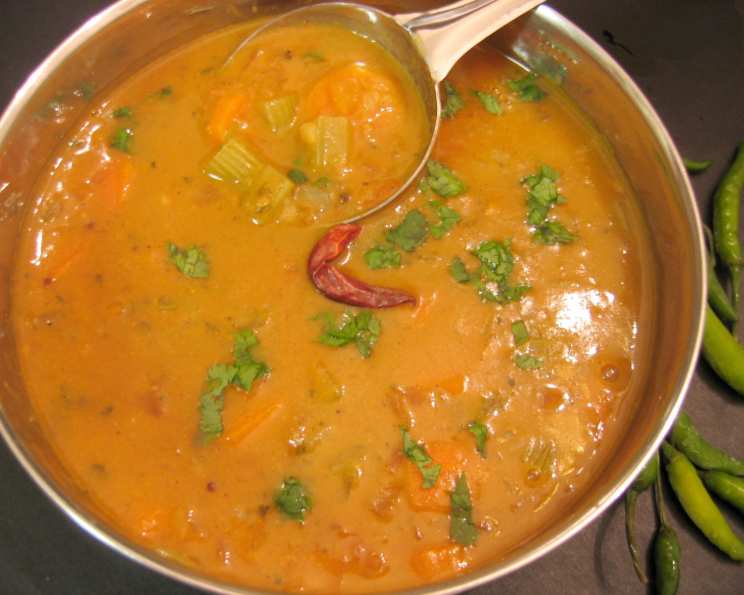
The Soulful Stew: Mastering the Art of Sambhar
The aroma of sambhar always transports me back to my grandmother’s kitchen. The air, thick with the scent of toasted spices, simmering lentils, and the subtle tang of tamarind, was the essence of comfort. I remember sitting cross-legged on the floor, watching her deft hands work their magic, creating this South Indian staple that nourished our bodies and souls. Every spoonful was a warm hug, a taste of home I carry with me wherever I go.
Recipe Overview
- Prep Time: 30 minutes
- Cook Time: 40 minutes
- Total Time: 1 hour 10 minutes
- Servings: 4-6
- Dietary Type: Vegan
Ingredients
- 8 ounces red lentils or 8 ounces yellow lentils, picked over, washed and drained
- 3-4 cups water
- 1 inch ball tamarind pulp
- 1 cup boiling water, in which to soak the tamarind pulp
- ½ teaspoon turmeric
- 2 tablespoons vegetable oil (I use coconut oil)
- ½ teaspoon brown mustard seeds
- ½ teaspoon cumin seed
- 2 teaspoons sambhar powder
- 2 whole dried red chilies
- ¼ teaspoon asafoetida powder
- 8-10 fresh curry leaves
- 2 garlic cloves, crushed
- 2 tablespoons desiccated unsweetened coconut (shredded)
- 1 lb chopped mixed vegetables (for example, cauliflower, zucchini, red bell pepper, okra, mushrooms, peas, Brussels sprouts)
- 4 firm tomatoes, peeled and chopped
- 2 tablespoons vegetable oil, extra
- 2 garlic cloves, extra, finely sliced
- Fresh cilantro, chopped, to garnish
Equipment Needed
- Deep saucepan
- Heatproof bowl
- Small skillet
- Strainer
Instructions
-
Begin by preparing the tamarind water. In a heatproof bowl, combine the tamarind pulp and 1 cup of boiling water. Let this mixture stand for 30 minutes to allow the tamarind to soften and infuse the water.
-
After 30 minutes, use your fingers to squeeze and press the tamarind, extracting as much pulp as possible into the water. Strain the mixture through a strainer, discarding the fibrous residue and seeds. Reserve the tamarind water for later use. This tamarind water provides the signature tangy flavour of sambhar.
-
While the tamarind is soaking, prepare the lentils. Place the red or yellow lentils in a deep saucepan. Add 3 cups of water and the turmeric. Bring the mixture to a boil over high heat.
-
Once boiling, reduce the heat to a simmer and gently cook the lentils, uncovered, until they are just tender. This should take approximately 20 to 30 minutes. Keep an eye on the water level; if it evaporates too quickly, add another ½ to 1 cup of water as needed.
-
While the lentils are cooking, prepare the spice tempering. Heat 2 tablespoons of vegetable oil (coconut oil is a great choice for added flavour) in a small skillet over medium heat.
-
Add the brown mustard seeds. Once they begin to splutter, add the cumin seeds, sambhar powder, dried red chilies, asafoetida, curry leaves, crushed garlic, and desiccated coconut.
-
Sauté the spices until the coconut becomes a golden brown, being careful not to burn them. Remove the skillet from the heat and set the spice tempering aside. The aroma at this stage is incredibly inviting and forms the base of the sambhar’s flavour profile.
-
Once the lentils are tender, add the sautéed spice mix to the saucepan. Also add the prepared mixed vegetables, chopped tomatoes, and the reserved tamarind water.
-
Mix everything well, ensuring all the vegetables are coated in the lentil and spice mixture. Cover the saucepan and simmer until the vegetables are just tender. This will take approximately 10 to 20 minutes, depending on the size of the diced vegetables.
-
As the tomatoes cook down, they should release enough fluid to simmer the other vegetables. However, if necessary, you can add another ½ cup of water to prevent the sambhar from becoming too dry.
-
Just before serving, prepare the final garlic and cilantro tempering. Heat the extra 2 tablespoons of vegetable oil in a small skillet. Add the finely sliced garlic and fresh cilantro.
-
Sauté for just 30 seconds, until the garlic is fragrant and the cilantro is slightly wilted. Be careful not to burn the garlic, as it can become bitter.
-
Pour the garlic and cilantro mixture over the sambhar and mix gently.
-
Serve immediately, allowing the flavors to meld and the aromas to fill the air.
Expert Tips & Tricks
- Vegetable Selection: Feel free to adjust the vegetable selection based on what’s in season or your personal preferences. Drumsticks (moringa pods) and shallots are also traditional additions.
- Spice Level: Adjust the amount of dried red chilies or sambhar powder to control the spice level according to your taste.
- Lentil Texture: For a smoother sambhar, you can use a hand blender to partially blend the cooked lentils before adding the vegetables. However, I prefer the rustic texture of whole lentils.
- Tempering is Key: Don’t skimp on the tempering. It’s the heart of the sambhar’s flavor. Ensure the mustard seeds splutter properly and the garlic turns golden brown for the best results.
Serving & Storage Suggestions
Sambhar is traditionally served hot with idli (steamed rice cakes), dosa (crispy crepes), vada (savory doughnuts), or rice. It can also be enjoyed as a soup on its own.
Leftover sambhar can be stored in an airtight container in the refrigerator for up to 3 days. It can also be frozen for longer storage (up to 2 months). Reheat gently on the stovetop or in the microwave. You might need to add a little water to adjust the consistency after reheating.
Nutritional Information
| Nutrient | Amount per Serving | % Daily Value |
|---|---|---|
| Calories | 380 kcal | 19% |
| Total Fat | 18g | 28% |
| Saturated Fat | 4g | 20% |
| Cholesterol | 0mg | 0% |
| Sodium | 250mg | 10% |
| Total Carbohydrate | 50g | 17% |
| Dietary Fiber | 15g | 60% |
| Sugars | 8g | – |
| Protein | 22g | 44% |
Note: Nutritional information is an estimate and may vary based on specific ingredients and portion sizes.
Variations & Substitutions
- Gluten-Free: Ensure the sambhar powder you use is gluten-free. Most commercially available brands are, but it’s always best to check the label.
- Coconut Milk: For a richer and creamier sambhar, substitute some of the water with coconut milk. Add it towards the end of the cooking process.
- Vegetable Variations: Experiment with different vegetables depending on the season. Eggplant, pumpkin, or green beans are all delicious additions.
- Protein Boost: Add cooked chickpeas or black-eyed peas for an extra boost of protein.
FAQs (Frequently Asked Questions)
Q: Can I make sambhar ahead of time?
A: Yes, sambhar can be made ahead of time. The flavors actually meld together and improve over time. Store it in the refrigerator and reheat before serving.
Q: What can I do if my sambhar is too sour?
A: If your sambhar is too sour due to the tamarind, add a small amount of jaggery (Indian unrefined sugar) or regular sugar to balance the flavors.
Q: Can I use pre-made sambhar powder?
A: Yes, you can use pre-made sambhar powder. However, making your own sambhar powder from scratch will result in a more flavorful and aromatic sambhar.
Q: How can I make my sambhar thicker?
A: To thicken your sambhar, you can mash some of the cooked lentils with a spoon or use a hand blender to partially blend the mixture.
Q: What if I don’t have tamarind pulp?
A: If you don’t have tamarind pulp, you can substitute it with tamarind paste, adjusting the quantity to taste. Lemon or lime juice can be used as a last resort, but the flavor will be slightly different.
Final Thoughts
I truly hope you’ll give this sambhar recipe a try. It’s more than just a dish; it’s a journey of flavors, a connection to tradition, and a celebration of simple ingredients transformed into something extraordinary. Don’t be afraid to experiment with the vegetables and spices to create your own unique version. Once you’ve mastered the art of sambhar, you’ll find yourself craving its comforting warmth time and time again. Serve it with fluffy idlis for breakfast or as a hearty accompaniment to rice for dinner. And please, share your feedback and variations with me – I’m always eager to learn from fellow food enthusiasts!