
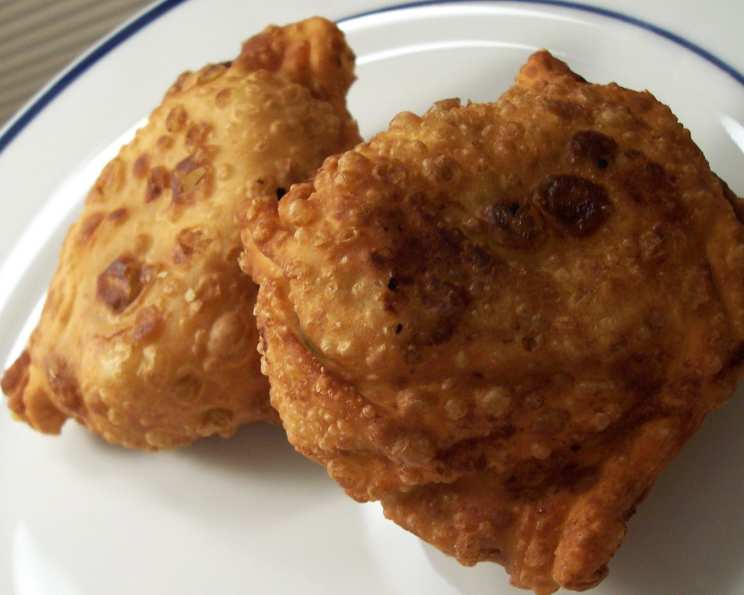
Samosas: A Culinary Journey to India
The scent of spices frying in hot oil instantly transports me back to a bustling market in Delhi. I remember the vibrant colors, the cacophony of sounds, and most vividly, the taste of my first samosa. The crisp, flaky pastry gave way to a warm, savory filling that exploded with flavor – a perfect blend of potatoes, peas, and fragrant spices. I’ve spent years chasing that perfect bite, and this recipe comes as close as any I’ve tried. This version is a cherished family favourite, a reminder of that sensory adventure.
Recipe Overview
- Prep Time: 2 hours
- Cook Time: 15 minutes
- Total Time: 2 hours 15 minutes
- Yields: 24 samosas
- Dietary Type: Vegetarian
Ingredients
For the Pastry:
- 3 cups all-purpose flour
- 1 teaspoon salt
- 4 tablespoons melted butter or ghee
- ¾ cup cold water
- Up to 4 tablespoons additional cold water (if needed)
- Vegetable oil for rubbing dough
For the Filling:
- 2 lbs potatoes, peeled
- 4 tablespoons vegetable oil
- 2 teaspoons mustard seeds (yellow or black)
- 2 medium onions, finely chopped
- 4 tablespoons fresh ginger, chopped
- 3 teaspoons fennel seeds
- 1 teaspoon ground cumin
- 1 tablespoon ground coriander
- 1 teaspoon turmeric
- 1 cup frozen green peas, defrosted
- 1 teaspoon salt
- 2 tablespoons water
- 1 teaspoon garam masala
- ½ teaspoon ground cayenne pepper
- Vegetable oil for deep frying
Equipment Needed
- Large pot
- Mixing bowl
- Frying pan
- Dough kneading surface or stand mixer with dough hook
- Rolling pin
- Knife
- Deep fryer or wok
- Slotted spoon
- Paper towels
Instructions
-
Begin by preparing the potatoes. Place the peeled potatoes in a large pot, cover with water, and bring to a boil. Cook until the potatoes are tender when pierced with a fork. Drain the potatoes and allow them to cool completely.
-
While the potatoes are cooking, prepare the pastry. In a large mixing bowl, combine the all-purpose flour and salt.
-
Add the melted butter or ghee to the flour mixture. Use your fingertips or a pastry blender to rub the butter into the flour until the mixture resembles coarse crumbs and becomes slightly flaky.
-
Gradually add the cold water. Pour ¾ cup of cold water over the flour mixture. Use your hands to bring the dough together.
-
If the dough is too dry, add additional cold water, one tablespoon at a time, until the dough forms a cohesive ball. Be careful not to overwater. You can add up to 4 tablespoons more water, one spoonful at a time, until everything comes together in a bowl.
-
Knead the dough. Turn the dough out onto a lightly floured surface and knead for about 10 minutes, or use a stand mixer with a dough hook attachment until the dough is smooth and elastic.
-
Rest the dough. Place the kneaded dough in a bowl, rub with vegetable oil to prevent it from drying out, and cover. Set aside while you prepare the filling.
-
Prepare the filling. Once the potatoes have cooled, cut them into small cubes.
-
Heat the vegetable oil in a large frying pan over medium heat. Add the mustard seeds and cook until they start to crackle and pop.
-
Immediately add the chopped onion and ginger to the pan. Cook for a few minutes until the onion softens and becomes translucent.
-
Add the fennel seeds, ground cumin, turmeric, cubed potatoes, defrosted peas, salt, and water. Stir well to combine.
-
Reduce the heat to low and let the filling cook for about 5 minutes, allowing the flavors to meld together.
-
Sprinkle over the garam masala and ground cayenne pepper. Stir again to incorporate.
-
Taste the filling and adjust the seasoning as needed. Remove the pan from the heat and set aside to cool slightly.
-
Assemble the samosas. Pinch off a small piece of dough. On a lightly floured surface, roll the dough thinly into a circle. The size of the circle will determine the size of your samosas.
-
Using a knife, cut the circle in half. Moisten the straight edge of one half with a finger dipped in water.
-
Shape the dough into a cone by overlapping the straight edges and pressing them together to form a seal.
-
Spoon the potato filling into the cone. Do not overfill.
-
Moisten the top edges of the cone with water and pinch them together to seal the samosa, forming a triangular shape.
-
Place the assembled samosas on a plate and cover with foil or plastic wrap to prevent them from drying out. You can prepare them up to 2-3 hours in advance.
-
Heat the oil for frying. Pour about 3 cups of vegetable oil into a 12-inch wok or a deep fryer. Heat the oil until it reaches a temperature of around 375°F (190°C). If you don’t have a thermometer, test the oil by dropping a small piece of dough into it; it should bubble and turn golden brown in about 30 seconds.
-
Fry the samosas. Carefully place the samosas into the hot oil, working in batches to avoid overcrowding the pan.
-
Fry for 5-7 minutes, or until golden brown and crispy on all sides. Turn the samosas occasionally to ensure even browning.
-
Remove the fried samosas from the oil using a slotted spoon and drain on paper towels to remove excess oil.
-
Serve the samosas warm and enjoy!
Expert Tips & Tricks
- Spice Level: Adjust the amount of cayenne pepper to suit your preferred level of spiciness. For a milder flavor, omit it entirely.
- Filling Variations: Experiment with different vegetables in the filling. Carrots, cauliflower, or spinach would all be delicious additions.
- Pastry Texture: Resting the dough is crucial for achieving a flaky and tender crust. Don’t skip this step!
- Sealing: Make sure to seal the edges of the samosas tightly to prevent the filling from leaking out during frying.
- Temperature Control: Maintaining the correct oil temperature is essential for crispy samosas. If the oil is not hot enough, the samosas will absorb too much oil and become greasy. If it’s too hot, they will brown too quickly on the outside and remain uncooked on the inside.
Serving & Storage Suggestions
Serve the samosas warm with your favorite chutney, such as mint-coriander chutney or tamarind chutney. They are also delicious on their own as a snack or appetizer.
Leftover samosas can be stored in an airtight container in the refrigerator for up to 3 days. To reheat, bake in a preheated oven at 350°F (175°C) for 10-15 minutes, or until heated through and crispy. You can also reheat them in an air fryer for a quicker option.
For longer storage, freeze the samosas after they have cooled completely. Place them in a single layer on a baking sheet and freeze for about 2 hours, or until solid. Then, transfer them to a freezer bag or container and store for up to 2 months. To reheat frozen samosas, bake them in a preheated oven at 375°F (190°C) for 20-25 minutes, or until heated through and crispy.
Nutritional Information
| Nutrient | Amount per Serving | % Daily Value |
|---|---|---|
| Calories | 135.9 kcal | N/A |
| Calories from Fat | 41 g | 30% |
| Total Fat | 4.6 g | 7% |
| Saturated Fat | 1.6 g | 7% |
| Cholesterol | 5.1 mg | 1% |
| Sodium | 217.8 mg | 9% |
| Total Carbohydrate | 20.9 g | 6% |
| Dietary Fiber | 1.9 g | 7% |
| Sugars | 1.1 g | 4% |
| Protein | 3 g | 5% |
Note: Nutritional information is an estimate and may vary based on specific ingredients and portion sizes.
Variations & Substitutions
- Gluten-Free: Use a gluten-free flour blend to make gluten-free samosas. You may need to add a binder, such as xanthan gum, to help hold the dough together.
- Vegan: Ensure that the butter or ghee used in the pastry is plant-based. You can also use vegetable shortening or coconut oil.
- Baked Samosas: For a healthier option, brush the samosas with oil and bake in a preheated oven at 375°F (190°C) until browned on both sides. You may need to brush them with oil a few times and flip them at least once to get them reasonably browned all over. The texture of the dough will not be as good as if you fry them, but it’s a lighter alternative.
- Sweet Samosas: Create a sweet version by filling the samosas with a mixture of dried fruits, nuts, and spices.
FAQs (Frequently Asked Questions)
Q: Can I make the dough ahead of time?
A: Yes, you can make the dough a day in advance. Store it in the refrigerator, wrapped tightly in plastic wrap. Bring it to room temperature before rolling it out.
Q: Why are my samosas soggy?
A: Soggy samosas are usually caused by frying them at too low a temperature or overcrowding the pan. Make sure the oil is hot enough and fry the samosas in batches.
Q: How do I prevent the filling from leaking out?
A: Make sure to seal the edges of the samosas tightly with water. Also, avoid overfilling them.
Q: Can I use a different type of oil for frying?
A: Yes, you can use any neutral-flavored oil with a high smoke point, such as canola oil, sunflower oil, or peanut oil.
Q: What is garam masala?
A: Garam masala is a blend of ground spices commonly used in Indian cuisine. It typically includes cinnamon, cardamom, cloves, cumin, coriander, and black pepper.
Final Thoughts
These samosas are more than just a snack; they are a taste of India, a celebration of flavor, and a reminder of the joy of cooking. Don’t be intimidated by the process – it’s much simpler than it seems. Gather your ingredients, follow the steps, and prepare to be transported to a world of aromatic spices and crispy, golden-brown goodness. I encourage you to try this recipe, experiment with the filling, and share your creations with friends and family. Enjoy!