
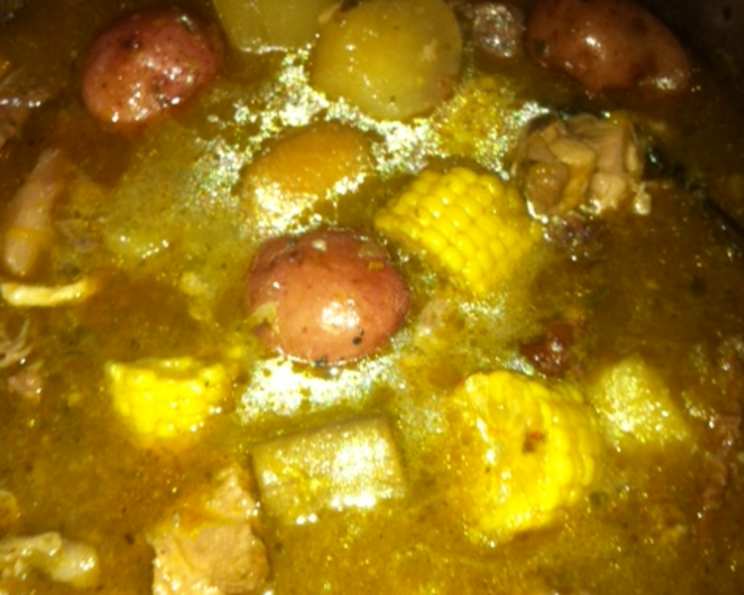
Sancocho: A Taste of Home, A Symphony of Flavors
The aroma alone transports me back to my abuela’s kitchen, a haven of warmth and laughter where simmering pots always promised comfort. Sancocho, a hearty stew brimming with vibrant vegetables, tender meats, and deep, soulful broth, was her signature dish. Each spoonful held not just sustenance, but a legacy of love passed down through generations. The memories of family gathered around a table laden with bowls of sancocho, sharing stories and laughter, are etched in my heart, making this dish more than just food – it’s a cherished piece of my heritage.
Recipe Overview
- Prep Time: 45 minutes
- Cook Time: 1 hour 35 minutes
- Total Time: 2 hours 20 minutes
- Servings: 6
- Dietary Type: Varies (can be adapted to be gluten-free and dairy-free)
Ingredients
For the Aji
- 1 cup fresh cilantro leaves, finely chopped
- 8 scallions, finely chopped (white and light green part only)
- ½ small scotch bonnet peppers or ½ small habanero pepper, seeded and finely chopped
- 1 tablespoon finely chopped white onion
- 2 teaspoons fresh lime juice (about ½ lime)
- ¾ cup water
- 1 small plum tomato, cored and finely chopped (optional)
- Salt, to taste
For the Soup
- 3 tablespoons olive oil
- 2 large yellow onions, finely chopped
- 3 garlic cloves, finely minced
- 2 large tomatoes, cored, peeled, seeded, and chopped
- 3 bay leaves
- 1 tablespoon finely chopped fresh thyme leaves
- 2 lbs skinless chicken thighs, excess fat removed
- 2 lbs flanken beef ribs (also called cross-cut ribs)
- 2 green plantains, peeled and cut into 2-inch long pieces
- 2 ripe plantains, peeled and cut into 2-inch long pieces
- 1 bunch fresh cilantro, stems tied together with kitchen twine
- 14 cups chicken broth, homemade or low sodium chicken broth
- 1 ½ lbs small potatoes, peeled (red or white)
- 3 cups diced pumpkin or 3 cups butternut squash
- 10 pieces frozen yucca root (2-inches long)
- 4 ears corn, husked and quartered
- White rice, for serving (optional)
- 1 medium Hass avocado, halved, seeded, peeled, and sliced for serving (optional)
- 6 tortillas, for serving (or Arepas) (optional)
Equipment Needed
- Large stockpot
- Small glass bowl or jar with a tight-fitting lid
- Slotted spoon
- Kitchen twine
Instructions
- Prepare the Aji: In a small glass bowl or jar with a tight-fitting lid, combine the cilantro, scallions, chiles, onions, lime juice, and ¾ cup of water. If using, add the chopped tomato. Season with salt to taste. Stir all ingredients together.
- Infuse the Aji: Cover the bowl or jar and set the aji aside at room temperature for several hours. This allows the flavors to meld and intensify. Refrigerate until serving.
- Sauté Aromatics: Heat the olive oil in a large stockpot over medium heat for 1 minute. Add the onions and garlic and cook until they are soft and transparent, about 5 minutes, stirring occasionally.
- Build the Base: Add the chopped tomatoes, bay leaves, and thyme to the pot. Continue to cook for 5 more minutes.
- Sear the Meats: Add the chicken thighs and beef ribs to the pot. Cook until the tomatoes have disintegrated, about 15 minutes. Stir occasionally and skim off any foam that rises to the top of the broth.
- Simmer with Plantains: Add the green plantains, tied cilantro stems, and chicken stock to the pot. Bring the mixture to a boil.
- Slow Cook: Reduce the heat to medium-low and simmer, covered, until the plantains are tender, about 30 minutes.
- Remove Chicken: Using a slotted spoon, carefully remove the chicken from the pot and set it aside.
- Add Vegetables: Add the potatoes, pumpkin (or butternut squash), ripe plantains, yucca, and corn to the pot. Simmer uncovered until all the vegetables are tender, about 20 minutes.
- Remove Seasonings: Remove the tied cilantro stems and bay leaves from the pot and discard.
- Reheat Chicken: Return the chicken to the pot to reheat it.
- Serve: To serve, arrange a piece of chicken, some beef, plantains, and a few pieces of yucca and potatoes on each plate. Serve the broth in a small bowl, and the aji sauce on the side. Offer a bowl of rice, corn, some avocados, and arepas or tortillas on separate plates.
Expert Tips & Tricks
- Meat Tenderness: For even more tender beef, consider browning the ribs before adding them to the pot. This adds a deeper layer of flavor through the Maillard reaction.
- Plantain Ripeness: The combination of green and ripe plantains offers a delightful contrast in textures and flavors. Green plantains contribute a starchy, slightly savory note, while ripe plantains provide sweetness and a softer consistency.
- Adjusting Broth Consistency: If you prefer a thicker sancocho, you can mash a small portion of the potatoes or pumpkin against the side of the pot during the last few minutes of cooking. This will naturally thicken the broth.
- Aji Heat Level: The heat level of the aji can be easily adjusted by using more or less chile pepper, or by opting for a milder pepper variety altogether. Removing the seeds and membranes from the peppers will also reduce the heat.
- Make-Ahead Tip: The sancocho can be made a day or two ahead of time. In fact, the flavors often deepen and improve with time. Just be sure to store it properly in the refrigerator.
Serving & Storage Suggestions
Sancocho is best served hot, allowing the warmth of the broth and the aromas of the ingredients to fully envelop the senses. Arrange the solid components of the stew on a platter, and serve the broth separately in bowls. This presentation allows guests to appreciate the variety of textures and flavors.
Leftover sancocho can be stored in an airtight container in the refrigerator for up to 3-4 days. It can also be frozen for longer storage (up to 2-3 months). When reheating, add a splash of broth or water if necessary to restore the original consistency. Reheat gently over medium-low heat on the stovetop or in the microwave.
Nutritional Information
| Nutrient | Amount per Serving | % Daily Value |
|---|---|---|
| Calories | 689.6 kcal | N/A |
| Calories from Fat | 161 g | 23% |
| Total Fat | 18 g | 27% |
| Saturated Fat | 3.8 g | 18% |
| Cholesterol | 125.5 mg | 41% |
| Sodium | 1910 mg | 79% |
| Total Carbohydrate | 88.3 g | 29% |
| Dietary Fiber | 10.2 g | 40% |
| Sugars | 29.8 g | N/A |
| Protein | 49.8 g | 99% |
Note: Nutritional information is an estimate and may vary based on specific ingredients and portion sizes.
Variations & Substitutions
- Vegetarian Sancocho: Omit the chicken and beef ribs for a vegetarian version. Add more vegetables like sweet potatoes, carrots, and chayote squash to compensate. Use vegetable broth instead of chicken broth.
- Seafood Sancocho: Replace the chicken and beef with shrimp, fish, or other seafood. Add the seafood during the last 15-20 minutes of cooking to prevent it from overcooking.
- Spicy Sancocho: Increase the amount of chile pepper in the aji, or add a pinch of cayenne pepper to the soup itself for an extra kick.
- Regional Variations: Sancocho recipes vary widely from region to region. Feel free to experiment with different vegetables and meats to create your own unique version. In some regions, corn on the cob is added whole, while in others, it is cut into smaller pieces.
- Thickening Agent: If you don’t have pumpkin or butternut squash, you can use potatoes to thicken the soup. Just mash some cooked potatoes and stir them back into the broth.
FAQs (Frequently Asked Questions)
Q: Can I use a different cut of beef for this sancocho?
A: Yes, while flanken ribs are traditional, you can substitute with other cuts of beef like chuck roast or short ribs. Adjust the cooking time accordingly to ensure the beef is tender.
Q: Is it necessary to peel and seed the tomatoes?
A: While it’s not strictly necessary, peeling and seeding the tomatoes will result in a smoother broth. If you’re short on time, you can skip this step.
Q: Can I use dried herbs instead of fresh thyme and cilantro?
A: Fresh herbs provide the best flavor, but you can substitute with dried herbs if necessary. Use about 1 teaspoon of dried thyme and 1 tablespoon of dried cilantro for every tablespoon of fresh herbs.
Q: How can I make this sancocho less salty?
A: Use low-sodium chicken broth, and be mindful of adding salt throughout the cooking process. You can always add more salt at the end, but it’s difficult to remove it once it’s in the soup.
Q: What are arepas, and where can I find them?
A: Arepas are a type of cornbread flatbread popular in Colombia and Venezuela. They can be found in Latin American grocery stores or made from scratch using pre-cooked corn flour (masa harina).
Final Thoughts
Sancocho is more than just a recipe; it’s an invitation to gather, to connect, and to savor the simple pleasures of life. It’s a dish that nourishes both body and soul, carrying with it the warmth of family traditions and the vibrant flavors of Latin America. So, gather your ingredients, embrace the process, and let the rich aroma of sancocho fill your kitchen. I encourage you to try this recipe, make it your own, and share it with the people you love. And don’t forget that vibrant Aji for a burst of flavor! ¡Buen provecho!