
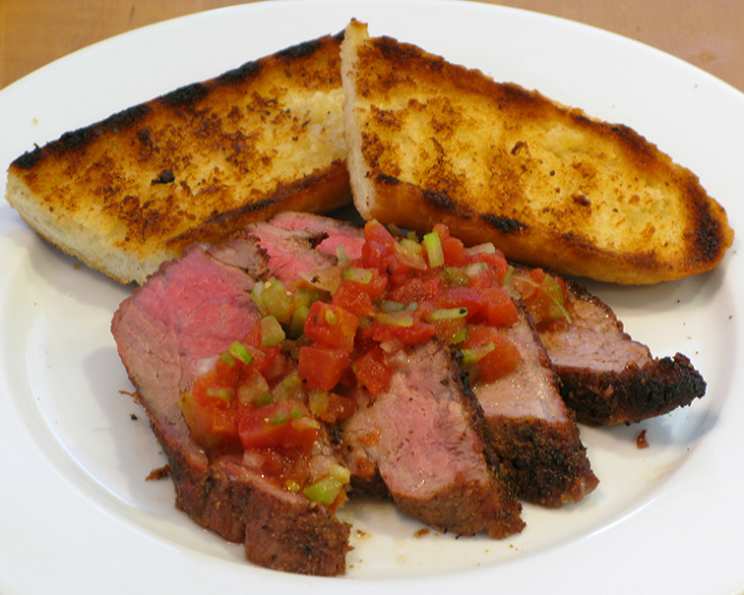
Santa Maria Tri-Tip: A Taste of California Ranchland
My earliest memory of Santa Maria tri-tip isn’t from a fancy restaurant, but from a sun-drenched county fair. The aroma of smoky oak, mingling with the savory scent of perfectly seasoned beef, hung thick in the air. I remember standing in line, practically vibrating with anticipation, as a grizzled rancher carved thin slices of the rosy-pink meat. That first bite – tender, juicy, and bursting with peppery goodness – transported me to the heart of California’s ranching country. It was more than just a meal; it was an experience, a taste of tradition that I’ve cherished ever since.
Recipe Overview
- Prep Time: 15 minutes + 1-4 hours marinating
- Cook Time: 30-35 minutes
- Total Time: 4 hours 45 minutes (including marinating)
- Servings: 6
- Yield: 6 servings
- Dietary Type: Gluten-Free, Dairy-Free
Ingredients
- 2 – 3 lbs beef tri-tip roast or 2 – 3 lbs top sirloin roast
- 1 tablespoon black pepper, fresh-ground
- 2 teaspoons granulated garlic
- 1 teaspoon granulated onion
- 1 1/2 teaspoons paprika
- 1/2 teaspoon cayenne pepper
- 1 teaspoon rosemary
- 1 teaspoon salt
- 1/2 cup red wine vinegar
- 1/2 cup garlic-infused vegetable oil
Equipment Needed
- Barbecue grill
- Water-soaked oak chips or mesquite chips (optional, for smoking)
- Whisk
- Basting brush
- Meat thermometer
Instructions
-
In a bowl, thoroughly mix together the black pepper, granulated garlic, granulated onion, paprika, cayenne pepper, rosemary, and salt. This is your dry rub.
-
Rub the spice mixture generously all over the beef tri-tip or top sirloin roast, ensuring every surface is coated.
-
Let stand at room temperature for 1-4 hours. This allows the flavors to penetrate the meat. The longer it marinates, the more intense the flavor will be. If marinating for longer than 1 hour, keep refrigerated until 30 minutes before grilling.
-
Prepare the barbecue grill. For an authentic Santa Maria flavor, use water-soaked oak chips (preferred, if you can find them) or mesquite chips on the charcoal to produce smoke. Soaking the chips prevents them from burning too quickly and creates a more consistent smoke.
-
In a small bowl, drizzle the garlic-infused vegetable oil slowly into the red wine vinegar, whisking rapidly to emulsify. This creates a simple yet flavorful baste.
-
Brush the vinegar and oil mixture on the meat as soon as you put it on the grill.
-
Grill the meat over direct heat, at medium-high temperature. This ensures a good sear and flavorful crust. Aim for a grill temperature of around 350-400°F (175-200°C).
-
Turn the meat at least 3 times, basting with the vinegar and oil mixture every time you turn it. This ensures even cooking and keeps the meat moist.
-
Grill for a total of 30-35 minutes, or until the internal temperature reaches 140 degrees F (60 degrees C) for medium-rare. Use a meat thermometer to accurately gauge the doneness. For medium, aim for 150°F (66°C), and for medium-well, aim for 160°F (71°C).
-
Once cooked, remove the tri-tip from the grill and let it rest for 10-15 minutes before slicing. This allows the juices to redistribute, resulting in a more tender and flavorful final product.
-
Slice the tri-tip about 1/8″ to 1/4″ thick across the grain. Slicing against the grain shortens the muscle fibers, making the meat easier to chew.
-
Serve immediately with warm corn tortillas and your favorite salsa.
Expert Tips & Tricks
- Oak wood is key: If you can source oak wood chips or even oak logs for your grill, it will significantly enhance the authentic Santa Maria flavor.
- Don’t skip the rest: Allowing the tri-tip to rest after grilling is crucial for retaining its juices. Tent it loosely with foil to keep it warm.
- Garlic Oil Infusion: For the garlic-infused oil, you can either buy it pre-made or easily make your own. Gently heat olive oil with crushed garlic cloves over low heat for about 30 minutes, then strain. Let cool completely before using.
- Charcoal Placement: When using charcoal, arrange the coals so that you have a hotter area for searing and a cooler area for slower cooking if needed. This allows you to control the cooking process better.
- Internal Temp is King: Always rely on a meat thermometer for accuracy, rather than solely on cooking time.
Serving & Storage Suggestions
Serve Santa Maria tri-tip immediately after slicing while it’s still warm and juicy. Traditionally, it’s served with warm corn tortillas, allowing guests to make their own tacos. Salsa is a must-have accompaniment, and other popular sides include pinto beans, grilled vegetables, and a simple green salad.
Leftover tri-tip can be stored in an airtight container in the refrigerator for up to 3-4 days. To reheat, slice thinly and warm gently in a skillet over medium heat, or microwave briefly. You can also use leftover tri-tip in sandwiches, salads, or stir-fries.
Nutritional Information
| Nutrient | Amount per Serving | % Daily Value |
|---|---|---|
| Calories | 350 kcal | 18% |
| Total Fat | 25g | 38% |
| Saturated Fat | 10g | 50% |
| Cholesterol | 100mg | 33% |
| Sodium | 500mg | 21% |
| Total Carbohydrate | 2g | 1% |
| Dietary Fiber | 0g | 0% |
| Sugars | 0g | 0% |
| Protein | 30g | 60% |
| Note: Nutritional information is an estimate and may vary based on specific ingredients and cooking methods. |
Variations & Substitutions
- Spice Level: Adjust the amount of cayenne pepper to control the heat level. Omit it entirely for a milder flavor or add more for extra spice.
- Herb Variations: Experiment with different herbs in the dry rub. Thyme, oregano, or marjoram can be added for a unique twist.
- Vinegar Swap: If you don’t have red wine vinegar, you can substitute apple cider vinegar or balsamic vinegar, although the flavor profile will be slightly different.
- Cut of Meat: While tri-tip is traditional, top sirloin works well as a substitute. You could also try a flap meat (also known as sirloin tip) for a similar, but slightly leaner, result.
- Marinade Variation: For a richer marinade, add a tablespoon of Worcestershire sauce or soy sauce to the vinegar and oil mixture.
FAQs (Frequently Asked Questions)
Q: What makes Santa Maria tri-tip different from other grilled beef?
A: It’s all about the specific dry rub, the use of oak wood for smoking, and the technique of grilling over direct heat while basting.
Q: Can I use a gas grill instead of charcoal?
A: While charcoal and oak smoke are preferred for authenticity, a gas grill can be used. Use a smoker box with wood chips to infuse a smoky flavor.
Q: How do I prevent the tri-tip from drying out?
A: Basting frequently with the vinegar and oil mixture, avoiding overcooking, and letting the meat rest after grilling are key to keeping it moist.
Q: What is the best way to slice tri-tip?
A: Always slice against the grain to ensure maximum tenderness. Identify the direction of the muscle fibers and cut perpendicular to them.
Q: Can I marinate the tri-tip overnight?
A: Yes, you can marinate it overnight in the refrigerator, but be mindful that the flavors will be more intense. Reduce the amount of salt in the rub if marinating for more than 4 hours.
Final Thoughts
Santa Maria tri-tip is more than just a recipe; it’s a culinary tradition steeped in California history. The simple yet flavorful combination of spices, the smoky kiss of oak wood, and the perfectly grilled beef create an unforgettable experience. I encourage you to try this recipe and bring a taste of the California ranchland to your own table. Don’t be afraid to experiment with variations and make it your own. Share your creations and feedback – I’d love to hear about your experience! Pair it with a robust California Cabernet Sauvignon for the ultimate indulgence.