
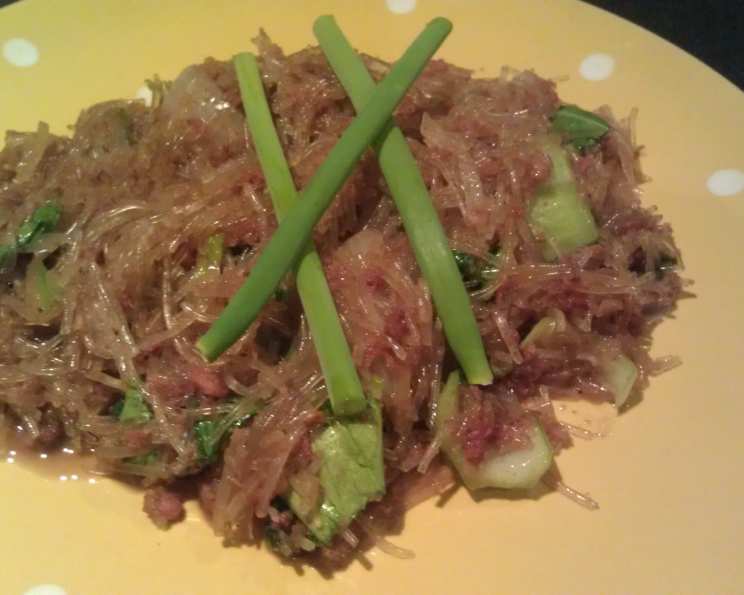
Sapa Sui: A Taste of Samoan Comfort
The aroma of soy sauce, savory corned beef, and tender bok choy always transports me back to my childhood. My Auntie Lei, a formidable woman with a heart of gold, used to make Sapa Sui for every family gathering. I can still picture her, sleeves rolled up, expertly wielding a pair of kitchen shears to snip the softened bean thread noodles, the steam rising to mingle with her laughter as she told stories of our ancestors. This dish isn’t just food; it’s a warm embrace, a reminder of family, and a celebration of Samoan heritage.
Recipe Overview
- Prep Time: 20 minutes
- Cook Time: 30 minutes
- Total Time: 50 minutes
- Servings: 4-6
- Yield: 6 cups
- Dietary Type: Varies (can be adapted to be gluten-free)
Ingredients
- 4 (8 ounce) packages bean thread noodles (cellophane noodles)
- 4 cups chicken broth
- 1 large onion, diced
- 1 – 1 1⁄2 cups soy sauce (adjust to taste)
- 3 bunches bok choy, cut long (separated stems and leaves)
- 1 lb New Zealand corned beef, or any canned corned beef
- 1⁄4 cup oil (vegetable or canola oil recommended)
Equipment Needed
- Large pot or Dutch oven
- Large skillet or wok
- Kitchen shears or scissors
- Cutting board
- Knife
Instructions
- Prepare the Noodles: In a large pot, bring the chicken broth to a boil. Add the bean thread noodles. Cook for 3-4 minutes, or until the noodles begin to soften. Turn off the heat and let the noodles sit in the hot broth until they are soft enough to cut easily with kitchen shears or scissors. This usually takes about 5-7 minutes. Soaking too long can result in mushy noodles, so keep an eye on them.
- Sauté the Aromatics: While the noodles are soaking, heat the oil in a large skillet or wok over medium heat. Add the diced onion and sauté until tender and translucent, about 5-7 minutes. Stir occasionally to prevent burning.
- Cook the Corned Beef: Add the corned beef to the skillet with the sautéed onions. Break up the corned beef with a spoon or spatula as it heats through. Cook until thoroughly heated, about 5 minutes, stirring frequently.
- Incorporate the Bok Choy: Add the bok choy stems to the skillet first, as they take longer to cook. Stir-fry for about 2 minutes, then add the bok choy leaves. Continue to cook until the bok choy is wilted but still slightly crisp, about 3-5 minutes.
- Combine Noodles and Vegetables: Using kitchen shears or scissors, cut the softened bean thread noodles into smaller, more manageable lengths directly in the pot with the broth. Gently stir the noodles to separate them.
- Combine All Ingredients: Pour the bean thread noodle and broth mixture into the skillet with the corned beef and bok choy. Mix well to combine all the ingredients.
- Season to Taste: Add soy sauce to taste, starting with 1 cup and adding more as needed. Stir well to ensure the soy sauce is evenly distributed. Be mindful that corned beef is already quite salty, so taste frequently as you add the soy sauce.
- Simmer and Serve: Let the Sapa Sui simmer for a few minutes, allowing the flavors to meld together. Serve hot.
Expert Tips & Tricks
- Noodle Perfection: Overcooked bean thread noodles can become gummy. The key is to soak them just until they are pliable enough to cut easily. If you accidentally oversoak, drain the noodles immediately and rinse with cold water to stop the cooking process.
- Bok Choy Balance: Adding the bok choy stems before the leaves ensures that both are cooked to the perfect tenderness. The stems need a little extra time, while the leaves wilt quickly.
- Corned Beef Considerations: While New Zealand corned beef is traditional, any canned corned beef will work. For a healthier option, you can use lean ground beef or shredded chicken instead. If using fresh meat, be sure to cook it thoroughly before adding the other ingredients.
- Gluten-Free Adaptation: To make this dish gluten-free, use tamari instead of soy sauce, as tamari is typically gluten-free. Be sure to check the label to confirm.
Serving & Storage Suggestions
Sapa Sui is best served hot, straight from the skillet or pot. It makes a hearty and satisfying meal on its own, but can also be served with a side of steamed rice or bread rolls to soak up the flavorful broth.
Leftovers can be stored in an airtight container in the refrigerator for up to 3 days. To reheat, simply microwave until heated through, or reheat in a skillet over medium heat, adding a splash of water or broth if needed to prevent sticking.
Sapa Sui is not ideal for freezing, as the bean thread noodles can become mushy upon thawing.
Nutritional Information
(Estimated values per serving)
| Nutrient | Amount per Serving | % Daily Value |
|---|---|---|
| Calories | 486 kcal | 24% |
| Total Fat | 27g | 41% |
| Saturated Fat | 7g | 35% |
| Cholesterol | 76mg | 25% |
| Sodium | 2487mg | 104% |
| Total Carbohydrate | 47g | 16% |
| Dietary Fiber | 4g | 16% |
| Sugars | 5g | N/A |
| Protein | 18g | 36% |
Variations & Substitutions
- Vegetarian Sapa Sui: Substitute the corned beef with firm tofu or tempeh. Add extra vegetables like mushrooms, carrots, and bell peppers for added flavor and texture. Use vegetable broth instead of chicken broth.
- Spicy Sapa Sui: Add a pinch of red pepper flakes or a drizzle of chili oil to the skillet while sautéing the onions for a kick of heat.
- Seafood Sapa Sui: Replace the corned beef with shrimp, scallops, or a combination of seafood. Be sure to cook the seafood just until it is opaque to prevent it from becoming rubbery.
- Coconut Milk Infusion: For a richer, creamier version, replace half of the chicken broth with coconut milk. This adds a subtle sweetness and a velvety texture.
FAQs (Frequently Asked Questions)
Q: Can I use different types of noodles?
A: While bean thread noodles are traditional, you can experiment with other types of noodles like rice noodles or egg noodles. Keep in mind that the cooking time may vary depending on the type of noodle you use.
Q: Can I add other vegetables besides bok choy?
A: Absolutely! Sapa Sui is a versatile dish that can easily be adapted to include your favorite vegetables. Cabbage, carrots, mushrooms, and bell peppers are all great additions.
Q: Is it necessary to use New Zealand corned beef?
A: No, any canned corned beef will work just fine. New Zealand corned beef is often preferred for its flavor and texture, but feel free to use whatever is available.
Q: Can I make this dish ahead of time?
A: While Sapa Sui is best served fresh, you can prepare some of the components ahead of time. Dice the onion, cut the bok choy, and cook the corned beef in advance. Store the ingredients separately in the refrigerator until ready to assemble.
Q: How can I reduce the sodium content?
A: Corned beef and soy sauce are both high in sodium. To reduce the sodium content, use low-sodium corned beef and low-sodium soy sauce or tamari. You can also reduce the amount of soy sauce and add other seasonings like garlic powder, onion powder, or black pepper to enhance the flavor.
Final Thoughts
Sapa Sui is more than just a recipe; it’s a piece of Samoan culture that I’m honored to share with you. I encourage you to try this dish and experience the comforting flavors of my heritage. Feel free to experiment with variations and substitutions to make it your own. And most importantly, don’t forget to share it with loved ones, because food is always best enjoyed in good company. Fa’afetai tele (thank you very much) for giving this recipe a try!