
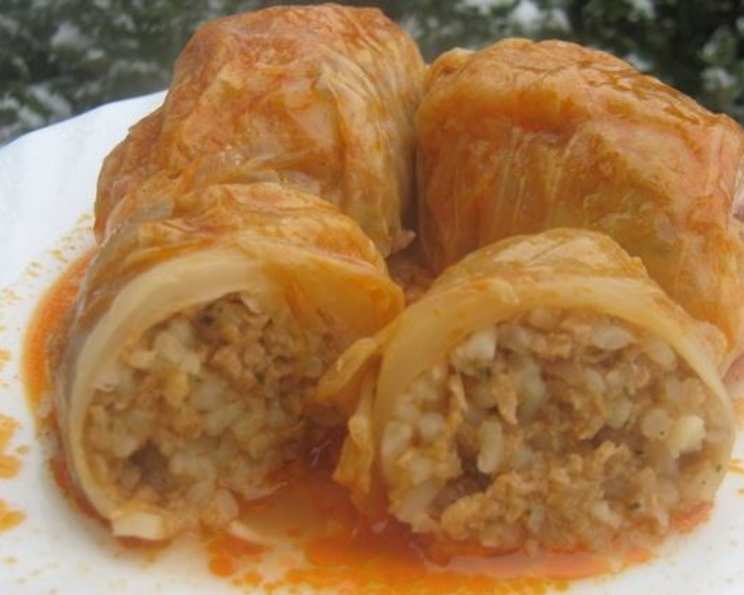
Sarma: A Taste of Bosnian Comfort
The scent of sarma instantly transports me back to my grandmother’s kitchen. I can almost see her now, her nimble fingers deftly rolling each cabbage leaf around a savory meat filling, a comforting smile gracing her face. The simmering pot would fill the house with an aroma that promised warmth, togetherness, and a taste of home. More than just a dish, sarma is a symbol of family, tradition, and the simple joys of sharing a meal together. It’s a flavor that is forever etched in my memory.
Recipe Overview
- Prep Time: 30 minutes
- Cook Time: 3 hours
- Total Time: 3 hours 30 minutes
- Servings: 4-6
- Yield: Varies depending on cabbage leaf size
- Dietary Type: Not specified (contains meat)
Ingredients
- 2 lbs sour cabbage leaves (or one large head of green cabbage)
- 10 ounces ground veal (beef or lamb may be used if you prefer)
- 1/3 cup rice
- 1 medium onion, finely minced
- Salt and pepper to taste
- Paprika to taste
- Beef stock or water
- Butter and sour cream, to serve (optional)
Equipment Needed
- Large pot (at least 6-quart capacity)
- Knife
- Cutting board
Instructions
- If using a whole head of green cabbage, prepare it by carefully separating the leaves. You can either gently peel them off or boil the whole head for a few minutes to soften the leaves and make them easier to separate. Be very careful not to tear the leaves; the more intact they are, the easier they will be to roll. If using sour cabbage leaves from a jar, rinse them gently to remove excess brine.
- In a bowl, combine the ground veal (or your preferred meat), rice, minced onion, salt, pepper, and paprika. Mix thoroughly with your hands until all ingredients are well incorporated. The rice doesn’t need to be pre-cooked; it will cook inside the cabbage leaves during the simmering process.
- Now comes the fun part: assembling the sarma! Lay a cabbage leaf flat on your work surface. Place about a tablespoon (or more, depending on the leaf size) of the meat mixture near the base of the leaf.
- Begin rolling the leaf from the base, over the meat mixture, into a tight cylinder. After the first “roll,” tuck in the sides of the leaf, like you’re wrapping a burrito. Continue rolling until you have a neat, compact sarma. The goal is to create a tight roll to prevent the filling from escaping during cooking.
- Repeat steps 3 and 4 until all the meat mixture and cabbage leaves are used up.
- Layer the rolled sarma tightly into your large pot. Pack them snugly together to prevent them from unrolling during cooking. You can create multiple layers, ensuring they are packed tightly.
- Pour beef stock or water over the sarma until they are completely covered. I often find that even if you use water, the cooking process releases rich flavors from the meat and cabbage, creating its own delicious broth.
- Place a plate or smaller pot lid on top of the sarma to keep them submerged in the liquid during cooking. This prevents the top layer from drying out.
- Bring the pot to a boil over medium-high heat, then reduce the heat to low, cover the pot, and simmer for at least three hours. The longer they simmer, the more tender and flavorful they become. During the simmering process, check the liquid level periodically and add more beef stock or water if necessary to keep the sarma covered.
- After three hours, check the sarma for doneness. The cabbage leaves should be very tender, and the meat filling should be cooked through.
- Serve hot, with a dollop of butter and sour cream, if desired. Some people also like to spoon some of the cooking liquid over the sarma. Boiled potatoes are a common and delicious accompaniment to sarma.
Expert Tips & Tricks
- Sour cabbage can be quite salty. Rinsing the leaves thoroughly before using them will help to reduce the saltiness.
- If you can’t find sour cabbage, using regular green cabbage works fine, but it will have a slightly different flavor. Consider adding a splash of vinegar to the broth to mimic the tanginess of sour cabbage.
- For extra flavor, you can add some smoked meat, such as smoked ribs or bacon, to the pot while the sarma is simmering. This will add a rich, smoky dimension to the dish.
- The key to tender sarma is a long, slow simmer. Don’t rush the cooking process!
- If you prefer a thicker sauce, you can thicken the cooking liquid with a slurry of flour or cornstarch before serving.
Serving & Storage Suggestions
Sarma is best served hot, straight from the pot. Ladle a generous portion onto each plate, and garnish with a dollop of butter and sour cream. You can also serve it with boiled potatoes, mashed potatoes, or crusty bread for soaking up the delicious sauce.
Leftover sarma can be stored in an airtight container in the refrigerator for up to 3-4 days. The flavor actually improves as it sits, as the flavors meld together even more. Reheat gently on the stovetop over low heat, or in the oven. Avoid microwaving, as it can make the cabbage leaves tough.
Sarma also freezes well. To freeze, allow the sarma to cool completely, then transfer them to a freezer-safe container or bag. They can be frozen for up to 2-3 months. Thaw overnight in the refrigerator before reheating.
Nutritional Information
| Nutrient | Amount per Serving | % Daily Value |
|---|---|---|
| Calories | 350 kcal | 18% |
| Total Fat | 20g | 31% |
| Saturated Fat | 10g | 50% |
| Cholesterol | 100mg | 33% |
| Sodium | 500mg | 22% |
| Total Carbohydrate | 25g | 8% |
| Dietary Fiber | 5g | 20% |
| Sugars | 5g | – |
| Protein | 20g | 40% |
Note: Nutritional information is an estimate and may vary based on specific ingredients and portion sizes.
Variations & Substitutions
- For a vegetarian version, substitute the ground meat with a mixture of cooked lentils, mushrooms, and walnuts.
- Try adding other vegetables to the filling, such as grated carrots, diced bell peppers, or finely chopped celery.
- Experiment with different herbs and spices, such as dill, parsley, or caraway seeds.
- If you don’t have beef stock, you can use chicken stock or vegetable stock instead.
FAQs (Frequently Asked Questions)
Q: Can I use pre-cooked rice instead of raw rice?
A: While you can, it’s not recommended. Raw rice absorbs the flavors of the meat and broth as it cooks, resulting in a more cohesive and flavorful filling.
Q: How do I prevent the sarma from unrolling while cooking?
A: Packing the sarma tightly in the pot and placing a plate or lid on top will help to keep them submerged and prevent them from unrolling.
Q: Can I make sarma in a slow cooker?
A: Yes, you can! Layer the sarma in the slow cooker, cover with stock, and cook on low for 6-8 hours, or on high for 3-4 hours.
Q: What if I don’t have sour cream to serve with the sarma?
A: Plain yogurt or Greek yogurt makes a good substitute for sour cream.
Q: Can I add tomato sauce to the broth?
A: Some people like to add a can of diced tomatoes or a few tablespoons of tomato paste to the broth for a richer flavor. It’s a matter of personal preference!
Final Thoughts
Sarma is more than just a meal; it’s an experience. It’s a dish that brings people together, fosters conversation, and creates lasting memories. I encourage you to try this recipe and share it with your loved ones. Whether you follow the recipe exactly or add your own personal touch, I hope you enjoy the process of creating this delicious and comforting dish. Don’t hesitate to share your feedback and experiences, and consider pairing it with a crisp white wine for a truly delightful meal. Happy cooking!