
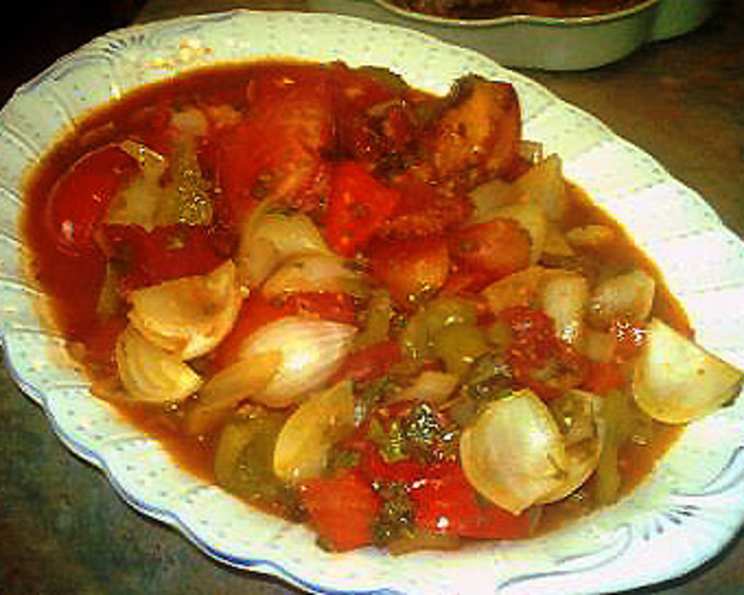
Satarash: A Garden’s Embrace in a Pan
The scent of Satarash always transports me back to my grandmother’s kitchen. The aroma of simmering tomatoes, sweet peppers, and fragrant herbs would fill the air, promising a simple yet deeply satisfying meal. I remember sneaking tastes of the slightly sweet, slightly tangy mixture, burning my tongue but not caring one bit. It was more than just a side dish; it was a taste of home, a celebration of the season’s bounty, and a reminder of my grandmother’s love poured into every spoonful.
Recipe Overview
- Prep Time: 15 minutes
- Cook Time: 15 minutes
- Total Time: 30 minutes
- Servings: 4
- Dietary Type: Vegan
Ingredients
- 2 tablespoons extra virgin olive oil
- 1 large onion, cut coarsely
- 1 red sweet bell pepper, cut coarsely
- 1 sweet green pepper, cut coarsely
- 4 Italian plum tomatoes, chopped
- 4 whole tomatoes, chopped (skin and deseed if preferred)
- 3 garlic cloves, minced fine
- 1/4 cup fresh basil, chopped
- 1/4 teaspoon oregano
- 3-4 fresh mint leaves, finely chopped
- 1 teaspoon salt
- Fresh ground pepper to taste
- Optional: Hot pepper flakes or 1 small hot pepper, minced
Equipment Needed
- Large skillet
Instructions
-
Begin by heating the extra virgin olive oil in a large skillet over medium heat. Make sure the skillet is large enough to accommodate all the vegetables comfortably.
-
Add the coarsely cut onions and peppers to the skillet. Sauté them until they become slightly tender and the onions turn translucent. This usually takes about 5-7 minutes. Stir frequently to prevent burning.
-
Incorporate the chopped Italian plum tomatoes and whole tomatoes. If using canned whole tomatoes, feel free to skin and deseed them first for a smoother texture, but it’s not essential. Adding a variety of tomato types contributes to a richer flavor profile.
-
Introduce the minced garlic, chopped basil, oregano, and finely chopped mint leaves into the skillet. The basil and oregano provide a classic Mediterranean aroma, while the mint adds a refreshing and unique twist.
-
Season the mixture with salt and fresh ground pepper to taste. Remember that you can always add more seasoning later, so start with a moderate amount and adjust as needed.
-
For those who enjoy a touch of heat, now is the time to add hot pepper flakes or a minced small hot pepper. Be cautious with the amount, as a little goes a long way.
-
Reduce the heat to low and let the Satarash simmer for approximately 10-15 minutes, or until the tomatoes have broken down and the mixture has slightly thickened. Stir occasionally to prevent sticking and ensure even cooking.
-
Taste and adjust seasoning as needed. Add more salt, pepper, or herbs to your liking.
-
Serve hot as a side dish, over rice, pasta, polenta, or grilled meat.
Expert Tips & Tricks
-
Tomato Prep: If you’re using fresh, ripe tomatoes, consider quickly blanching them in boiling water for about 30 seconds to loosen the skins. Then, plunge them into an ice bath to stop the cooking process. The skins will slip off easily. Deseeding the tomatoes is optional, but it can create a smoother sauce.
-
Herb Infusion: For a more intense herb flavor, add the basil, oregano, and mint towards the end of the cooking process. This will preserve their fresh, vibrant aromas.
-
Consistency Control: If the Satarash becomes too thick, add a splash of water or vegetable broth to thin it out. Conversely, if it’s too watery, simmer it for a longer period to allow the excess moisture to evaporate.
-
Make-Ahead Magic: Satarash can be made a day or two in advance. The flavors actually meld and deepen over time. Store it in an airtight container in the refrigerator.
-
Spice It Up: If you want to experiment with different flavor profiles, try adding a pinch of smoked paprika for a smoky depth or a dash of balsamic vinegar for a tangy sweetness.
-
Vegetable Variations: Feel free to customize the vegetable medley based on what’s in season or your personal preferences. Zucchini, mushrooms, or fresh green beans would all be delicious additions.
Serving & Storage Suggestions
Satarash is incredibly versatile and can be served in a multitude of ways. It makes a fantastic side dish alongside grilled chicken, fish, or sausages. It’s also delicious spooned over cooked grains like rice, quinoa, or couscous. For a vegetarian meal, serve it with crusty bread for dipping or toss it with pasta.
Leftovers can be stored in an airtight container in the refrigerator for up to 3-4 days. To reheat, simply warm it in a skillet over medium heat or microwave it until heated through. You can also freeze Satarash for longer storage. Thaw it overnight in the refrigerator before reheating.
Nutritional Information
| Nutrient | Amount per Serving | % Daily Value |
|---|---|---|
| Calories | 150 kcal | 8% |
| Total Fat | 9g | 14% |
| Saturated Fat | 1.5g | 8% |
| Cholesterol | 0mg | 0% |
| Sodium | 350mg | 15% |
| Total Carbohydrate | 15g | 5% |
| Dietary Fiber | 4g | 16% |
| Sugars | 7g | N/A |
| Protein | 3g | 6% |
Variations & Substitutions
- Mediterranean Twist: Add Kalamata olives, capers, and a squeeze of lemon juice for a Mediterranean-inspired variation.
- Spicy Satarash: Increase the amount of hot pepper flakes or use a hotter variety of pepper for a fiery kick.
- Smoked Satarash: Grill the peppers and onions before adding them to the skillet for a smoky flavor.
- Creamy Satarash: Stir in a dollop of Greek yogurt or a splash of coconut milk at the end of cooking for a creamier texture. (Note: This would no longer be vegan.)
- Herb Garden Satarash: Experiment with different herbs like thyme, rosemary, or parsley.
- Added Vegetables: As mentioned before, feel free to add other vegetables such as eggplant, zucchini, or corn.
FAQs (Frequently Asked Questions)
Q: Can I use canned tomatoes instead of fresh tomatoes?
A: Yes, you can substitute canned diced or crushed tomatoes for fresh tomatoes. Use the equivalent amount by weight. However, fresh tomatoes will provide a brighter, more vibrant flavor.
Q: Can I make this spicier?
A: Absolutely! Add more hot pepper flakes or a finely minced hot pepper to increase the heat level. Taste and adjust to your preference.
Q: How do I prevent the Satarash from sticking to the skillet?
A: Use a non-stick skillet or ensure that the skillet is well-seasoned. Stir the mixture frequently to prevent sticking, and add a little more olive oil if needed.
Q: Can I freeze Satarash?
A: Yes, Satarash freezes well. Allow it to cool completely before transferring it to an airtight container or freezer bag. Thaw overnight in the refrigerator before reheating.
Q: What can I serve Satarash with?
A: Satarash is a versatile dish that can be served as a side, topping, or even a main course. Serve it with grilled meats, fish, pasta, rice, or crusty bread.
Final Thoughts
Satarash is more than just a recipe; it’s a celebration of fresh, seasonal ingredients and simple, honest cooking. It’s a dish that can be easily adapted to your personal preferences and enjoyed in countless ways. I encourage you to try this recipe and experience the joy of creating a flavorful and satisfying meal from your garden’s bounty. Feel free to experiment with different vegetables, herbs, and spices to create your own unique version of Satarash. And don’t forget to share your creations with friends and family!