
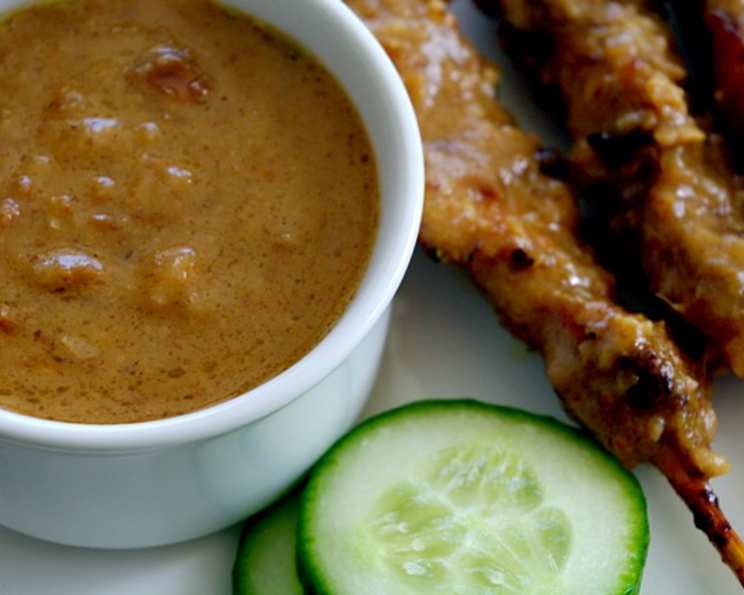
The Ultimate Homemade Satay Sauce: A Taste of Southeast Asia
The memory is etched in my mind: the bustling night market, the air thick with the aroma of grilling meats and exotic spices, and the vibrant colours of street food stalls vying for attention. But above it all, the scent of my mother’s satay sauce reigned supreme. It was more than just a condiment; it was a taste of home, a comforting embrace in a faraway land. That rich, nutty, slightly spicy sauce, clinging lovingly to perfectly grilled skewers, transported me back to her kitchen every single time. Now, I’m excited to share that same cherished recipe with you.
Recipe Overview
- Prep Time: 20 minutes
- Cook Time: 20 minutes
- Total Time: 40 minutes
- Yields: 10 cups
- Serves: 10
- Dietary Type: Vegetarian (easily adaptable to vegan)
Ingredients
- 1 kg unsalted peanuts
- 2 inches shrimp paste (belacan)
- 30 dried chilies
- 1 cup coconut milk
- 5 cups water
- 1 teaspoon salt
- 8 ounces tamarind pulp
- 4 ounces palm sugar (gula melaka)
- 4 tablespoons granulated sugar
Equipment Needed
- Large skillet or baking sheet
- Blender or food processor
- Grill or small pan
- Large saucepan
- Fine-mesh strainer
Instructions
- Toast the Peanuts: Spread the unsalted peanuts in a single layer on a large skillet or baking sheet. Toast them over medium heat (if using a skillet), or in a preheated oven at 350°F (175°C), until golden brown. This usually takes about 10-15 minutes in the oven or slightly less in a skillet, depending on your appliance. Stir or shake them frequently to ensure even toasting and prevent burning. Be vigilant – burnt peanuts will ruin the entire sauce!
- Grind the Peanuts: Once the peanuts are toasted and cooled slightly, transfer them to a blender or food processor. Blend until you achieve a mix of small chunks of peanuts and some fine peanut powder. The texture is key here; you want a bit of both for the perfect satay sauce consistency. Avoid over-processing into peanut butter. Set aside.
- Prepare the Shrimp Paste and Chilies: Grill or toast the shrimp paste (belacan) over medium heat, flipping occasionally, until fragrant. This should only take a minute or two per side. Be prepared for a strong aroma! Steam the dried chilies until softened. A quick simmer in boiling water for about 5 minutes should do the trick.
- Blend the Aromatics: Combine the toasted shrimp paste and steamed dried chilies in a blender or food processor. Blend until you achieve a smooth paste. Add a little water if needed to help the blending process.
- Prepare the Liquids: In a bowl, mix the coconut milk with 4 cups of water. Set aside.
- Extract Tamarind Juice: In another bowl, mix the tamarind pulp with the remaining 1 cup of water. Use your hands to break down the pulp and release its flavor. Strain the mixture through a fine-mesh strainer to remove any seeds or fibers. Reserve the tamarind juice.
- Combine and Cook: Scrape the palm sugar (gula melaka) into a large saucepan. Add the granulated sugar, blended chili paste, and tamarind juice. Cook over medium heat, stirring constantly for about 4 minutes, until the sugars are dissolved and the mixture begins to thicken slightly.
- Add Peanuts and Coconut Milk: Stir in half of the ground peanuts into the simmering mixture. Then, gradually stir in the coconut milk mixture. Bring the sauce to a boil, then reduce the heat to low and simmer, stirring constantly, for another 3 minutes. This allows the flavors to meld together beautifully.
- Adjust and Finish: Taste the sauce and adjust the seasoning as needed. Add more sugar for sweetness, salt for savory depth, or more chili paste for extra heat. Stir in the remaining ground peanuts. Simmer for another minute, stirring constantly, until the sauce reaches your desired consistency. Keep in mind that the sauce will thicken as it cools.
Expert Tips & Tricks
- Peanut Perfection: Don’t skip the toasting step! Toasting the peanuts enhances their flavor and adds depth to the sauce. Keep a close eye on them to prevent burning.
- Belacan Boost: The shrimp paste (belacan) adds a unique umami flavor that is essential to authentic satay sauce. If you can’t find belacan, you can substitute with a small amount of fish sauce, but it won’t be quite the same.
- Chili Control: The number of dried chilies can be adjusted to your preference. For a milder sauce, remove the seeds from the chilies before steaming and blending. For a spicier sauce, add a few more chilies.
- Sweetness Balance: The combination of palm sugar and granulated sugar provides a complex sweetness. If you can’t find palm sugar, you can substitute with brown sugar.
- Consistency Check: The sauce should be thick enough to coat the back of a spoon. If it’s too thin, simmer it for a few more minutes, stirring constantly. If it’s too thick, add a little more water or coconut milk.
Serving & Storage Suggestions
Serve the warm satay sauce with grilled chicken, beef, or tofu skewers. It’s also delicious as a dipping sauce for spring rolls or vegetables. Garnish with chopped peanuts and fresh cilantro for a beautiful presentation.
Store leftover satay sauce in an airtight container in the refrigerator for up to 5 days. You can also freeze it for up to 2 months. Thaw it in the refrigerator overnight before reheating. To reheat, gently warm the sauce in a saucepan over low heat, stirring occasionally, until heated through. You may need to add a little water to thin it out, as it will thicken upon refrigeration.
Nutritional Information
| Nutrient | Amount per Serving | % Daily Value |
|---|---|---|
| Calories | 794.7 kcal | N/A |
| Calories from Fat | 554 g | 70% |
| Total Fat | 61.6 g | 94% |
| Saturated Fat | 13.8 g | 69% |
| Cholesterol | 0 mg | 0% |
| Sodium | 268.5 mg | 11% |
| Total Carbohydrate | 56.5 g | 18% |
| Dietary Fiber | 7.8 g | 31% |
| Sugars | 31.9 g | N/A |
| Protein | 17.1 g | 34% |
Variations & Substitutions
- Vegan Satay Sauce: To make this recipe vegan, simply omit the shrimp paste (belacan) or substitute with a small amount of miso paste or a vegan shrimp paste alternative.
- Gluten-Free Satay Sauce: This recipe is naturally gluten-free.
- Spicy Satay Sauce: Add more dried chilies or a pinch of cayenne pepper for a spicier kick.
- Creamy Satay Sauce: Use full-fat coconut milk for an even richer and creamier sauce.
- Peanut Butter Satay Sauce: For a smoother sauce, use a combination of ground peanuts and a couple of tablespoons of peanut butter.
FAQs (Frequently Asked Questions)
Q: Can I make this satay sauce ahead of time?
A: Absolutely! In fact, the flavors meld together even better when the sauce sits for a day or two in the refrigerator.
Q: What can I use if I don’t have tamarind pulp?
A: Tamarind paste is the best substitute. Start with half the amount of tamarind paste and adjust to taste. You can also use a mixture of lime juice and brown sugar as a last resort, but the flavor won’t be quite as authentic.
Q: How do I prevent the peanuts from burning when toasting?
A: Keep a close eye on the peanuts and stir them frequently. Toast them over medium heat, not high heat. If using the oven, spread them in a single layer and check them every few minutes.
Q: My satay sauce is too thick. How can I thin it out?
A: Simply add a little water or coconut milk, one tablespoon at a time, until you reach your desired consistency.
Q: Can I use pre-ground peanuts instead of toasting and grinding them myself?
A: While you can, the flavor and texture will be significantly better if you toast and grind the peanuts yourself. Freshly ground peanuts have a much more intense and aromatic flavor.
Final Thoughts
This satay sauce recipe is more than just a set of instructions; it’s a journey into the heart of Southeast Asian cuisine. I encourage you to try it, to experiment with the flavors, and to make it your own. Share it with friends and family, and let the rich, nutty, slightly spicy goodness transport you to a world of culinary delight. And don’t hesitate to leave a comment and let me know how it turned out!